


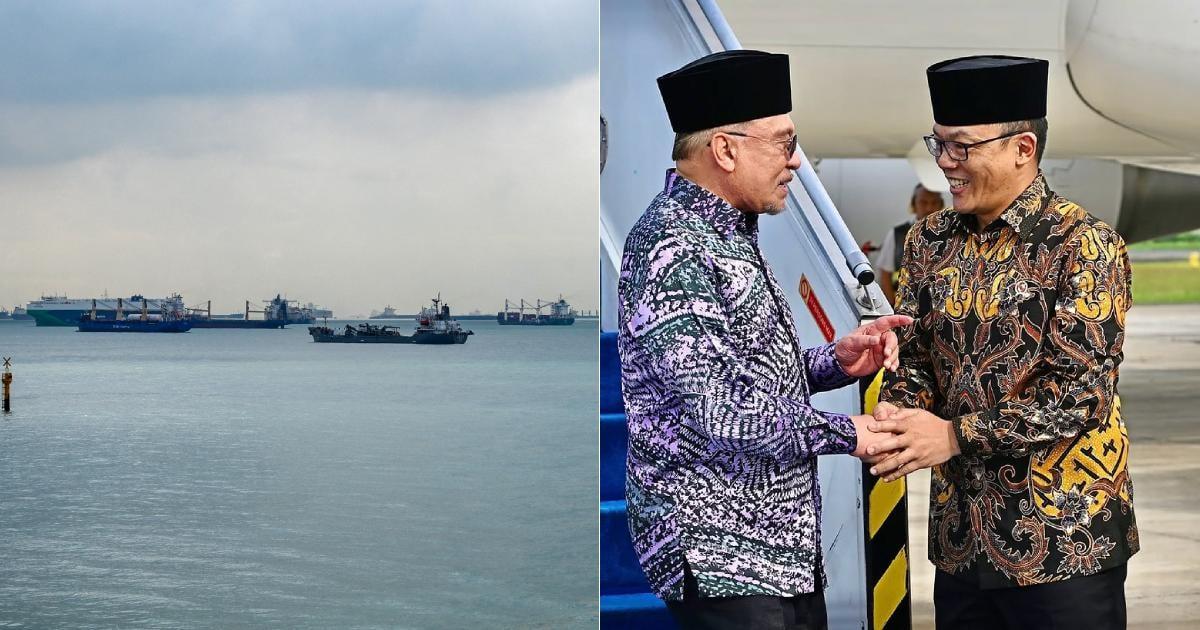
 Cover image via Roslan Rahman/AFP & @sugiono_56 (Instagram)
Follow us on Instagram, TikTok, and WhatsApp for the latest stories and breaking news.
Indonesia will not impose tariffs on vessels transiting the Strait of Malacca, the country's Foreign Minister Sugiono said on Thursday, 23 April
Sugiono drew a firm line under a proposal that had sparked immediate pushback from Malaysia, Singapore, and the global shipping community just days earlier.
The clarification came during a brief interview in response to questions from journalists, and it was unambiguous.
"No. Indonesia is not in a position to impose such tariffs in the Malacca Strait," Sugiono said, as reported by ANTARA News.
What prompted the walkback?
Earlier this week, Indonesia's Finance Minister Purbaya Yudhi Sadewa floated the idea of charging ships to transit the Strait of Malacca at a symposium in Jakarta, citing Iran's wartime toll system at the Strait of Hormuz as a possible model.
His remarks were notably casual. As Bloomberg reported him as saying, "I don't know, is that right or wrong?", but they landed in an already tense regional climate and drew swift responses.
Singapore's Foreign Minister Vivian Balakrishnan said the same day that passage through the Strait of Malacca must remain free for all, and that Singapore "will not participate in any attempts to close or interdict or to impose tolls in our neighbourhood".
Malaysia's Foreign Minister Datuk Seri Mohamad Hasan stressed that no unilateral decisions could be made on the Strait, and that any action must involve consensus among all littoral states.
Sugiono's walkback wasn't just diplomatic; it was based in international law, specifically the treaty that underpins Indonesia's own existence as a unified nation
He emphasised that Indonesia respects UNCLOS — the United Nations Convention on the Law of the Sea, the international treaty that governs maritime passage globally — and pointed out that the treaty recognises Indonesia as an archipelagic state on the condition that it does not impose tariffs on straits within its territory.
That condition is not incidental.
As SAYS reported earlier in our ongoing coverage amid the geopolitical tension surrounding the Strait of Malacca, UNCLOS is the legal framework that transformed Indonesia's 17,000 islands into a single sovereign nation. Without it, the waters between those islands would revert to international waters, fragmenting the country's territorial integrity.
Imposing a toll on the Strait of Malacca would not just violate international law; it would undermine the very treaty Indonesia depends on to hold itself together.
Sugiono also reaffirmed Indonesia's commitment to freedom of navigation.
"We also hope for free passage, and I believe this is a shared commitment among many countries to create a shipping lane that is open, neutral, and mutually supportive," he said, according to ANTARA News.

Indonesia's Foreign Minister Sugiono speaks to the media.
Image via Cindy Frishanti/ANTARA NewsWhere this leaves things
The episode, from Purbaya's offhand remarks to Sugiono's swift rebuttal, illustrates both the sensitivity of the Strait of Malacca as a subject and the speed at which loose proposals can ripple across the region when the waterway is already under scrutiny.
For now, the three littoral states, Malaysia, Indonesia, and Singapore, remain aligned on the principle that has always governed the Strait: it stays open, and passage through it stays free.
But the fact that the question was raised at all, even casually, is a reminder of how much pressure the current global climate is placing on arrangements that were previously taken for granted.
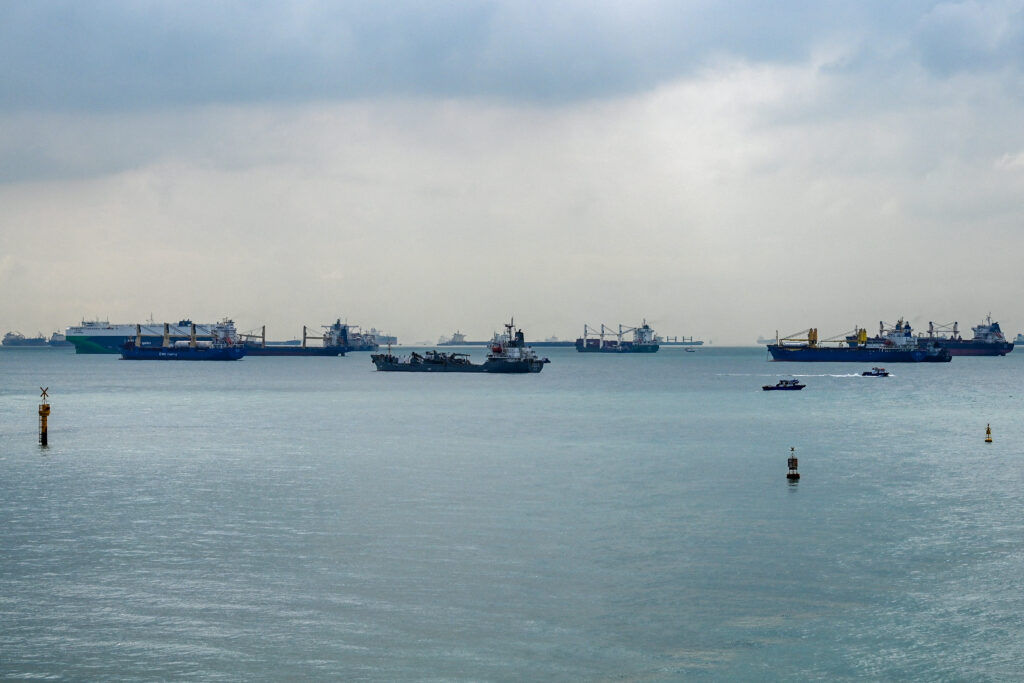
This picture shows vessels anchored along the Singapore straits eastern anchorage in Singapore on 21 April.
Image via Roslan Rahman/AFP