


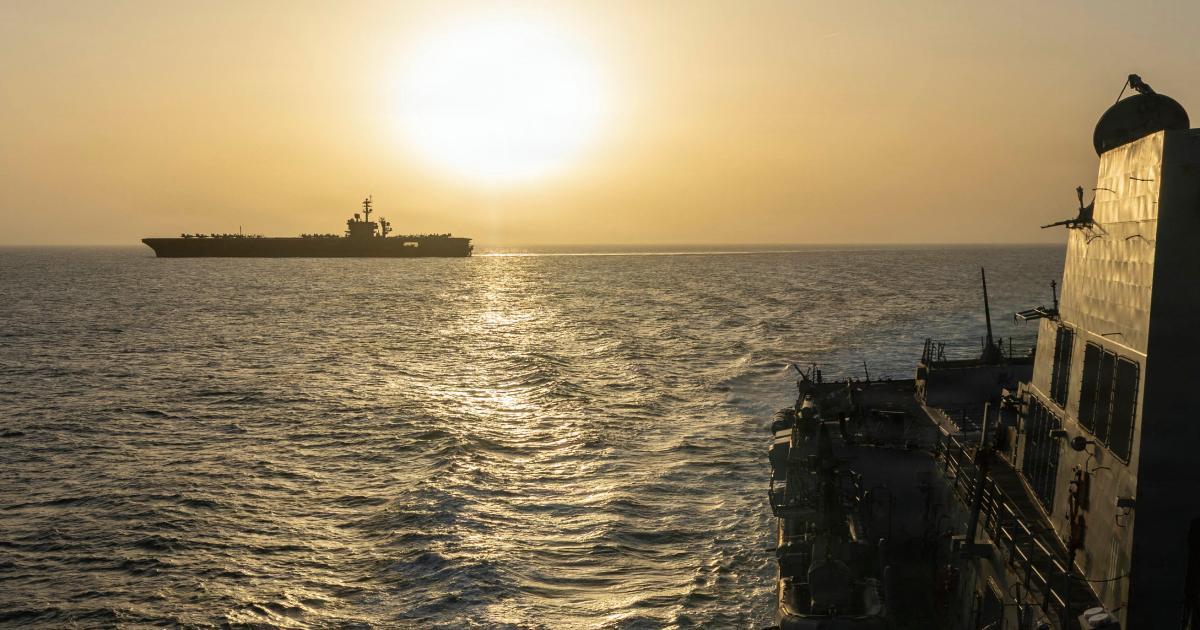
 Cover image via AFP Photo/US Navy/US Central Command Public Affairs
Follow us on Instagram, TikTok, and WhatsApp for the latest stories and breaking news.
Five Iran-linked tankers that were heading towards Malaysia have been rerouted after the US warned it may intercept ships suspected of carrying Iranian oil in international waters
According to the Wall Street Journal, which cited data from List Intelligence, the Iran-flagged Suezmax tanker Kariz, loaded with approximately one million barrels of crude, changed course off Sri Lanka early last Friday after initially heading towards Malaysia and Singapore.
A second vessel, the sanctioned Andromeda, carrying roughly two million barrels of oil, also diverted in the Indian Ocean.
Two empty tankers, Amak and Elisabet, turned back near the Strait of Hormuz after approaching US Navy vessels.
A fifth vessel was also reported to have rerouted, though the WSJ did not identify the flags under which four of the five ships were sailing.
The diversions follow a public warning by US Joint Chiefs of Staff Chairman General Dan Caine that American forces would pursue Iran-affiliated vessels even in waters far beyond the Middle East, creating a chilling effect on ship movements across the region.
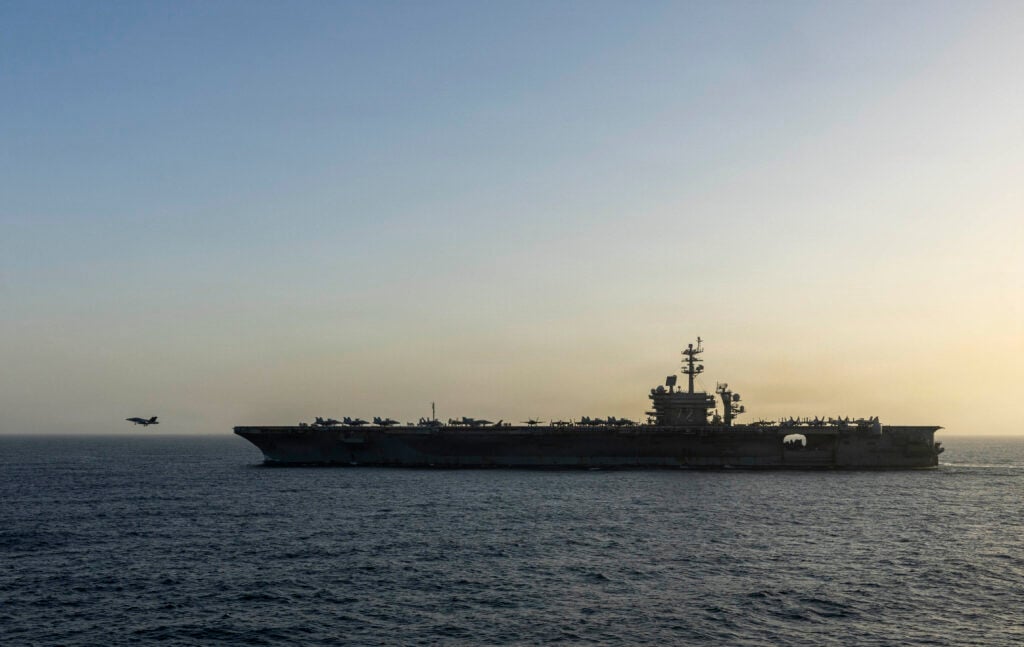
This US Navy handout photograph by US Central Command Public Affairs shows USS Abraham Lincoln conducting blockade operations in the Arabian Sea on 16 April.
Image via AFP Photo/US Navy/US Central Command Public AffairsBut the oil wasn't for Malaysia
The Iranian-linked tankers were heading from the Gulf of Oman towards Malaysia, but the oil aboard was not meant for Malaysia, sources told The Edge.
"The vessels are not ours," shipping sources told the publication.
Separate from the diverted tankers, the Malaysian government has been working to secure its own crude supply through legitimate channels
In late March, the government said seven tankers owned by Malaysian firms, including those linked to Petroliam Nasional Bhd (PETRONAS), were awaiting clearance to safely transit the Strait of Hormuz.
A passage has since been secured for those vessels.
The first to arrive, the PETRONAS-chartered Ocean Thunder, docked in Malaysia on 18 April carrying around one million barrels of crude from Iraq.
Communications Minister Datuk Fahmi Fadzil confirmed on 20 April that a second vessel is expected to arrive by the end of the week.
To put that in perspective, The Edge cited 2025 data from Wood Mackenzie: one million barrels of crude can produce up to 64 million litres of diesel, roughly two days of Malaysia's daily consumption, and around 48 million litres of petrol, which can be consumed in a single day.
The Malaysian government has said existing fuel supplies are sufficient until the end of May, while PETRONAS said it has enough for its fuel stations nationwide until the end of June.
The supply crunch, however, is far from resolved
The closure of the Strait of Hormuz at the height of the US-Iran conflict has affected roughly one-fifth of global oil supply, with the impact falling most heavily on Asia, including Southeast Asia.
Some countries have begun tapping strategic reserves. Others have introduced consumption-reduction measures such as remote working.
Oil prices have responded sharply. Brent crude, the global benchmark, rose 4.64% to USD94.57 per barrel as of Monday. The US-Iran war had earlier pushed prices above USD100 per barrel.
The situation threatens to become a wider supply issue if the conflict is prolonged. Countries and companies are racing to lock in crude to keep refineries running, a feedstock that is ultimately refined into everything from petrol to plastic packaging..
Over the weekend, US President Donald Trump reportedly said a US Navy vessel had attacked and seized an Iranian-flagged ship in the Gulf of Oman, while also dispatching a senior delegation to Pakistan for talks.
Iran responded by saying it has no plans to engage in a new round of negotiations with the US, and warned it would retaliate over the seizure.
What this means for Malaysia
The rerouting of five tankers heading in Malaysia's direction is a visible sign of how US pressure is reshaping ship movements across the region in real time, even when the cargo in question has nothing to do with the country.
Security expert Munira Mustaffa, founder of Chasseur Group, had previously cautioned that Malaysia's exposure to the conflict isn't hypothetical.
"The assumption that geographic distance provides insulation is one we keep making and keep being wrong about," she told SAYS.
"Conflicts don't respect the boundaries we draw around ourselves."
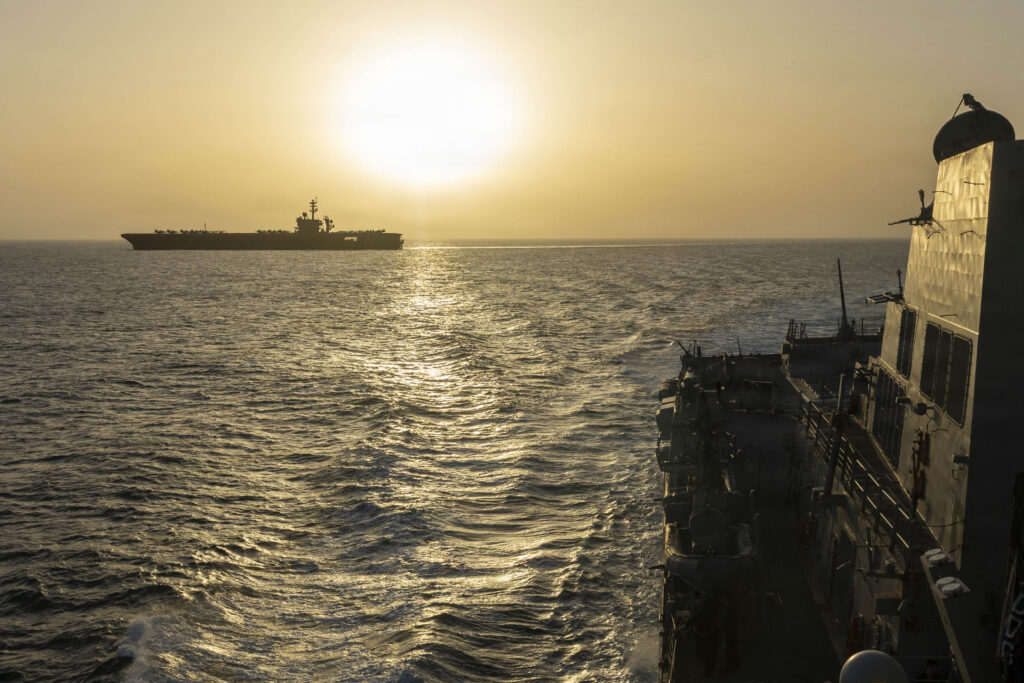
This US Navy handout photograph released by US Central Command Public Affairs shows USS Abraham Lincoln (L) conducting blockade operations in the Arabian Sea in April.
Image via AFP Photo/US Navy/US Central Command Public Affairs