
Indonesia Wants To Charge Ships For Using The Strait Of Malacca. Malaysia And Singapore Disagree
A proposal from Indonesia's Finance Minister Purbaya Yudhi Sadewa has exposed a rare crack in the otherwise united stance the three littoral states have long projected over the Strait of Malacca.


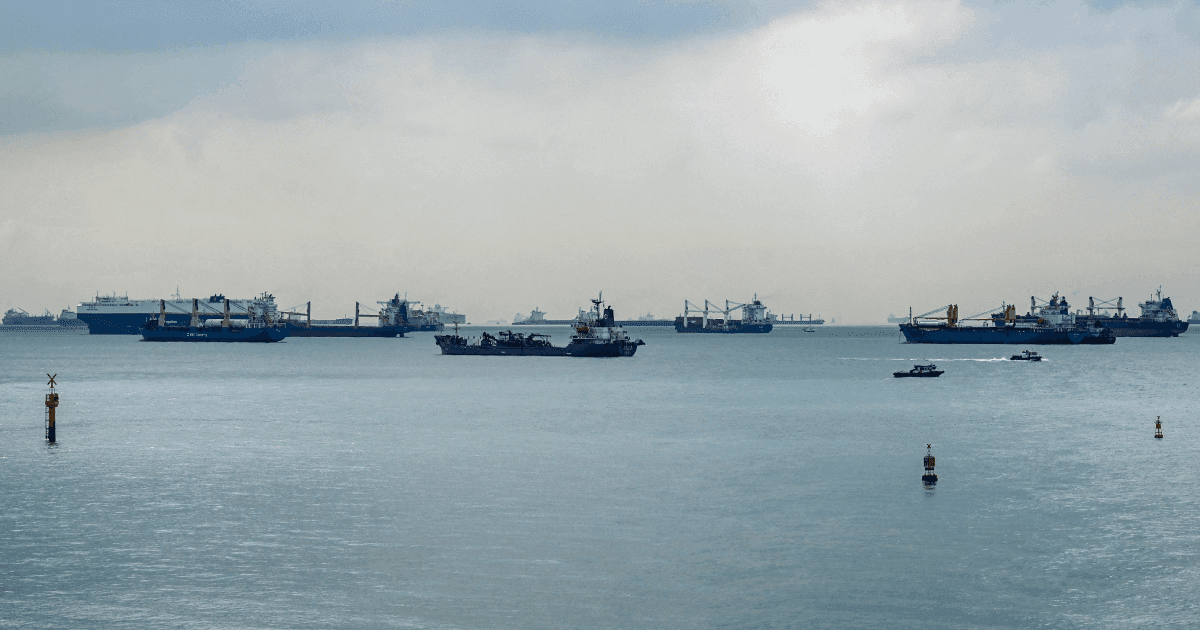 Cover image via Roslan Rahman/AFP
Follow us on Instagram, TikTok, and WhatsApp for the latest stories and breaking news.
For decades, the Strait of Malacca has been governed by a simple, shared principle among the three countries that border it
The principle is that the waterway stays open, and passage through it remains free. That consensus is now being tested, from within.
Indonesia's Finance Minister Purbaya Yudhi Sadewa raised eyebrows this week when he floated the idea of imposing a levy on vessels transiting the Strait of Malacca, remarks that landed in sharp contrast to the positions taken almost simultaneously by Malaysia and Singapore.
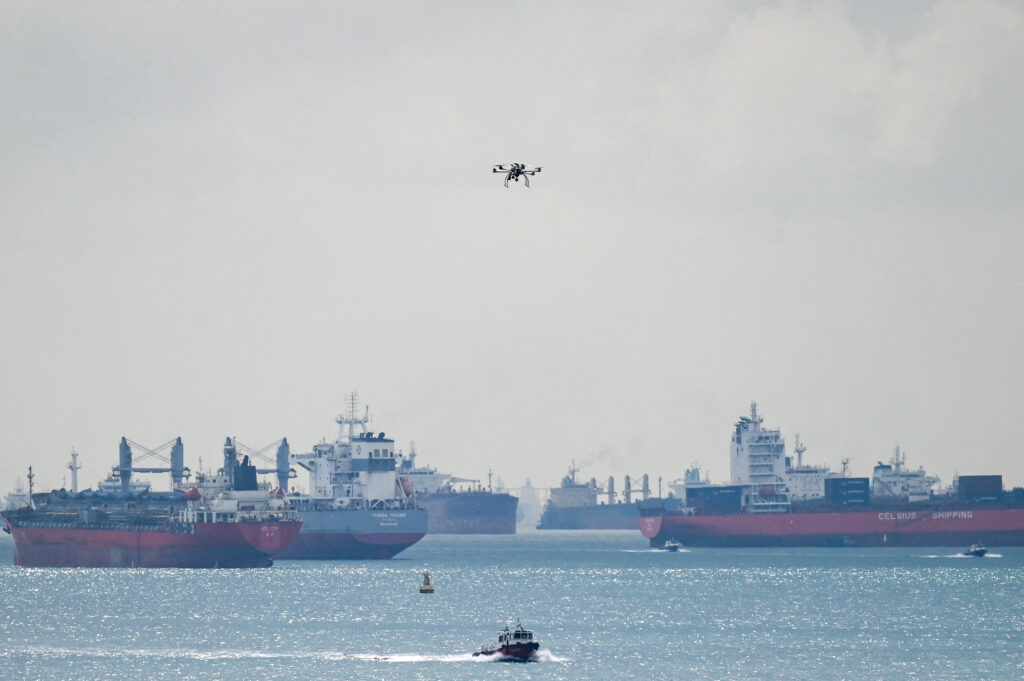
This picture shows vessels anchored as a drone flies along the Singapore straits eastern anchorage in Singapore on 21 April 2026.
Image via Roslan Rahman/AFPThe proposal
Speaking at a symposium hosted by state-owned infrastructure financier Sarana Multi Infrastruktur in Jakarta on Wednesday, 22 April, Purbaya framed the idea as part of President Prabowo Subianto's broader push to position Indonesia as a central player in global trade rather than a peripheral one.
"Indonesia is not a marginal country. We sit along a key global trade and energy route, yet ships passing through the Malacca Strait are not charged," he said, as reported by Jakarta Globe.
In a more offhand moment, as reported by Bloomberg, he added: "I don't know, is that right or wrong?" — before noting, with a smile, "If it were split three ways between Indonesia, Malaysia and Singapore, it could be quite significant, right?"
Purbaya cited discussions around Iran's toll system in the Strait of Hormuz as a possible reference model.
However, he acknowledged the proposal remains at an early stage and is unlikely to move quickly, given the complexity of securing agreement among the three littoral states, as well as the expected pushback from the global shipping industry.
"With all the resources we have, we should not think defensively. We need to start thinking more offensively, but in a measured way," he said.
President Prabowo had earlier signalled a similar direction.
Speaking on 8 April, he highlighted Indonesia's position along the Strait of Malacca, as well as the Straits of Sunda and Makassar, through which he said 70% of East Asia's energy and trade passes.
"Are we aware of how important Indonesia is?"
"We must understand that we are always the focus of the world's attention. That is why we must also lead this nation well, correctly, and reliably," Prabowo said.
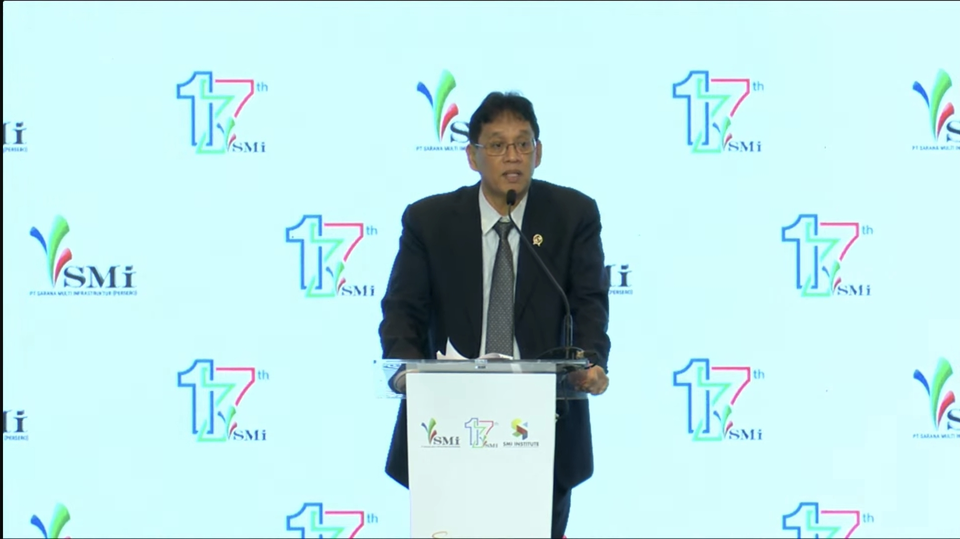
Indonesia's Finance Minister Purbaya Yudhi Sadewa.
Image via Addin Anugrah Siwi/BeritasatuSingapore's position, delivered the same day, could not have been more different from Indonesia's
Foreign Minister Vivian Balakrishnan, speaking at Singapore Maritime Week 2026 and in a separate interview at a CNBC event, was categorical.
"The right of transit passage is guaranteed for everyone," he said, as quoted by The Edge.
"We will not participate in any attempts to close or interdict or to impose tolls in our neighbourhood."
His remarks carried a wider warning.
Referring to tensions between the US and China, Balakrishnan said the real danger lies in that relationship fracturing entirely.
"If they go to war in the Pacific, what you're witnessing now in the Strait of Hormuz is just a dry run," he said, as reported by Bloomberg.
Despite the divergence with Jakarta's finance minister, Balakrishnan maintained that all three littoral states remain fundamentally aligned on keeping the Strait of Malacca open.
"All of us are trade-dependent economies. All of us know it is in our interest to keep it open. The point here is that all three countries have a strategic interest and are strategically aligned in keeping it open. That's not something which you can take for granted in many other places," he said.
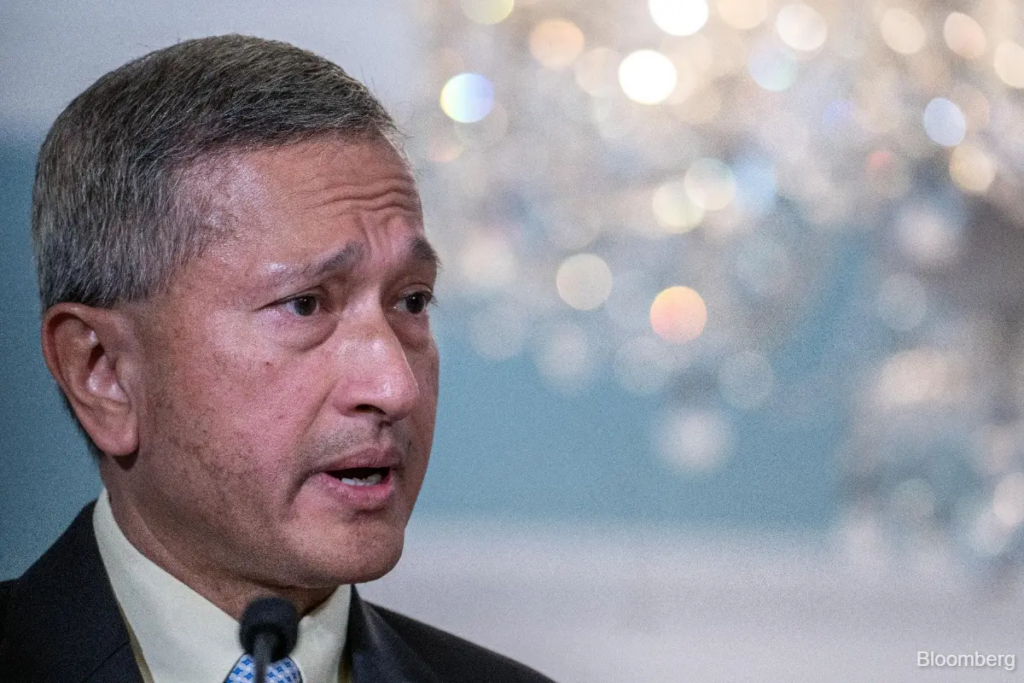
Singapore's Foreign Minister Vivian Balakrishnan.
Image via The Edge/BloombergMalaysia's response came through two ministers, both stressing the same point: nothing can be decided unilaterally
Transport Minister Anthony Loke, speaking at a roundtable session in Singapore earlier this week, said Malaysia remains committed to ensuring both freedom of navigation and freedom of transit in the Strait, reported FMT.
Foreign Minister Datuk Seri Mohamad Hasan was more explicit.
Speaking as an additional guest at the 10th Better Nation Forum on the impact of the US-Iran conflict on Malaysia, he stressed that any decision concerning the Strait of Malacca must involve all parties, and that the existing consensus-based framework leaves no room for unilateral moves, FMT reported.
"Whatever is to be done in the Strait of Malacca must involve the cooperation of all four countries. That is our understanding; it cannot be done unilaterally," he said, referring to Malaysia, Singapore, Indonesia, and Thailand, which together jointly conduct patrols of the waterway.
"When we entered into a joint agreement on patrols and the security of the Strait of Malacca, that was the basis; there are no unilateral decisions. ASEAN is entirely based on consensus. Even at the subcommittee level, everything is based on consensus," Mohamad added.
He also said Malaysia would continue to practise what he called "active neutrality" and avoid being drawn into global political contests.
"We are a trading nation, our economy is an open economy, and we trade with everybody. We can't afford to be seen as leaning towards anybody. Otherwise, our economy will be disrupted," he said.

Foreign Minister Datuk Seri Mohamad Hasan.
Image via BernamaThe levy proposal arrives at a particularly sensitive moment
The Strait of Malacca is carrying more strategic weight than usual as the Strait of Hormuz remains in crisis, with Iran and the US locked in an active standoff that has disrupted roughly one-fifth of global oil supply.
Iran's push to charge vessels for Hormuz transit is precisely the model Purbaya pointed to. The fact that it is being raised as a reference signals that the Hormuz crisis is reshaping how some governments are thinking about their own chokepoints.
For Malaysia, the immediate concern is less about the levy itself, which faces steep practical and diplomatic hurdles, and more about what the proposal reveals: that the united front among the three littoral states, long assumed to be solid, is not immune to pressure or ambition.
As security expert Munira Mustaffa told SAYS earlier in our coverage around the growing geopolitical tension surrounding the Strait of Malacca, the space for deliberate ambiguity in the region is narrowing.
The Strait of Malacca has always been governed by consensus, but it appears that keeping that consensus is getting harder.
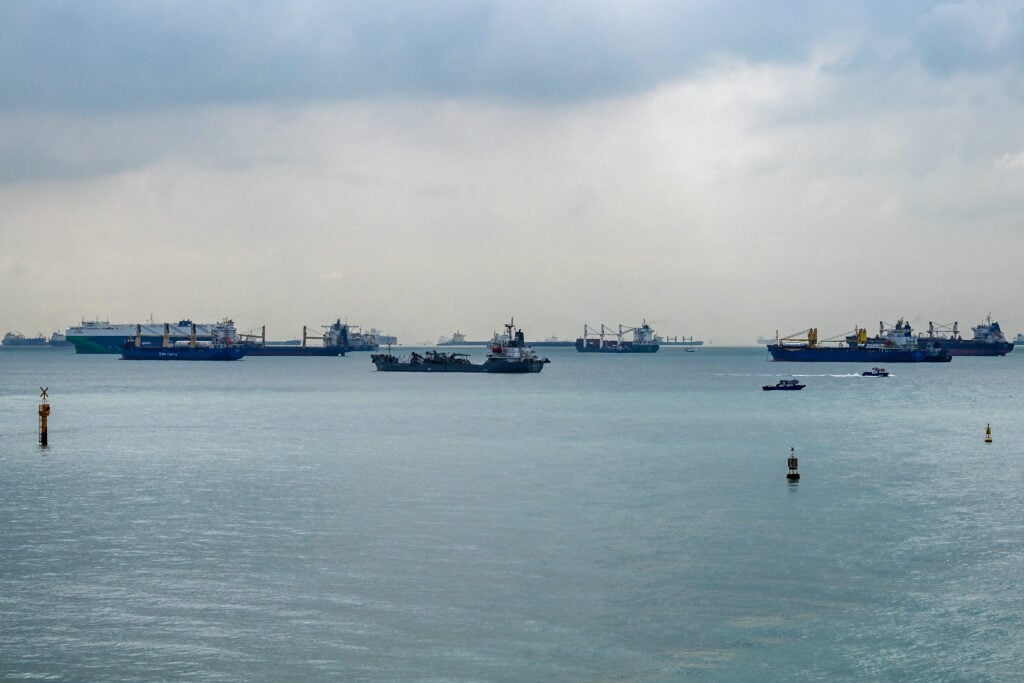
This picture shows vessels anchored along the Singapore straits eastern anchorage in Singapore on 21 April 2026.
Image via Roslan Rahman/AFP