
PMO Adviser Warns Malaysia’s Supply Crisis Could Hit Factories, Jobs & Daily Life By July
Nurhisham Hussein says Malaysia is entering a rare "supply-side crisis" driven by fuel and petrochemical disruptions, warning that shortages cannot simply be solved through subsidies or government spending.


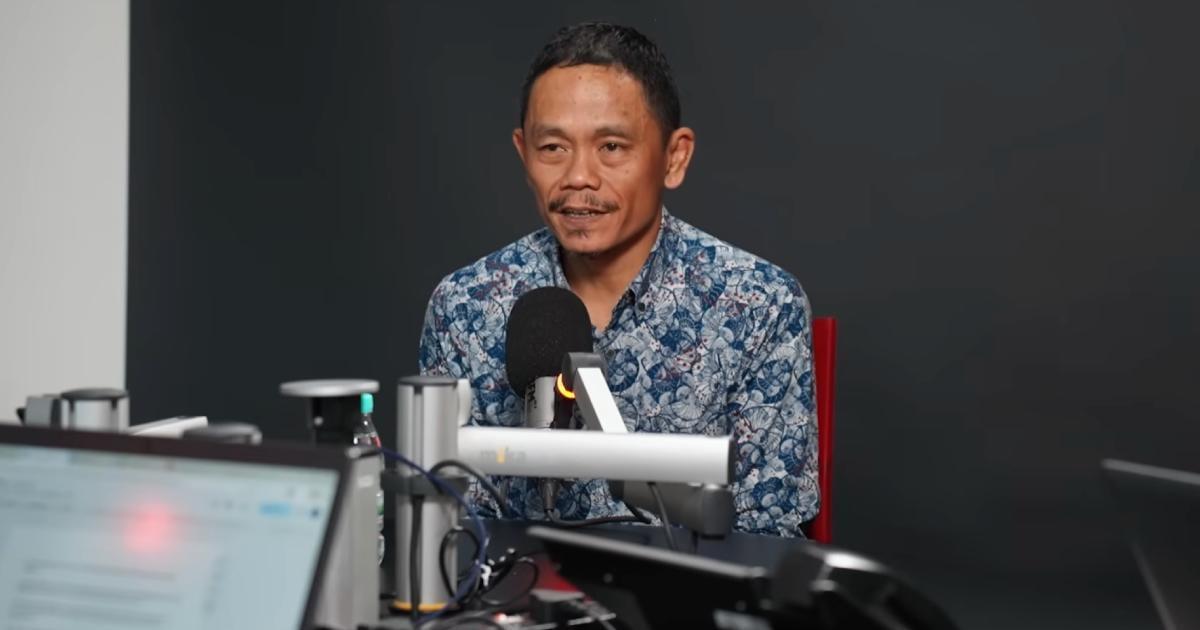 Cover image via @bfmradiomy (YouTube)
Follow us on Instagram, TikTok, and WhatsApp for the latest stories and breaking news.
Malaysia could begin feeling the real economic and industrial effects of the global supply crisis within weeks
This is according to the Economic Adviser to the Prime Minister's Office, Nurhisham Hussein, who warned that the country is entering a rare "supply-side crisis" unlike previous downturns.
Speaking on BFM 89.9's The Breakfast Grille, Nurhisham said the disruptions triggered by the ongoing Middle East conflict are no longer just about fuel prices or inflation, but about actual shortages of critical supplies that industries depend on to function.
And unlike previous crises, he said this is not something governments can simply spend their way out of.
"This is a supply crisis," he said.
"And it's very different from the crises that we've gone through before, which are always about demand.
"In a supply-side crisis, you can't spend your way out of it because you cannot buy something that's not there."
According to him, Malaysia may begin seeing the effects more visibly around June and July, when many manufacturers and businesses are expected to exhaust their existing raw material stockpiles
"We're going to start seeing production stoppages; we're going to start seeing people losing overtime, shift reductions, things like that," he warned.
Nurhisham said the current situation reminds him of February 2020, just before the COVID-19 pandemic escalated into a full-blown crisis.
"I feel like we're in February 2020," he said.
"The virus was just about to hit; we're hearing all this news. Everything's going on normally, but next month we were in a major crisis."

While he clarified that the current disruptions are not as severe as the pandemic, he said many Malaysians still do not fully grasp how deeply modern economies rely on fuel and petrochemical supply chains
He explained that the first wave of the crisis involved fuel shortages and rising energy costs, while the second wave centres on petrochemical feedstock, the raw materials used to manufacture plastics, nylon, polyester, hygiene products, cosmetics, automotive components, and other everyday goods.
"Our whole economy runs on plastics," he said during the interview.
"70% of a car is actually made out of plastic."
He added that the crisis exposed just how dependent Malaysia's manufacturing ecosystem is on global petrochemical flows moving through the Middle East, particularly around the Strait of Hormuz.
According to Nurhisham, even if the conflict ended immediately, the global oil supply would not recover overnight
He said around 12 to 13 million barrels per day remain shut in because oil wells cannot simply be restarted instantly once operations stop.
"Shut in means you're not turning off the faucet; you're actually cementing over the whole pipe," he explained.
"It'll take six months from the date the war ends for supplies to normalise."
Beyond fuel itself, he said, disruptions are now spilling into manufacturing supply chains, where companies are struggling to secure replacement raw materials quickly enough.
Nurhisham cited industry findings showing that while larger firms generally still have some buffer stock remaining, smaller manufacturers are already facing tighter conditions.
He said some SMEs reportedly only had one to two weeks of supplies left during surveys conducted in April.
Malaysia is currently trying to source alternative supplies from countries such as the US, but he said logistical realities create new complications.
For example, certain plastics produced in the US use different feedstock specifications than those commonly used in Malaysia, while shipping timelines are significantly longer.
"We have this very uncomfortable situation where we can get supplies from alternative sources, but it might not get here in time," he said.
The adviser also acknowledged that the crisis is placing enormous strain on government finances, particularly through fuel subsidies
At one point, he said subsidies were costing the government around RM2,300 every second, though the figure has since eased slightly alongside oil prices.
"The premiums are in single digits now, so it's not so expensive. I haven't done the calculation recently, but I think it's probably around RM1,500 to RM1,700 per second now. Still very expensive, but a bit more manageable."
He said Putrajaya is now reviewing expenditure and considering various measures to manage the fiscal pressure, including possible budget adjustments and emergency funding mechanisms similar to those used during the pandemic.
At the same time, Nurhisham pushed back against concerns that recent discussions on potential budget cuts to healthcare and education would affect basic services.
He described the leaked document that triggered public concern as an early-stage internal discussion paper rather than a finalised policy decision.
"There is no thought within the government that we're going to compromise basic services," he said.
Still, Nurhisham stressed that the government alone cannot fully shield the country from a supply-side crisis, as the issue is not fundamentally about money, but about availability.
He warned against panic buying, industrial hoarding, and excessive consumption, saying shortages could worsen if businesses and consumers begin stockpiling supplies aggressively
"The more you consume, the less is available for your neighbour or for your business partner or for your friends or your family," he said.
He added that navigating the months ahead will require a shift in public mindset similar to the collective discipline seen during the pandemic.
"We need to go back to that spirit of COVID, #KitaJagaKita," he said.
