


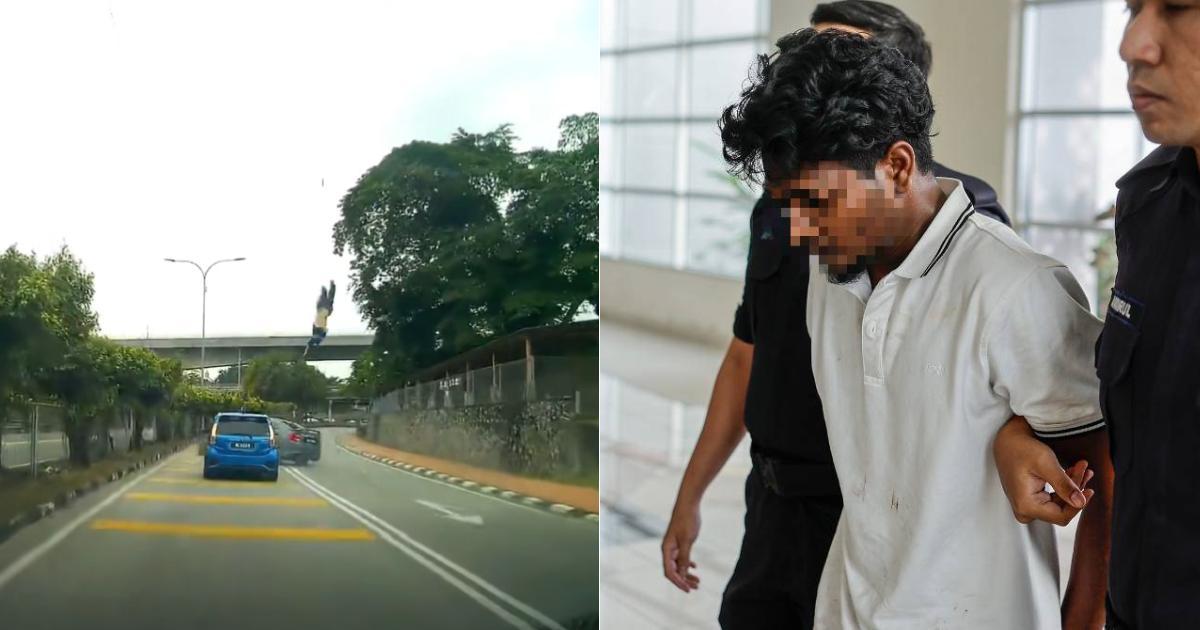
 Cover image via
Follow us on Instagram, TikTok, and WhatsApp for the latest stories and breaking news.
On the morning of Sunday, 29 March, Amirul Hafiz Omar left his home in Klang to do something ordinary: buy a Mathematics textbook for his eldest child, who had lost his copy before the new school term
He never came back.
At around 11.40am, along Jalan Raya Barat near the South Klang district police headquarters, a Honda City travelling at high speed veered into the opposite lane while overtaking other vehicles. It struck Amirul's motorcycle head-on.
The force of the impact flung him into the air and onto the roof of a Perodua Myvi that was passing in the same direction. He was pronounced dead at the scene.
Amirul, 33, was a warehouse worker by day and a Lalamove delivery rider by night, a dual-job grind he maintained to support his wife, Nor Nadia Abdul Majid, 32, and their three young children aged 2, 7, and 9.
A colleague of over a decade described him as someone who was always "the first to step forward" when help was needed. He never complained, despite being the sole breadwinner of the family.
The driver, a man in his 20s with no prior criminal record, tested positive for both alcohol and drugs. Dashcam footage of the crash spread rapidly on social media, triggering a wave of grief and fury across the country.
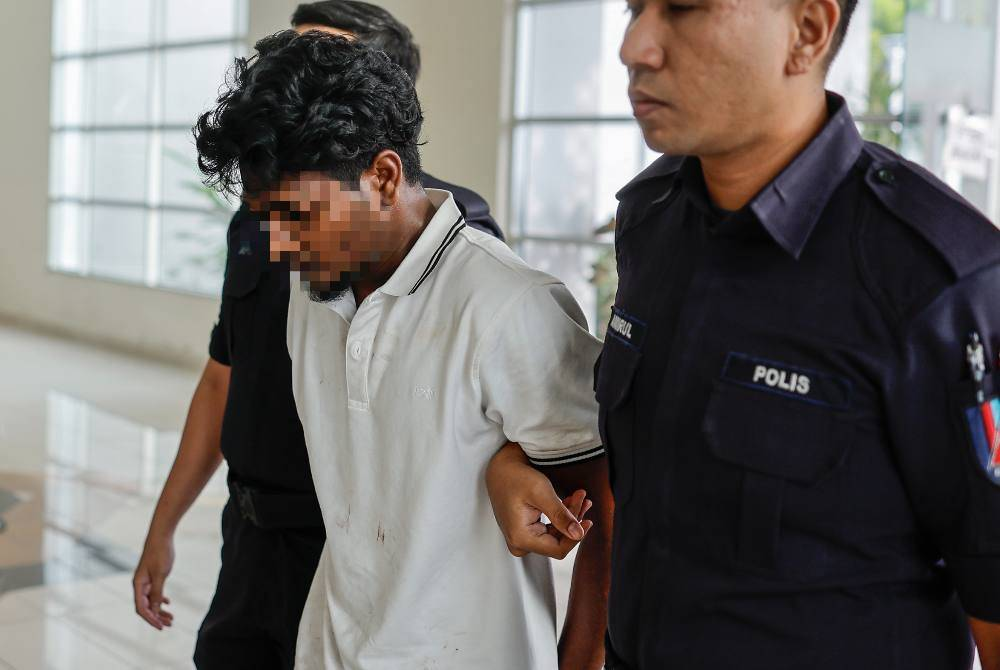
The magistrate's court has granted police a four-day remand order to detain the driver.
Image via Sinar Daily via BernamaImage via"One more life has been lost. One more family has been destroyed. Justice must be served," demanded Jerantut member of parliament (MP) Khairil Nizam Khirudin.
As Malaysians demanded answers, a familiar question resurfaced: what actually happens to someone who kills another person while driving drunk or drugged in this country? Yes, they go to prison, but do they lose their driving licence?
Here is what the law says.
First, what happens the moment someone is charged?
Even before a case goes to trial, the law already has a provision that kicks in immediately.
Under the Road Transport Act 1987, if you are charged under Section 44, the section covering drunk or drugged driving that causes death or injury, your driving licence is confiscated on the spot and remains suspended until the court reaches a verdict. You cannot legally drive while awaiting trial.
In the Klang case, the Magistrate's Court granted a four-day remand order for the suspect on 30 March, from Monday until Thursday, 2 April, to facilitate investigations under Section 44(1) of the Road Transport Act 1987 and Section 15(1)(a) of the Dangerous Drugs Act 1952, the latter because he also tested positive for drugs.
What does the law say about licence disqualification upon conviction?
Malaysia's drunk driving laws were significantly strengthened when the Road Transport (Amendment) Act 2020 came into force on 23 October 2020.
The reforms followed years of public outrage over fatal crashes involving drunk drivers, the same outrage we are seeing again now.
Here is how the penalties break down by offence:

So yes, if convicted of causing death while under the influence, the driver faces a mandatory prison sentence of between 10 and 15 years and a fine of up to RM100,000. He also cannot hold or obtain a driving licence for at least 10 years from the date of conviction.
For context, before the 2020 amendment, the same offence carried a minimum of just three years in prison and a fine between RM8,000 and RM20,000.
So why does this keep happening?
The 2020 amendments were themselves introduced in response to a string of high-profile fatal drunk driving incidents. Yet here we are again, in 2026, grieving another family shattered in broad daylight. The penalties were increased precisely because previous punishments failed as deterrents.
Reacting to the tragedy, lawmakers have demanded stricter laws.
The Jerantut MP has called for a lifetime driving ban for all drunk driving offenders who kill, arguing that a 10-year suspension does not reflect the permanent, irreversible harm caused.
Meanwhile, Machang MP Wan Ahmad Fayhsal Wan Ahmad Kamal argued that the current legal approach is no longer sufficient, and that choosing to drive drunk should be treated as an intent to harm, even proposing the death penalty for fatal drunk driving cases.
He described it as "extreme negligence that should be considered a serious crime against society".
Religious Affairs Minister Zulkifli Hasan separately proposed exploring the Islamic compensation mechanism of diyat, blood money paid by an offender to the victim's family, as an additional avenue for justice for Amirul's children.
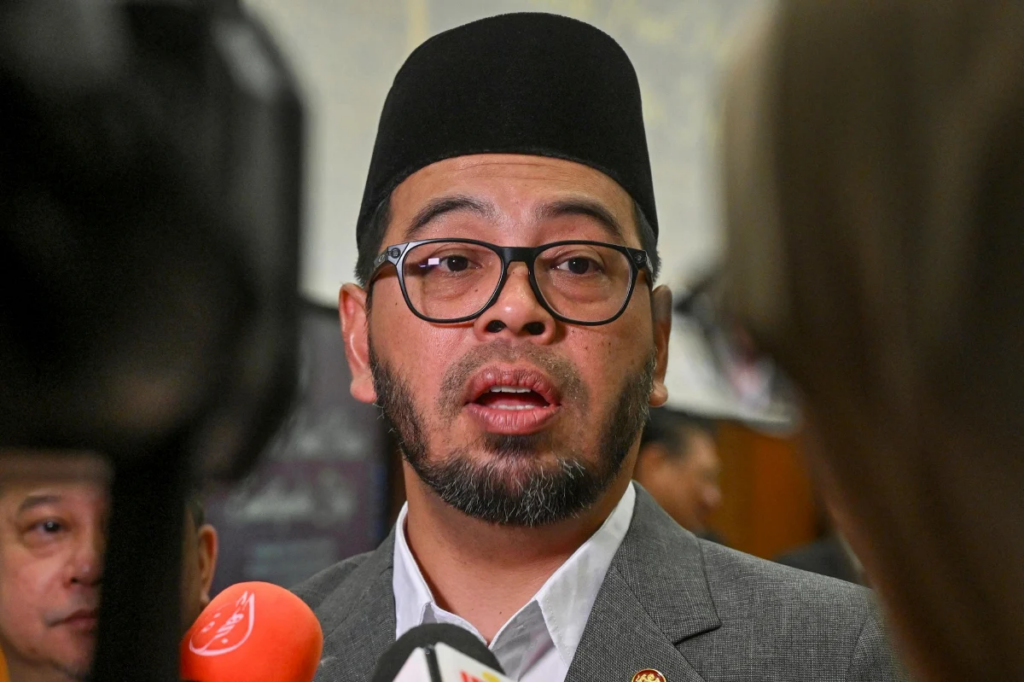
Zulkifli Hasan, Minister in the Prime Minister's Department of Malaysia.
Image via Harian MetroWhat is the government doing about it?
In direct response to the Klang incident, Transport Minister Anthony Loke announced on 30 March that his ministry is drafting further amendments to the Road Transport Act 1987.
The proposed change would make it compulsory for drunk- and drug-driving offenders to pay financial compensation to the families of victims in fatal accidents, on top of existing prison sentences and fines.
What happens next for the suspect?
As of 31 March, the suspect remains on remand while police complete investigations.
He has not yet been formally charged in court. Once charged under Section 44(1), his driving licence will remain confiscated throughout the court process, which could take months or years to resolve.
If convicted, the court has discretion within the sentencing range when determining the exact prison term and fine, taking into account factors such as the severity of the driving, whether it was a first offence, and the impact on the victim's family.
The minimum 10-year licence disqualification applies regardless.
Amirul's widow, Nor Nadia, has said she intends to pursue legal action to protect the rights of her children, who have lost both their father and the family's only source of income.
Pro bono legal assistance has been offered to the family by both Pembela (a coalition of Islamic NGOs) and PAS Youth.
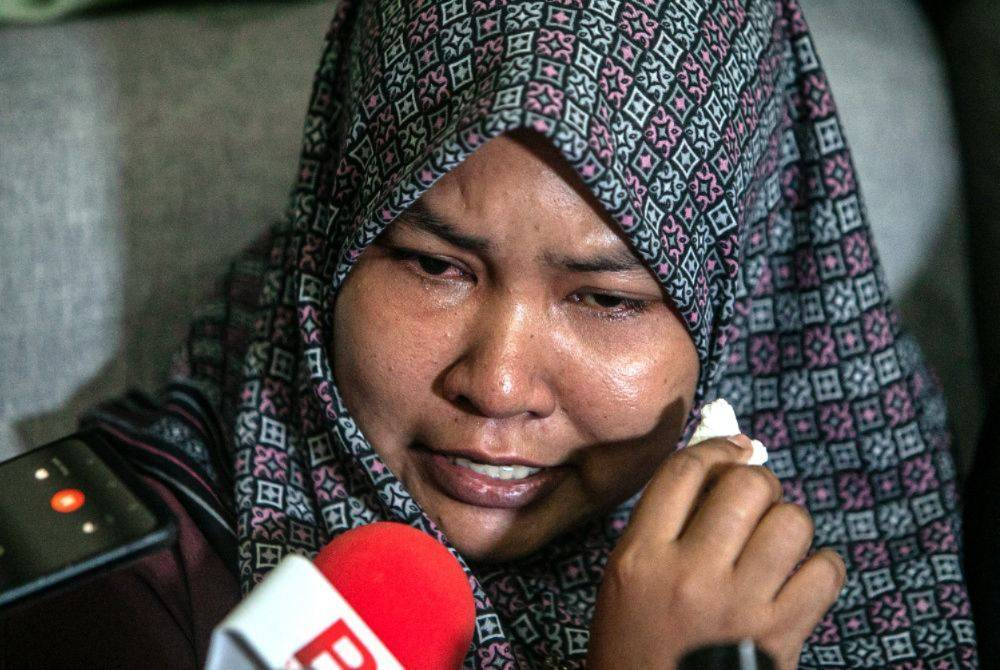
Nor Nadia Abdul Majid.
Image via Sinar Daily via BernamaThe bottom line
Yes, someone convicted of causing death while drunk or drugged behind the wheel will lose their licence for a minimum of 10 years, on top of a mandatory prison sentence. Their licence is also confiscated from the moment they are charged, not just when convicted.
But whether those penalties are a sufficient deterrent is a question Malaysia is still grappling with. Laws have been toughened. Sentences have been lengthened. Fines have been multiplied. And yet, families like Amirul's continue to bear the price of someone else's choice to get into a car impaired.
The push is now on for even stronger measures, mandatory compensation for victims' families, lifetime bans, and in some quarters, the most severe penalty the law can offer.
Whether any of it would have saved Amirul on a Sunday morning when he left home to buy a textbook is a question that has no answer.
