


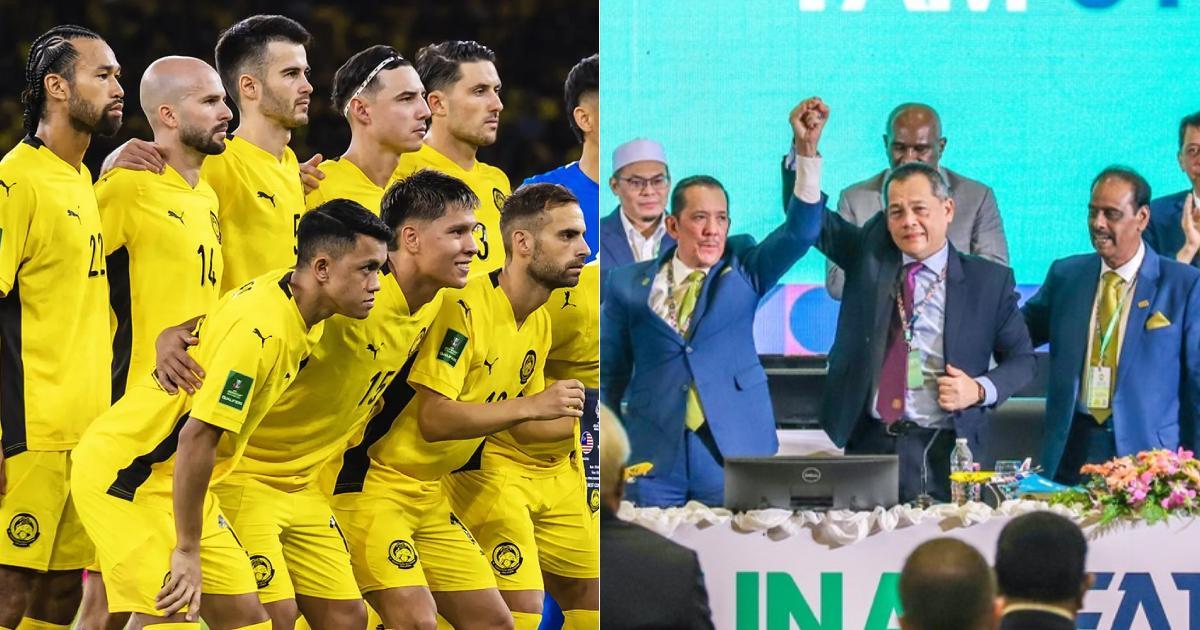
 Cover image via
 Follow us on Instagram, TikTok, and WhatsApp for the latest stories and breaking news.
The FIFA Appeal Committee has revealed an alleged coordinated scheme by the Football Association of Malaysia (FAM) to naturalise foreign players using forged ancestral birth certificates
While FIFA noted that the seven foreign players involved hold valid Malaysian passports, the international governing body confirmed that the ancestral "roots" used to justify their eligibility, specifically their grandparents' birthplaces, were fabricated.
Below is a breakdown of the scandal, the evidence, and the consequences, as outlined by FIFA in its motivated decision.
Under FIFA regulations, a player who acquires a new nationality can only represent that country if they have a "genuine link" to it
It's typically defined as being born there, having a parent or grandparent born there, or living there for at least five years.
However, FIFA noted that none of the seven players met this criteria, which led FAM to attempt to bypass the rules by engaging in a fraudulent process:
The objective: Fast-track the naturalisation of seven foreign-born professionals to play for the Malaysian national team.
The method: FAM admitted that its administration "engaged in handling and formatting" birth certificates to alter the content. They took the players' original grandparents' birth certificates and forged new ones, changing the birthplaces from cities in South America and Europe to Malaysian locations like "George Town", "Malacca", and "Kuching".
The outcome: These forged documents were submitted to the Malaysian Ministry of Home Affairs. Consequently, the players were granted citizenship and issued legitimate Malaysian passports.

Earlier, Home Minister Datuk Seri Saifuddin Nasution Ismail told the Dewan Rakyat that he used his constitutional discretion to "waive the residency requirement" for the seven footballers.
The seven players sanctioned by FIFA are:
- Facundo Garcés (Argentina): Claimed grandfather born in "George Town" (actually born in Argentina).
- Rodrigo Holgado (Argentina): Claimed grandfather born in "George Town" (actually born in Argentina).
- Imanol Machuca (Argentina): Claimed grandmother born in "Penang" (actually born in Argentina).
- Gabriel Palmero, also known as Gabriel Felipe Arrocha (Spain): Claimed grandmother born in "Malacca" (actually born in Spain).
- Jon Irazabal (Spain): Claimed grandfather born in "Kuching" (actually born in Spain).
- João Vítor Brandão Figueiredo (Brazil): Claimed grandmother born in "Johore" (actually born in Brazil).
- Héctor Hevel (Netherlands): Claimed grandfather born in "Malacca Straits Settlements" (actually born in the Netherlands).

Front, from left: Imanol Machuca, Joao Figueiredo and Jon Irazabal.
Image via New Straits TimesAccording to FIFA, its investigation uncovered the fraud by obtaining the original birth records from the players' home countries
The comparison revealed discrepancies and clumsy forgeries, such as the misspelling of "Kuching" as "Luching" on the forged birth certificate for Jon Irazabal's grandfather.

The forged certificate for Imanol Machuca's grandmother listed her birthplace as "george town Penang, federacion do malaya", using the Portuguese "do" instead of Spanish "de", and failing to capitalise proper nouns.
Additionally, the forged certificate for Brazilian João Vítor Brandão's grandmother listed her sex as "male".

In Gabriel Palmero's case, he initially stated his grandmother was born in Spain, but later corrected himself to say "Malaysia".
"My grandfather was born in Venezuela and my grandmother in Spain… I mean Malaysia, sorry," he told FIFA.
According to FIFA, during the naturalisation process, all seven players signed forms declaring they had resided in Malaysia "for no less than 10 years", despite having only recently arrived in the country to join local clubs.
FIFA noted that in their appeal, both FAM and the players attempted to shift blame or minimise intent
FAM argued that the document alterations were "administrative adjustments" and not an official verification process.
In its defence, FAM claimed the fraud was carried out by isolated staff members without the knowledge of the players and the association, though it did not specify who was responsible.
Meanwhile, the players argued they were "passive victims" who trusted FAM and their agents. They claimed they signed the application documents, including the false 10-year residency declaration, without reading them because they did not understand the language.
FIFA rejected these excuses, calling the players' narrative of ignorance "flawed" and noting their "gross negligence" and "willful blindness".
FIFA also stated that a reasonable professional would question how they could represent a country with which they had "no genuine connection".
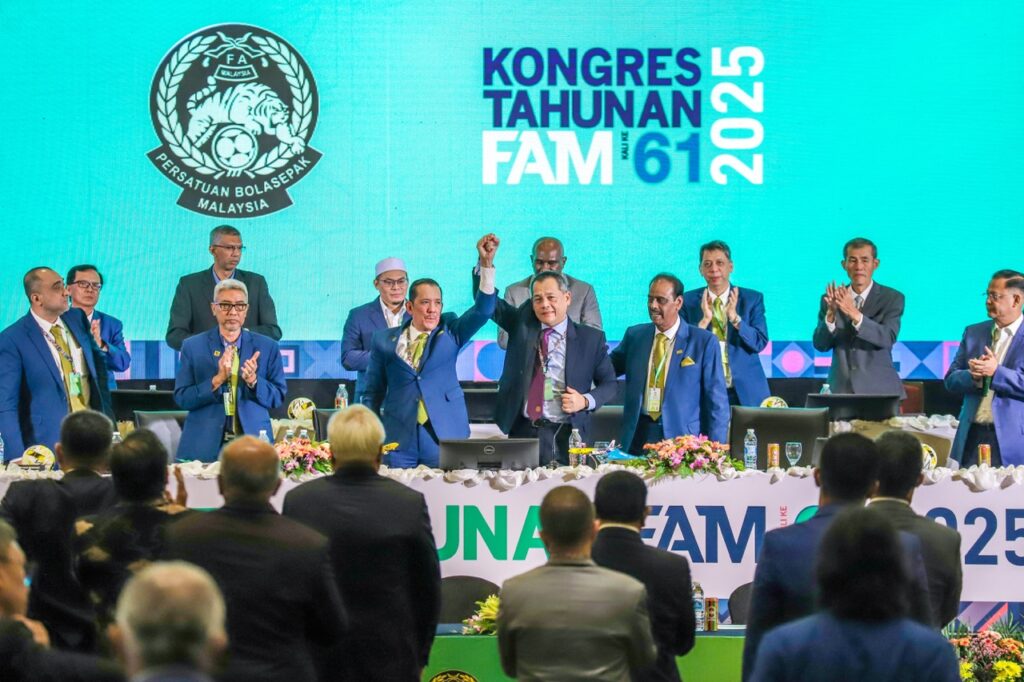
FAM executive committee.
Image via FAMSo, what happens now?
The FIFA Appeal Committee, which upheld the Disciplinary Committee's severe sanctions against FAM and the players, has instructed its Secretariat to:
- Launch a formal investigation into the internal operations of FAM to identify the individuals responsible for the forgery.
- Officially notify police and criminal authorities in Malaysia, Brazil, Argentina, Spain, and the Netherlands, as document forgery is a criminal offence in all these jurisdictions.

UPDATE
17 March, 2026
The Malaysian national football team's hopes of qualifying for the 2027 Asian Cup have been extinguished following the Asian Football Confederation's (AFC) decision to overturn two qualifying victories into 0-3 forfeits.
