


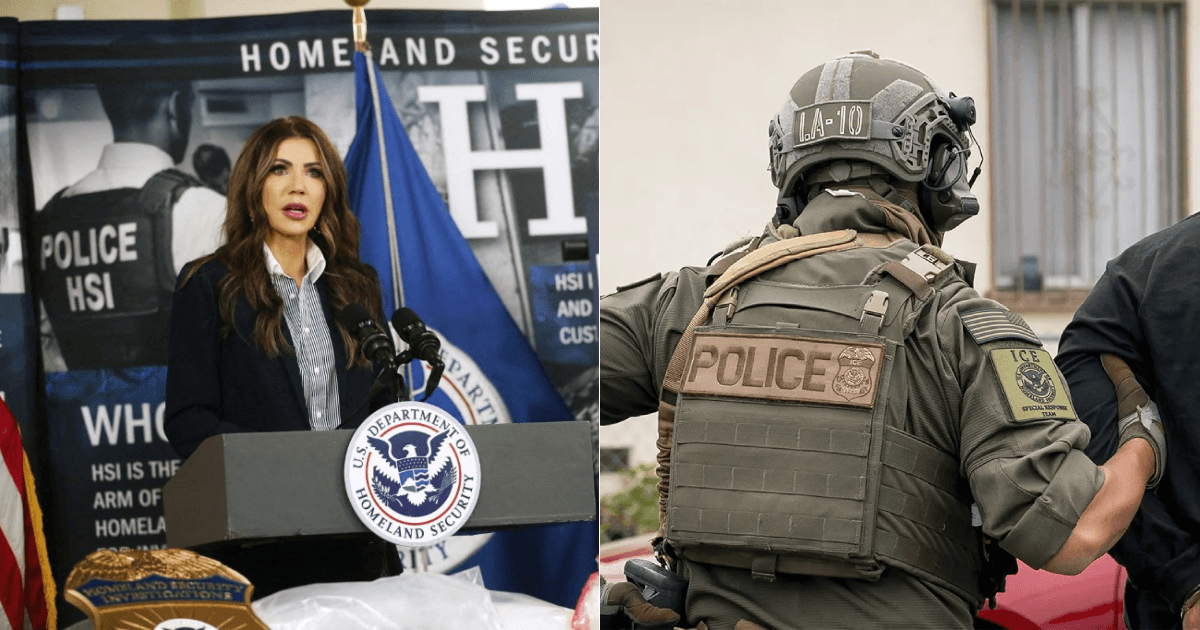
 Cover image via
Follow us on Instagram, TikTok, and WhatsApp for the latest stories and breaking news.
The US Department of Homeland Security (DHS) has launched a new public website called "Worst of the Worst"
It's a searchable registry highlighting non-US citizens who have been arrested or convicted of crimes and are now in the custody of Immigration and Customs Enforcement (ICE).
The website, dhs.gov/wow, went live on 8 December.
DHS describes it as part of a transparency effort under the Trump administration, allowing the public to look up individuals arrested in their communities and track enforcement operations. Each entry includes the person's name, photo, country of origin, place of arrest, and the offences they were convicted of.

Among those listed in the registry are two Malaysian nationals who were arrested in San Antonio, Texas
According to the database:
- Mohammed Farouk bin Mohammed Ali was convicted of marijuana offences and smuggling migrants.
- Normala binti Nur Islam was convicted of smuggling migrants.
Their inclusion indicates DHS considers their offences part of broader US border-security concerns. Migrant-smuggling cases in the US fall under 8 U.S.C. §1324, a federal provision covering transporting or harbouring people without legal status. Under US immigration law, this is often treated as an "aggravated felony", a classification that removes almost all avenues to contest deportation.
Both Malaysians were arrested in San Antonio, one of the major transit points for smuggling routes moving north from the US-Mexico border.
What listing on "Worst of the Worst" actually means
Those named on the site are already in ICE custody. Because they have criminal convictions, they are held in federal detention without bond and are placed in expedited removal proceedings. In many cases, no full immigration-court hearing is required. If they have been deported from the US before, the previous order would simply be reinstated.
Once the paperwork is completed, ICE will coordinate with the Malaysian consulate to issue travel documents before placing them on a chartered "ICE Air" flight, according to the official ICE website.
Malaysia generally cooperates with US deportations, and both individuals will be handed over to Malaysian authorities upon arrival at KLIA.
Unless they are wanted for offences committed in Malaysia, they will be processed by immigration and released. Malaysian police may interview returnees involved in cross-border crimes such as drugs or smuggling, but there is usually no further prosecution for crimes already dealt with abroad.
However, the main change introduced by this database is the permanence of the public record.
Previously, deportation cases were largely anonymous. Now, their names, mugshots, and criminal histories are openly published on a US government site. This can affect future travel as other countries may draw on publicly accessible records or shared security data when deciding entry.
For the offending individuals, the US outcome is final: aggravated-felony convictions mean a lifetime ban on re-entering the country legally.
Malaysia does not provide legal representation for its citizens charged with crimes abroad
Wisma Putra's long-standing policy is to respect local legal systems, and it does not pay for lawyers, bail, fines, or attempt to intervene in foreign courts.
Consular support is limited to welfare visits, notifying next of kin, and issuing the emergency travel document required for deportation. Any legal help must be funded by the family, and US immigration lawyers commonly cost between USD10,000 (RM41,000) and USD20,000 (RM82,000).
This policy was reaffirmed in the Dewan Rakyat in November this year, when Deputy Foreign Minister Mohamad Alamin said the government is studying the possibility of funding legal aid in the future; for now, families remain responsible for covering legal fees.

