


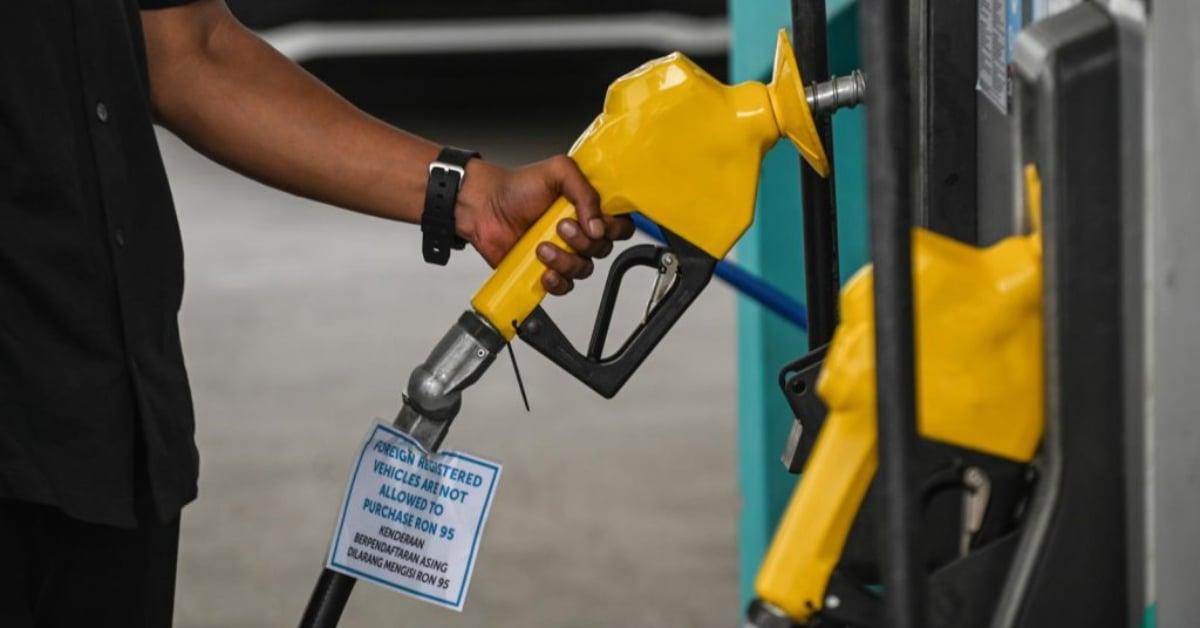
 Cover image via New Straits Times
Follow us on Instagram, TikTok, and WhatsApp for the latest stories and breaking news.
The government's plan remove RON95 fuel subsidies for higher-income Malaysians as part of fiscal reform risks appearing punitive if income is used as the sole criterion, economists have warned
Putrajaya has long proposed targeted subsidies to ensure assistance is directed to lower-income groups most affected by rising living costs. However, critics say a blanket exclusion of the T20 group could overlook the financial pressures faced by some urban households.
According to the New Straits Times, economists noted that higher incomes do not always equate to financial comfort, particularly among upper-middle-income families burdened by housing loans, childcare costs, and other living expenses.
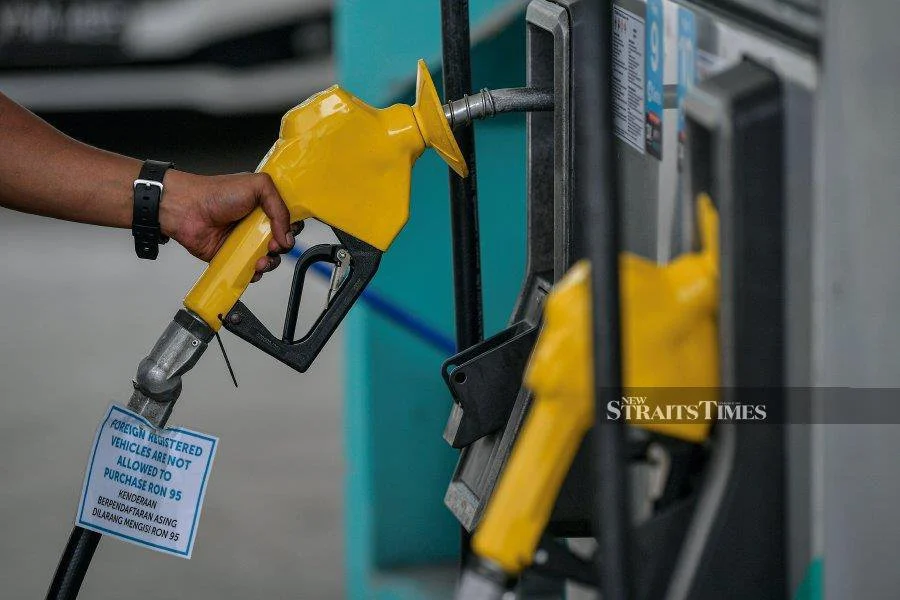
Samirul Ariff Othman, senior consultant at Global Asia Consulting, said subsidy reform should prioritise efficiency rather than penalising income groups
He said treating the T20 as a uniform category oversimplifies economic reality, adding that higher-income earners already contribute significantly through income taxes.
Samirul said a fairer approach would be to base subsidies on fuel consumption and vehicle usage rather than income alone, such as a quota system that provides all Malaysians with a basic subsidised amount for essential travel, with higher usage priced at market rates.
"In my view, income alone is too blunt a tool. Malaysia does not need a subsidy system that punishes success. It needs one that stops subsidising excess," he said.
He also suggested considering factors such as luxury vehicle ownership, multiple-car households and unusually high fuel consumption to better target leakages without undermining public trust in reform efforts.
Meanwhile, Carmelo Ferlito, chief executive of the Centre for Market Education, said tiered pricing at petrol pumps would be rigid and ineffective
"There is nothing wrong with the government wanting to support those who need help, but the manner in which it does so matters. Support should be based on actual needs, not income levels alone," he said.
Ferlito added that policymakers should also account for spending patterns, consumption behaviour, and regional cost differences rather than assuming uniform needs within income groups.
The proposal is currently under review after Prime Minister Datuk Seri Anwar Ibrahim said the government is refining its RON95 subsidy rationalisation plan
He said the proposal is being examined by a task force under the National Economic Action Council, with discussions ongoing on whether it should apply to the T5, T10, T15, or T20 income groups.
"In principle, we agree, but we want to ensure it does not affect the upper-middle class," he said.
Economists have previously estimated that excluding the T20 group from RON95 subsidies could save the government up to RM1.5 billion a month.
