


 Cover image via SAYS
Follow us on Instagram, TikTok, and WhatsApp for the latest stories and breaking news.
The Malaysian sun beat down relentlessly, casting shimmering mirages over a neighbourhood road in Puchong.
While most Malaysians stay indoors for work or daily routines, a group of volunteers toils under the blazing sun to help stray animals.
This is the story of Trap-Neuter-Release-Manage (TNRM) Malaysia, an NGO dedicated to controlling the stray animal population through humane methods and promoting responsible pet ownership.
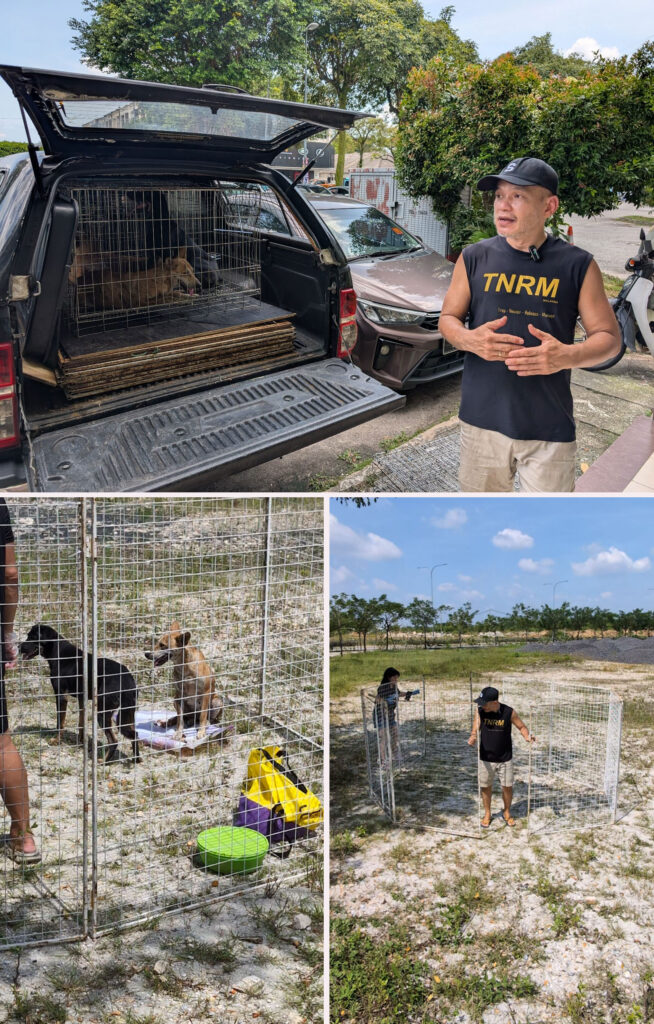
Stuart Tan, co-founder of TNRM Malaysia.
Image via SAYSOn a scorching day in May, as the country grappled with a heatwave, SAYS joined the NGO on a neutering mission in Taman Puchong Legenda
Stuart Tan, one of the three co-founders of TNRM Malaysia, led the mission, accompanied by three SAYS team members documenting it on video.
The trap-neuter-release (or trap-neuter-return) method dates back to the 1950s in Great Britain. Since then, it has gained global acceptance (except among Malaysian local councils), with scientists and international policymakers recognising it as the standard practice for managing stray populations.
Unlike catch-and-kill methods, TNR helps avoid the 'vacuum effect' — a phenomenon where removing strays from an area leads to new ones moving in. It also eases the burden on animal shelters and allows limited funds to be used more effectively.
Stray cats and dogs have long existed alongside humans, including in cities, a reminder that animals have a place in our shared environment.
While the method may be effective, its execution is far from easy — not only due to Malaysia's punishing heat, but also because of the time, energy, and coordination involved.
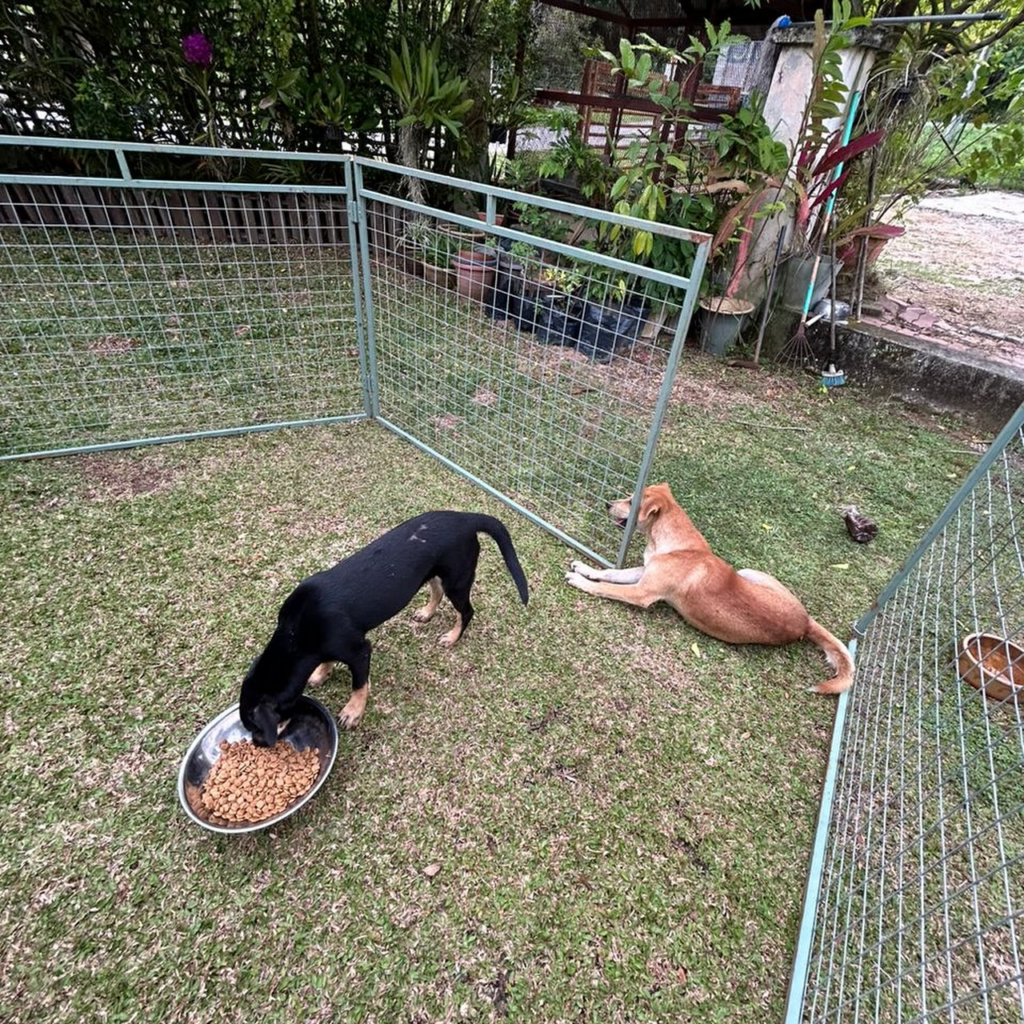
A photo showing a TNRM Malaysia mission in September last year
Image via Trap – Neuter – Release – Manage (TNRM) MalaysiaTNRM Malaysia has refined its approach, often working with residents who regularly feed strays to ensure a higher chance of success
For this mission, the NGO collaborated with two residents, including Jasmine, who feeds between 30 to 40 dogs at night — sometimes as late as 1am — providing meals of rice, meatloaf, chicken, and kibble.
Tan explained the crucial role of feeders like Jasmine, who act as the eyes and ears of TNRM by closely monitoring the dogs' routines, health, and behaviour.
"If they (the strays) are friendly, they'll usually follow the feeder right into the enclosure. But some are skittish," said the 54-year-old.
A typical TNRM operation involves setting up an enclosure with steel fencing and a large entrance, having a feeder to lure the strays inside, and then closing the entrance once they enter. The animals are then transferred into cages, sent to a vet for neutering and vaccination, and finally released back into their territory after a few days.
Even though 11am was an unusual feeding time for both Jasmine and the neighbourhood strays, her mere presence in the field quickly attracted attention. Within 20 minutes, she successfully lured two of the regular dogs into the enclosure in a single attempt.
The pair were calm and friendly, offering no resistance as Tan gently transferred them into cages. They neither barked nor tried to bite the fencing or escape.
It was a quiet show of trust, a product of Jasmine's years of generosity towards the stray community.
The entire operation — from coordinating the meeting point to setting up, waiting, luring, and trapping — took just over an hour.
Tan explained that stray dogs are highly sensitive animals, cautioning us to stay at least 300ft away from the enclosure to avoid leaving behind unfamiliar scents, which the dogs could easily detect.
We watched from a distance as Jasmine lured the two dogs into the trap.
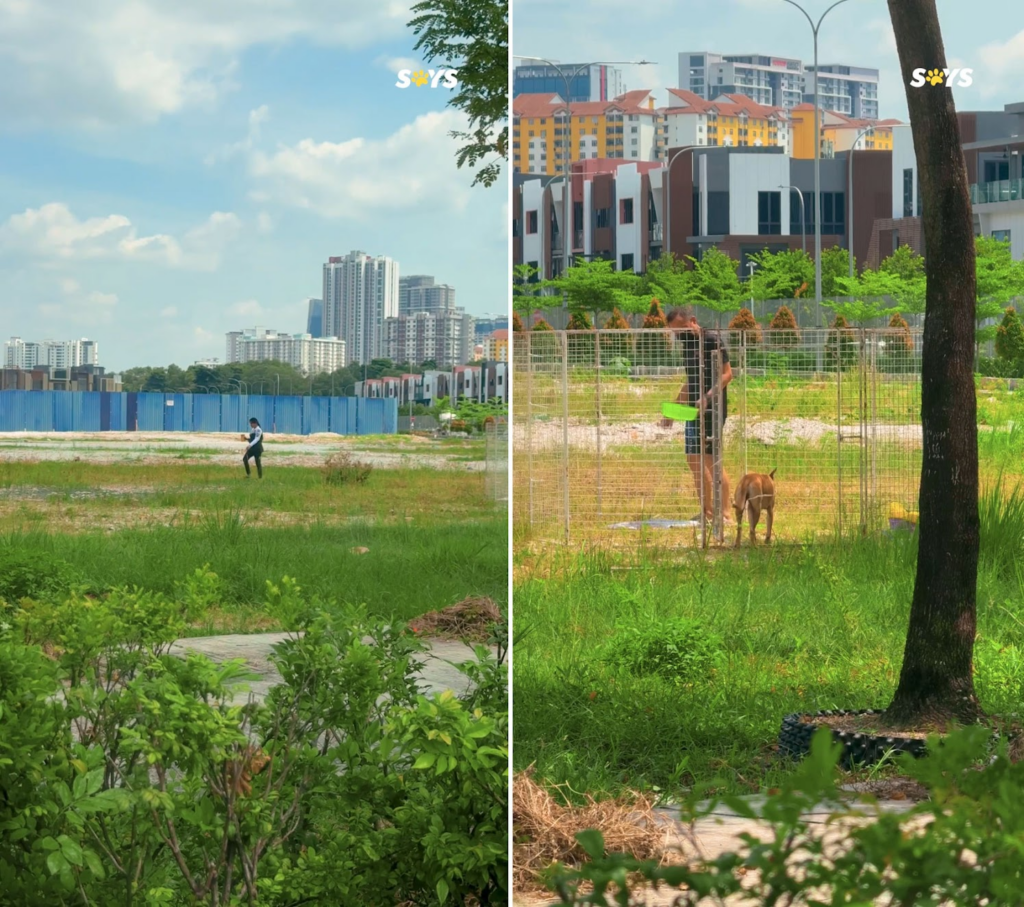
Local feeders Jasmine (left) and Ken (right) luring strays to enter the enclosure.
Image via SAYS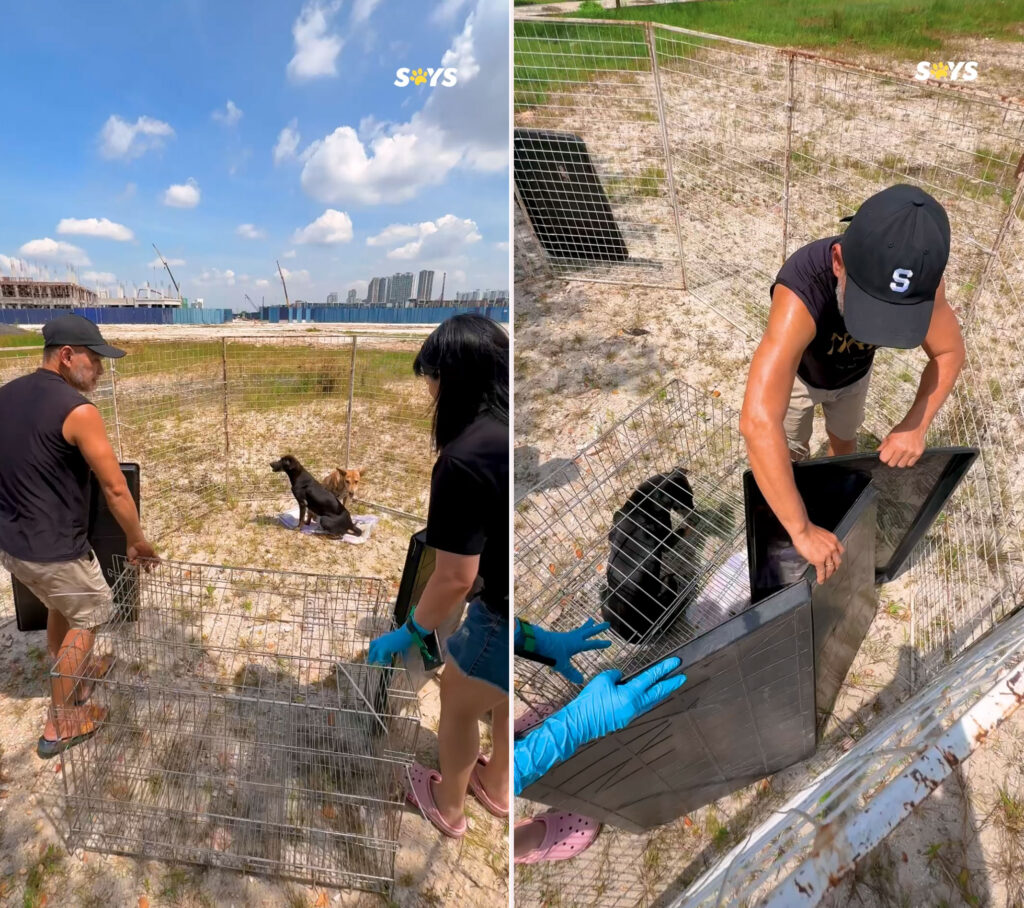
The first two strays that were captured.
Image via SAYSJust as we thought the operation was over, the group wanted to trap more strays
Though trapping the third dog took only 20 minutes, caging it took another 30 minutes. Clearly agitated, it bit the cage, jumped, and kicked at the fence in a frantic bid to escape.
Despite the tension and fear the dog might break free, Tan stayed composed, gently apologising to the frightened dog, hoping his voice would calm it.
The volunteers watched with concern and sympathy, silently wishing the dog could understand that they only meant to help.
Throughout the process, the team was thoughtful and careful, placing the caged dogs under shaded trees and ensuring they had water.
The operation began at 11am and concluded by 2pm, after the dogs were safely handed over to veterinarians at St. Angel Animal Medical Centre in Pusat Bandar Puchong.
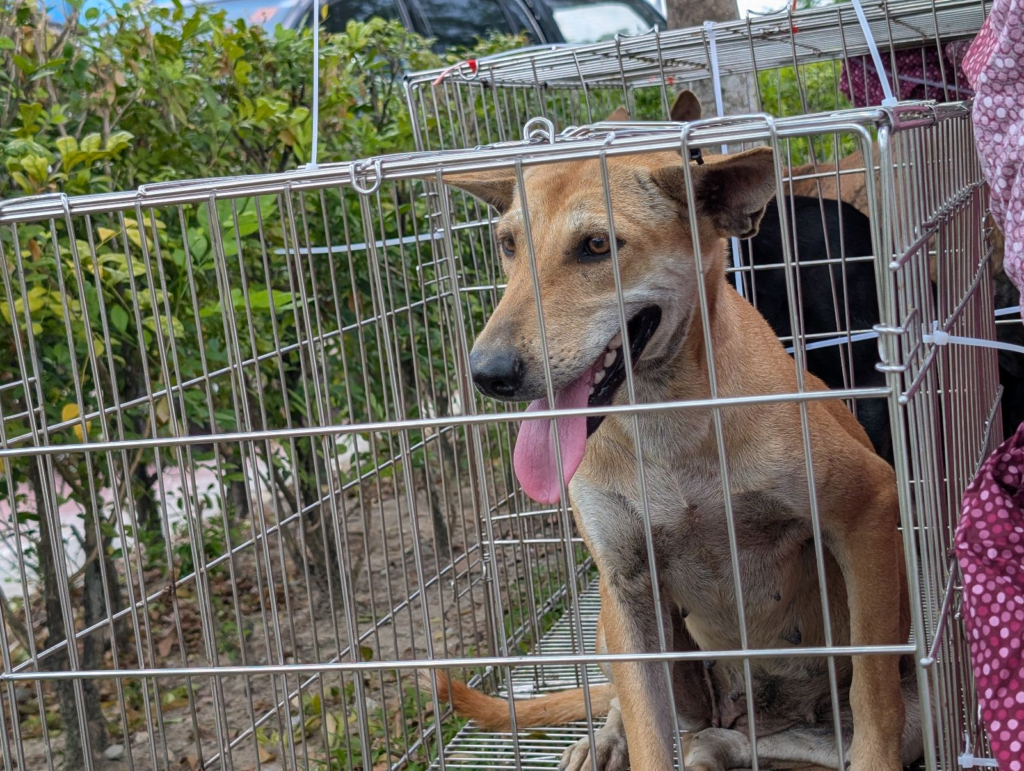
The third dog that was captured.
Image via SAYS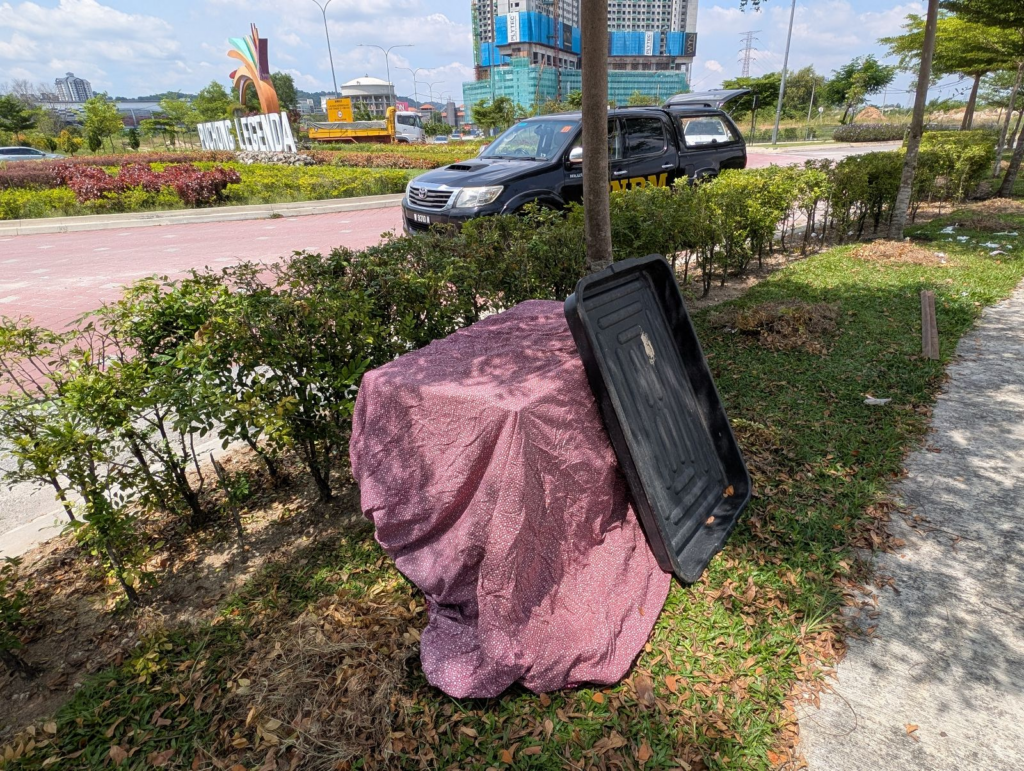
The dog's cage was placed under a shaded area to keep it cool and comfortable for the strays.
Image via SAYSAfter the mission, Tan sat down for a bowl of cendol at a nearby rojak stall and opened up about how TNRM Malaysia got its start
Tan was a piano teacher.
His personal drive stemmed from a life-altering experience at the age of 24 when he almost drowned at a waterfall, which instilled in him a strong desire to give back to society.
While his first intention was to help old folks, his path eventually led him to animal welfare, initially fostering puppies for another rescue organisation.
Tan co-founded TNRM Malaysia with Nawanat Dee-On in 2012, with Jean Liew joining the following year. The NGO was established after the last puppy Tan had fostered remained unadopted. Choosing to keep the dog made him realise the limitations of rescuing animals individually.
However, running the NGO proved time-consuming, something we experienced firsthand during just one mission.
Tan initially dedicated only his weekends to neutering missions. But one day, a stranger he had met just once offered him the chance to pursue it full-time — an opportunity that changed his life.
Described as a low-profile, successful property developer who wanted to help strays, the entrepreneur initially requested Tan to hire an individual to do it full-time.
"For four months, I couldn't find anybody for the job. Then, an idea just dawned on me: Why not I do it myself?
"At the time, I was still paying off my mortgage. So I suggested, 'Why not take the salary you'd be paying them, and just use it to pay off my house bit by bit instead?
"I was just suggesting monthly (loan repayments). I didn't even expect a lump sum," Tan said.
Impressed by Tan's willingness to leave his job to help strays full-time, the businessman returned the next day and handed him a cheque for RM150,000.
Tan said he is forever grateful to the businessman
He shared that his mortgage was fully paid off in 2018, six years after TNRM Malaysia was established. He believes it was those six years of hard work that led the property developer to recognise the significance of the NGO's cause.
Tan also highlighted the vital role of his co-founder, Liew, who has been instrumental in sustaining the organisation through effective fundraising, a valuable skill honed through her corporate experience and professional network.
The cost of neutering a dog is about RM355, which includes five to seven days of boarding.
TNRM Malaysia's record stands at 160 strays neutered in a single month, thanks to a donor who gave RM15,000 per month for three consecutive months, proving how crucial funding is to their work.
On average, the team handles about 50 to 60 animals monthly, depending on donations.
To maintain transparency, the organisation regularly posts expense receipts and donor acknowledgements on its Facebook page.
If you wish to donate or volunteer, find out more information here.
Watch our video documenting the neutering mission with TNRM Malaysia here:
Paws what you're doing and check out Furever Friends for more stories, videos, and updates!

