


 Cover image via
Follow us on Instagram, TikTok, and WhatsApp for the latest stories and breaking news.
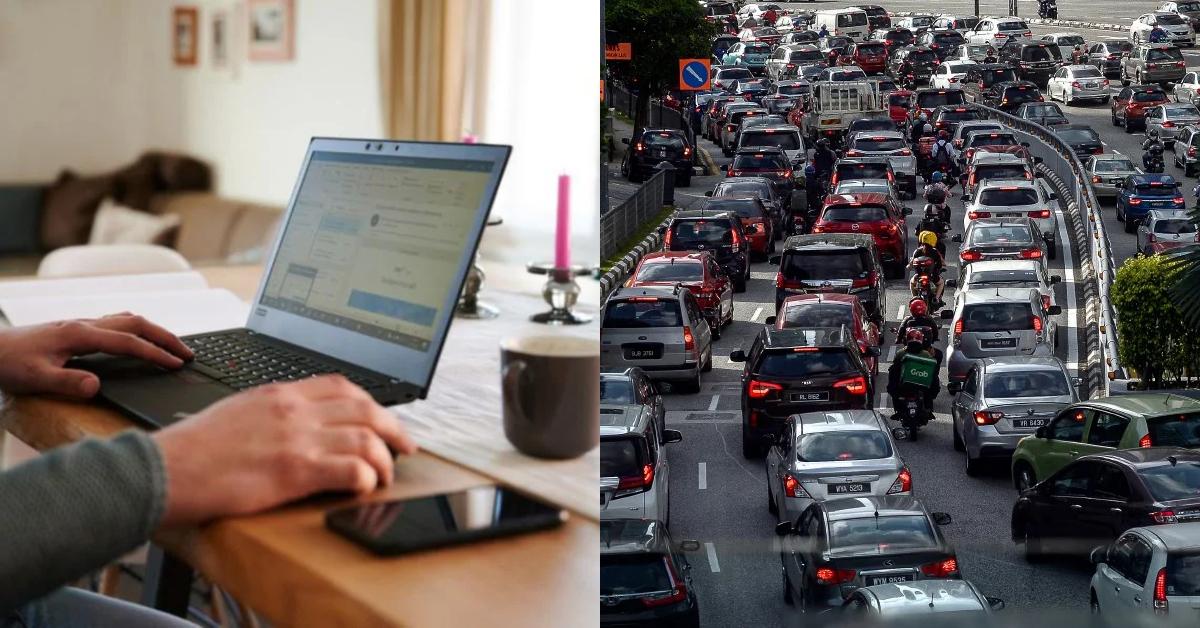
Residents across the Klang Valley are calling on companies to adopt flexible working arrangements as traffic worsens and public transport grows increasingly crowded
After a week of severe gridlock, netizens have sparked online discussions, urging employers to reinstate work-from-home (WFH) policies or adopt hybrid schedules instead of enforcing a full office return this year.
Many are pushing back on mandatory office attendance, citing chronic traffic jams and packed trains.
"Any company asking employees to return to the office in 2026 should really consider bringing back WFH. Just look at how bad the traffic has been lately — the trains are also full. Please normalise WFH or hybrid work. It doesn't cost the company and it's good for morale. Sincerely, a former HR employee," one user wrote.
View on Threads
Another questioned the necessity of five-day office attendance for desk-based roles.
"I don't understand why most companies require employees to be in the office five days a week. I get it for physical jobs, but if we work on laptops, why must we commute? Traffic keeps getting worse in Klang Valley — it doesn't make sense," a Threads user said.
View on Threads
Others echoed similar frustrations.
"Any company pushing for full return to office should reconsider WFH or at least hybrid. Just look at the traffic lately — it's peak-hour chaos every day. Public transport is just as bad — packed to the brim. People are leaving earlier and earlier because breakdowns during peak hours have become too common," another shared.
View on Threads
The discussion has resonated with many working Malaysians, who say daily commuting, marred by heavy traffic and overcrowded trains, is eating into their personal time
Still, while many agreed, some noted that WFH is a privilege that depends heavily on trust and accountability.
"There are people who treat WFH like a holiday, and that ruins it because trust is lost. But if the team delivers, work dynamics can still be strong. I don't think bosses would insist on physical presence if everything gets done," one user said.
Another added, "When employers trust their staff to deliver results, WFH becomes possible. It starts with good relationships between managers and employees. A hybrid setup — two days WFH and three days in office — is sufficient, in my opinion."
