


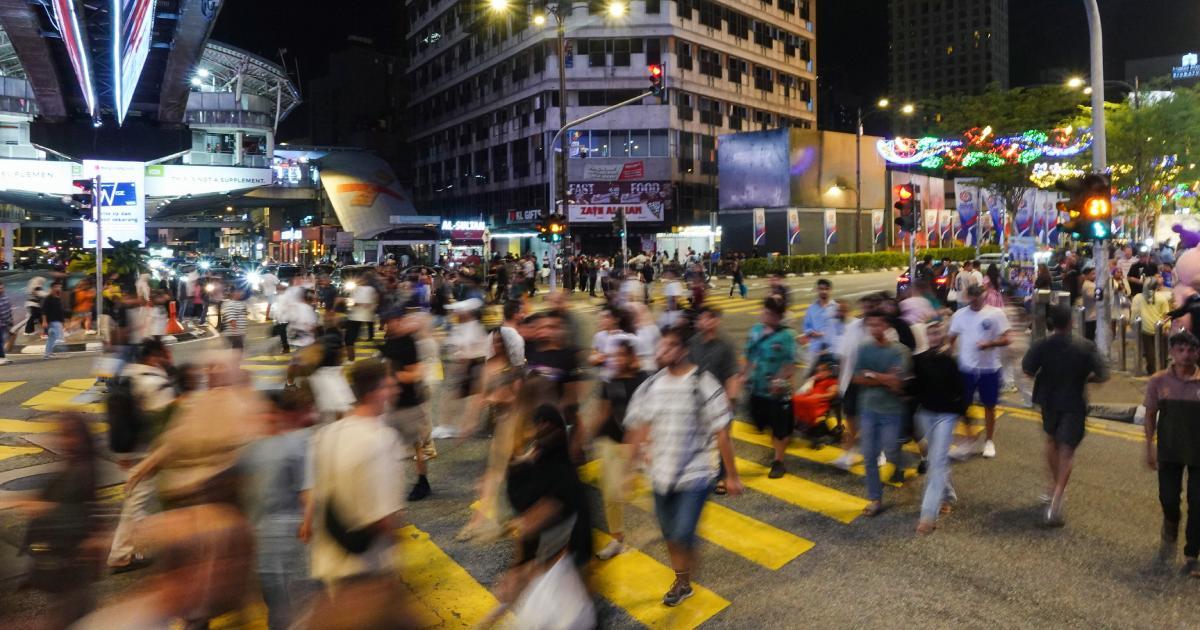
 Cover image via Agoes Rudianto/NurPhoto/AFP
Follow us on Instagram, TikTok, and WhatsApp for the latest stories and breaking news.
Malaysia saw a sharp spike in job losses in the first quarter of 2026, with 24,100 workers retrenched, a 47% jump compared to the same period last year
Data from the Social Security Organisation, analysed by Hong Leong Investment Bank (HLIB), showed layoffs surged to 10,700 in January before easing to 7,500 in February and 5,900 in March.
The bulk of the increase was driven by a sharp spike at the start of the year, when retrenchments hit their highest level in months.
While layoffs have since declined, the overall numbers remain significantly elevated compared to 2025, when roughly 16,500 workers were retrenched in the same three-month period.
Source: SOCSO / HLIB Research / SAYS.com
Manufacturing remains the most vulnerable sector
HLIB identified the manufacturing sector as the most exposed to job cuts, citing its reliance on global trade and external demand.
Layoffs were also concentrated in wholesale and retail trade, as well as logistics-related sectors, reflecting broader adjustments across the economy.
The bank described manufacturing as the current "weakest link" in the labour market, particularly amid global economic uncertainty and geopolitical tensions.
Klang Valley accounts for the majority of layoffs
Job losses continue to be heavily concentrated in Malaysia's main economic hubs.
In March alone, Selangor accounted for 29.3% of total layoffs, while Kuala Lumpur made up 25.6%, meaning the Klang Valley contributed more than half of all retrenchments nationwide this year.
Earlier in February, Kuala Lumpur's share had reached as high as 38%, underlining how corporate restructuring tends to hit major urban centres first.
HLIB noted that these areas are typically the first to be affected by corporate restructuring due to their high concentration of businesses.
Outside the Klang Valley, Penang and Johor continue to face heightened risk due to their reliance on export-oriented industries.
Penang's heavy dependence on the electrical and electronics (E&E) sector makes it particularly sensitive to global tech slowdowns, while Johor remains exposed to trade fluctuations and spillover effects from Singapore.
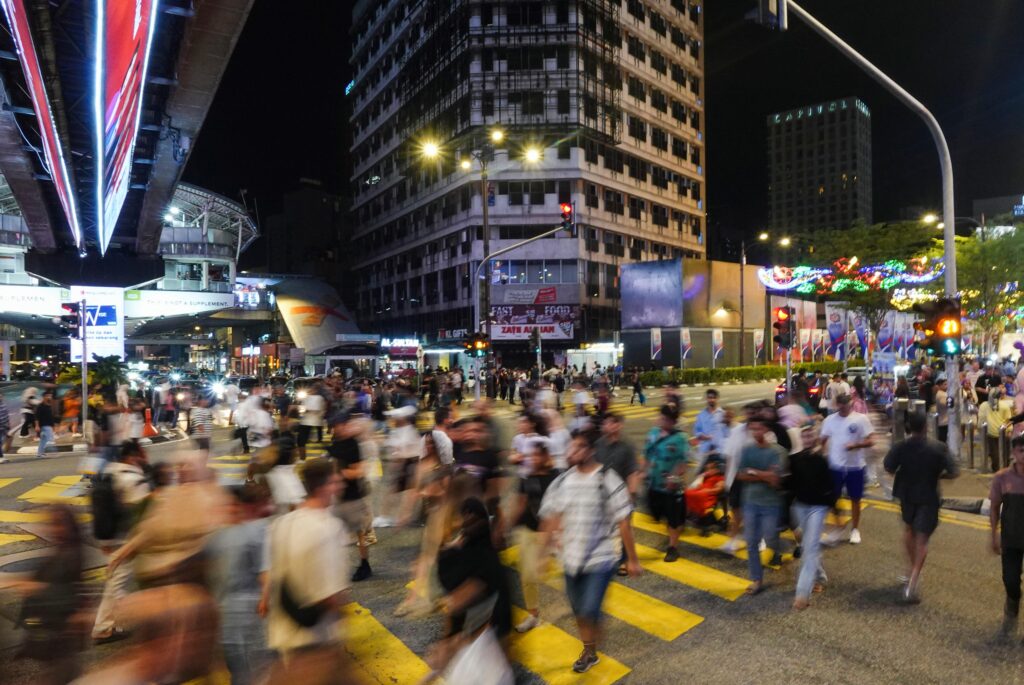
People walk at Bukit Bintang shopping area in Kuala Lumpur, Malaysia.
Image via Agoes Rudianto/NurPhoto/AFPDespite the spike in retrenchments, Malaysia's broader labour market has remained relatively stable
The OpenDOSM Labour Market Dashboard shows that the unemployment rate has held at 2.9% for four consecutive months, suggesting that some displaced workers are being absorbed into other sectors.
HLIB pointed to a rise in job vacancies, reaching about 107,000 in March, as a sign that hiring activity is still ongoing, particularly in services and construction.
This indicates that while some companies are cutting jobs, others are continuing to expand.
However, the contrast with last year is significant
In the first quarter of 2025, Malaysia recorded far fewer layoffs, supported by a stronger manufacturing cycle and robust demand in the semiconductor industry.
HLIB said the current wave of retrenchments reflects a period of adjustment as global conditions become more uncertain.
While layoffs have eased since January, the bank warned that downside risks remain amid a highly fluid global environment.
Export-driven sectors, especially manufacturing, are expected to stay vulnerable to external shocks in the months ahead.

A worker displays the first Malaysian locally-designed microprocessor.
Image via Ahmad Yusni/AFP