


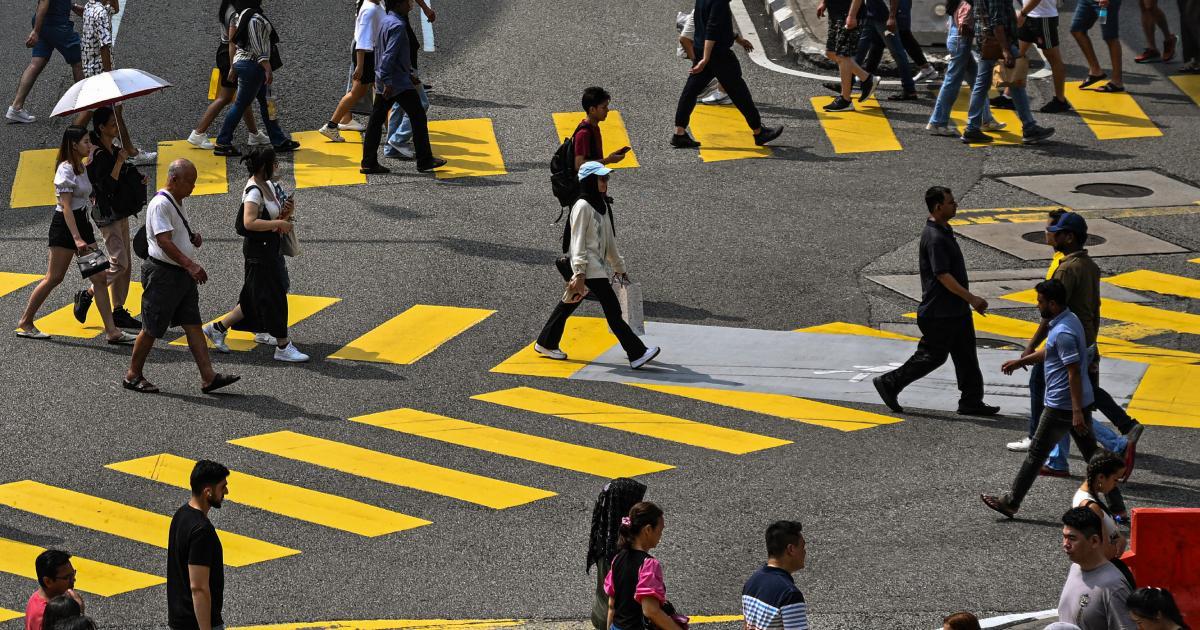
 Cover image via Mohd Rasfan/AFP
Follow us on Instagram, TikTok, and WhatsApp for the latest stories and breaking news.
UPDATE:
Malaysia's Job Losses Surge 47% In First Quarter Of 2026, With 24,100 Workers Retrenched
Selangor and Kuala Lumpur recorded the highest number of job losses in Malaysia in March, even as the country's overall unemployment rate remained steady
According to a research note by Hong Leong Investment Bank (HLIB), Selangor accounted for 29.3% of total loss of employment (LOE) cases, followed by Kuala Lumpur at 25.6%.
The figures, based on data from the Social Security Organisation, highlight how the country's main economic hubs continue to bear the brunt of retrenchments, reported the New Straits Times.
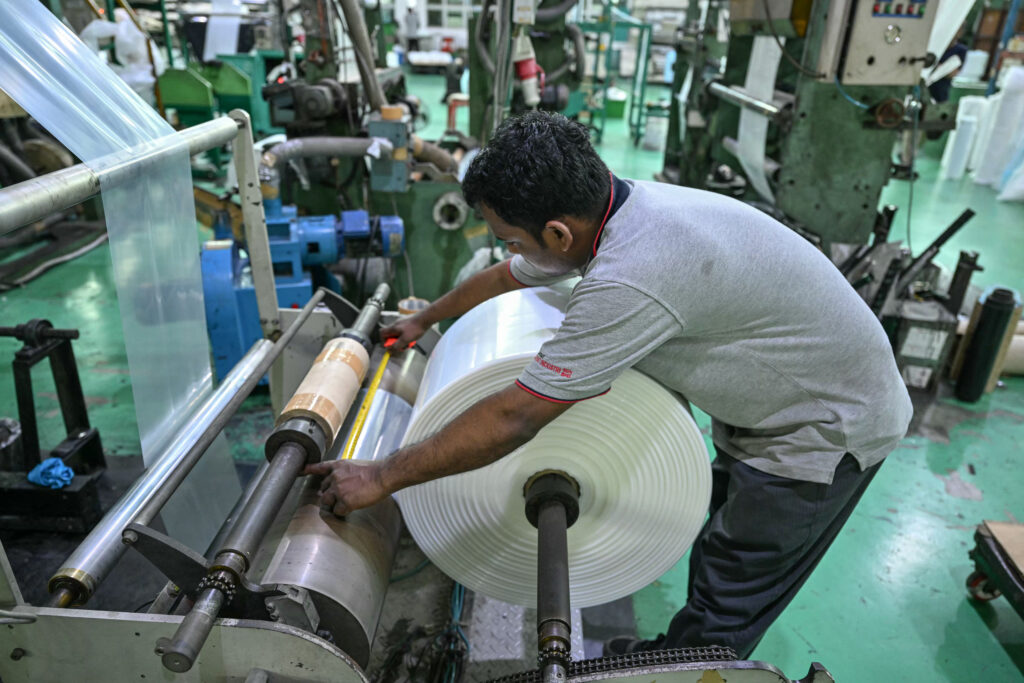
A worker installs low-density polyethylene plastic roll into a machine at a plastic factory in Klang.
Image via Mohd Rasfan/AFPWhile job losses have fallen, key sectors in the country are still under pressure
Malaysia recorded 5,900 job losses last month, a 21.3% drop from 7,500 in February.
Despite the decline, layoffs remained concentrated in several key sectors, particularly manufacturing, wholesale and retail trade, as well as information and communication.
HLIB described manufacturing as the "weakest link" in terms of job security, citing its exposure to global trade tensions and external demand shocks.
Labour market shows signs of resilience
At the same time, labour demand improved.
Total job vacancies rose to 107,000 in March, up from 96,500 previously, suggesting underlying resilience in the domestic economy.
Meanwhile, Malaysia's unemployment rate held steady at 2.9% in February, marking the fourth consecutive month at that level. Employment also edged up by 0.1% month-on-month, supported by hiring across most sectors except mining.
On a yearly basis, the number of unemployed persons declined by 4.9%, pointing to a gradual improvement in labour market conditions. The labour force continued to expand, while the participation rate remained unchanged at 70.9%.
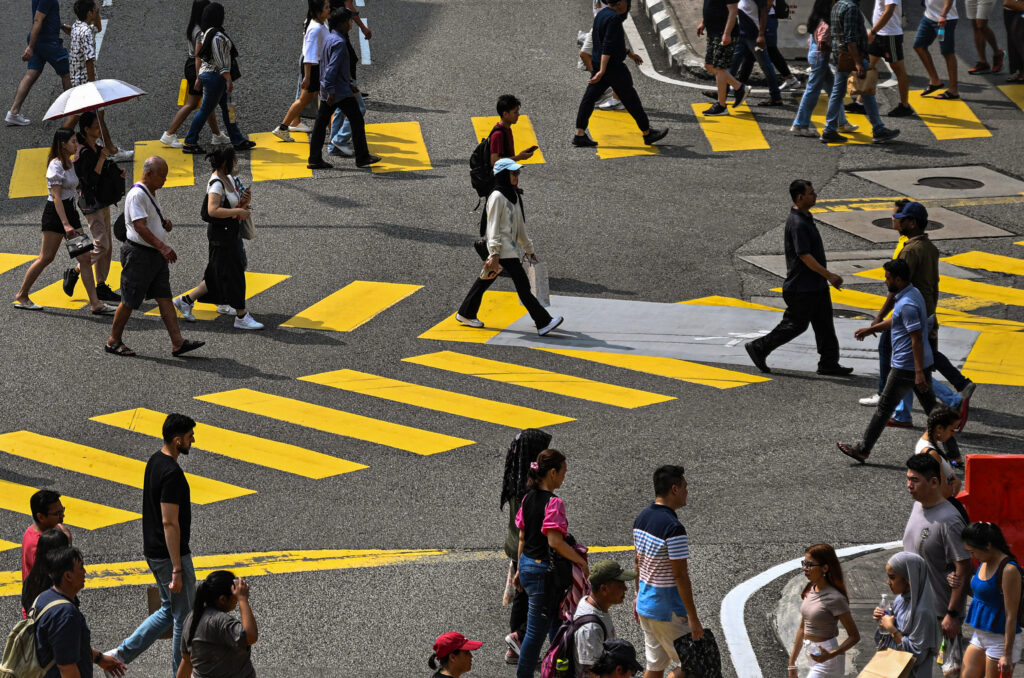
Pedestrians cross a road in Kuala Lumpur.
Image via Mohd Rasfan/AFPBut why are Selangor and KL the hardest hit?
HLIB noted that states with high concentrations of industrial and export-oriented activities tend to see the highest number of layoffs.
Selangor and Kuala Lumpur, Malaysia's main industrial and commercial centres, naturally record the largest share of retrenchments due to their sheer employment size.
Other vulnerable states are Penang and Johor
Beyond the Klang Valley, Penang and Johor are particularly sensitive to external economic shifts.
Penang, with its heavy reliance on the electrical and electronics (E&E) sector, is vulnerable to global tech slowdowns. Meanwhile, Johor faces risks tied to trade fluctuations and spillover effects from neighbouring Singapore.
Both states typically experience sharper labour market adjustments during periods of weakening global demand.
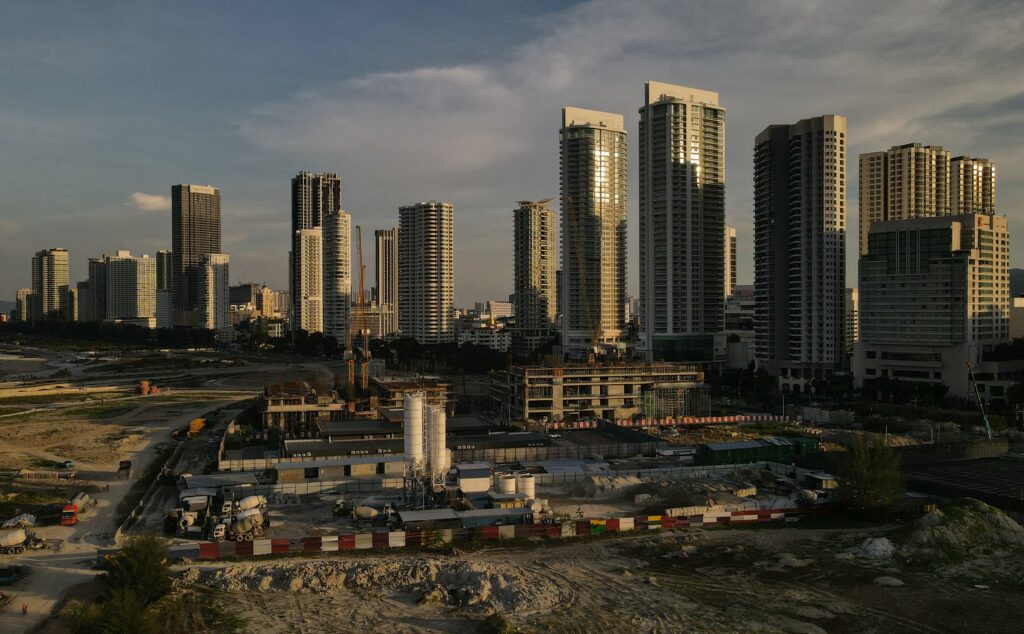
This photo shows a general view of construction sites and commercial buildings in George Town on Penang Island, Malaysia, on 8 April.
Image via Mohd Rasfan/AFPOutlook: Stable for now, but risks remain
Looking ahead, HLIB expects Malaysia's labour market to remain stable in the near term, supported by domestic demand and continued electrical and electronics exports.
It added that an immediate deterioration is unlikely despite ongoing geopolitical tensions. However, the bank cautioned that downside risks persist amid a highly fluid global environment.
While sectors like services and construction continue to support hiring, export-driven industries, particularly manufacturing, remain exposed to external shocks.
