


 Cover image via
Follow us on Instagram, TikTok, and WhatsApp for the latest stories and breaking news.
Malaysia is known as an oil-producing nation, but why do we still import crude oil and refined petroleum in large quantities, and why do global price hikes still affect us?
To understand this seemingly contradictory situation, we first need to look at data from the Department of Statistics Malaysia (DOSM), specifically the 'Mining of Petroleum and Natural Gas Statistics, Quarter Four 2025' report, which details the country's full-year import and export figures for oil and gas (O&G) products.
According to the report, Malaysia exported RM170 billion worth of O&G products across three categories: crude petroleum and condensate, refined petroleum products, and liquefied natural gas (LNG).
Meanwhile, the country imported RM152 billion worth of O&G products, making it a net exporter by RM18 billion.
Here are the top five countries Malaysia exported to and imported from last year, by category:
Export: Crude petroleum
and condensate
| # | Country | RM in millions |
|---|---|---|
| 1 | Thailand | 6,197 |
| 2 | Australia | 6,107 |
| 3 | Japan | 3,756 |
| 4 | Singapore | 1,309 |
| 5 | Brunei | 1,249 |
| *TOTAL | 23,755 |
Export: Refined petroleum
products
| # | Country | RM in millions |
|---|---|---|
| 1 | Singapore | 22,405 |
| 2 | Indonesia | 22,404 |
| 3 | Australia | 15,140 |
| 4 | Bangladesh | 4,736 |
| 5 | China | 4,501 |
| *TOTAL | 95,104 |
Export: Liquefied Natural
Gas (LNG)
| # | Country | RM in millions |
|---|---|---|
| 1 | Japan | 19,811 |
| 2 | South Korea | 13,953 |
| 3 | China | 12,833 |
| 4 | Thailand | 2,886 |
| 5 | Taiwan | 609 |
| *TOTAL | 51,634 |
Import: Crude petroleum
and condensate
| # | Country | RM in millions |
|---|---|---|
| 1 | Saudi Arabia | 18,027 |
| 2 | UAE | 11,147 |
| 3 | Oman | 4,866 |
| 4 | Sudan | 4,293 |
| 5 | United States | 2,606 |
| *TOTAL | 54,113 |
Import: Refined petroleum
products
| # | Country | RM in millions |
|---|---|---|
| 1 | Singapore | 36,286 |
| 2 | South Korea | 10,558 |
| 3 | China | 9,405 |
| 4 | India | 5,415 |
| 5 | Taiwan | 4,353 |
| *TOTAL | 91,954 |
Import: Liquefied Natural
Gas (LNG)
| # | Country | RM in millions |
|---|---|---|
| 1 | Australia | 6,013 |
| 2 | Trinidad & Tobago | 260 |
| *TOTAL | 6,274 |
To put the data in perspective, we spoke to two experts to give a quick 101 understanding on Malaysia's position in the global oil trade
1. Why does Malaysia import oil and gas despite being an oil-producing country?
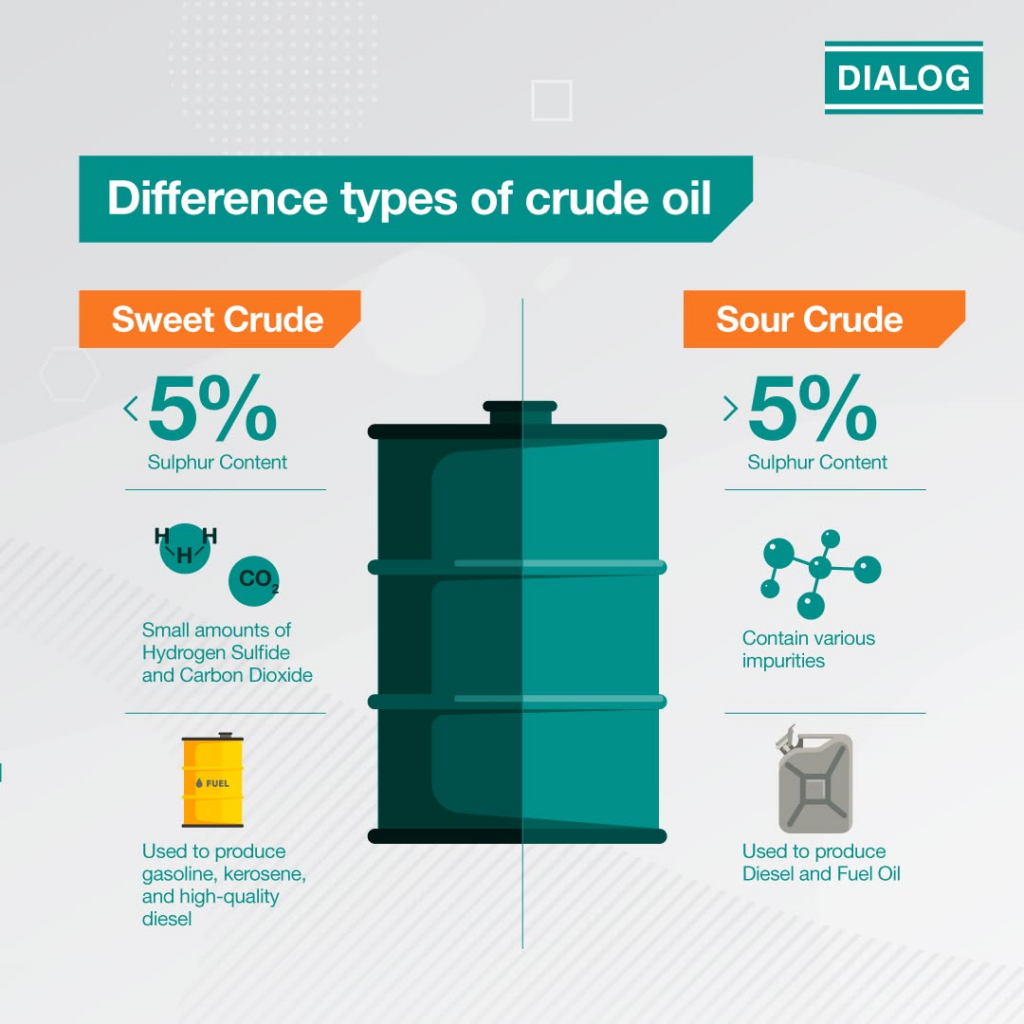
According to Sunway University economics professor Dr Yeah Kim Leng, Malaysia produces high-quality crude oil, also known as light sweet crude, specifically Tapis Blend, which has lower sulphur content and commands a higher price in global markets.
Instead of refining all of it locally, Malaysia often exports this premium crude to countries willing to pay more for it, while importing cheaper heavy crude oil, also known as sour crude oil for its higher sulphur content, which is better suited for domestic refineries.
"In essence, Malaysia sells higher-priced crude and imports cheaper crude that matches the configuration of its refineries," he explained.
Meanwhile, Fazrul Azreen, CEO of Oil & Gas Meta, a company providing talent and training for the industry, said countries that purchase Malaysia's crude oil often have refineries with less capital-intensive technology, making the lower-sulphur sweet crude easier to process and reducing the cost of producing refined petroleum products.
He explained that both sweet and sour crude oil produce similar end products, except that sweet crude yields high-value fuels such as gasoline and jet fuel.
Over the years, declining domestic reserves and rising demand have meant Malaysia also needs to import certain petroleum products and crude oil to meet both domestic consumption and export commitments, Yeah added.
Ultimately, it comes down to business, trading to maximise profits while ensuring refineries receive the types of crude oil they are designed to process. There is no pride in keeping "premium" products for domestic use if it means earning less and affecting the country's GDP.
2. Why can't Malaysia refine all of its own crude oil?
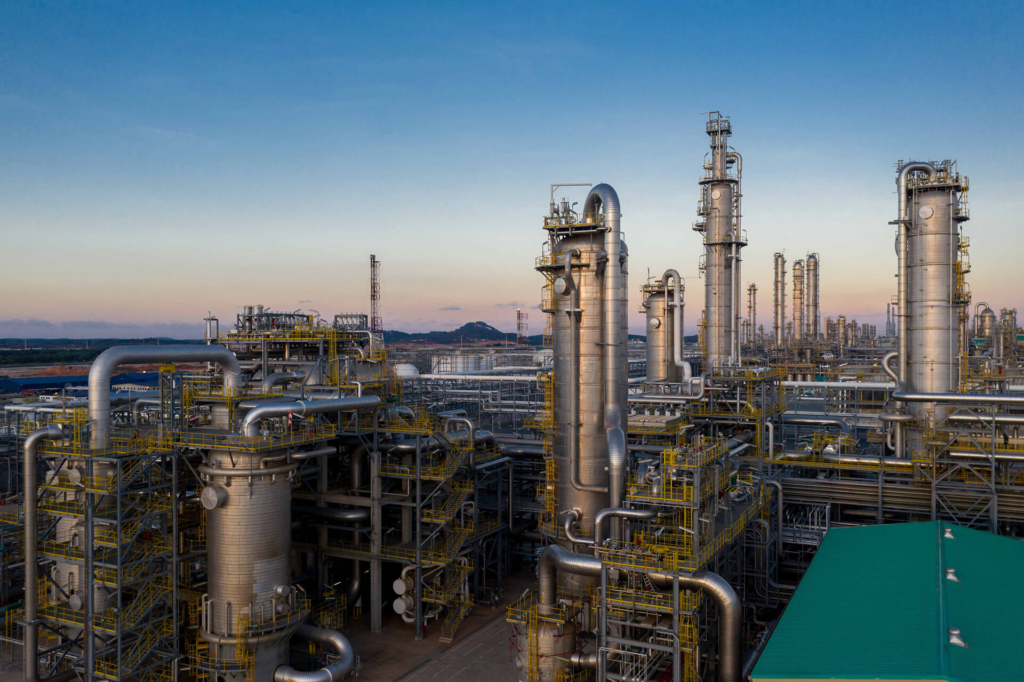
PETRONAS Pengerang Integrated Complex in Johor.
Image via PETRONASAccording to the Malaysian Investment Development Authority (MIDA), the country has six oil refineries located in:
- Port Dickson, Negeri Sembilan
- Kertih and Kemaman, Terengganu
- Tangga Batu and Sungai Udang, Melaka
- Pengerang, Johor
The country also has two naphtha crackers, two ethane gas crackers, and six LNG facilities, including two floating ones.
Meanwhile, Malaysia has about 20 active drilling rigs, making up roughly half the regional total, placing it among Southeast Asia's leaders in exploration and production (E&P) activity.
Yeah, who is also the Malaysian Economic Association president, said Malaysia has a refining capacity of approximately 1.03 million barrels per day, while producing (drilling from the earth) slightly over half a million barrels per day.
However, most Malaysian refineries are configured to process heavier sour crude oil, which is typically imported from countries such as Saudi Arabia, the UAE, and Oman.
The only local refinery dedicated to processing sweet crude oil is PETRONAS Penapisan in Terengganu, the company's first refinery in Malaysia, which processes about 49,000 barrels of sweet crude oil.
Several refineries also process both sweet and sour crude oil, but as mentioned earlier, local sweet crude oil is often exported for higher profits.
Yeah described this as a deliberate strategy.
"This 'sell high, buy low' approach allows Malaysia to maximise national revenue while keeping domestic refineries running efficiently," he said.
When asked why Malaysia does not simply build more refineries and capture the full profit from producing and refining crude oil, Fazrul explained that the economics are not so straightforward.
He explained that while offshore oil developments can sometimes generate a return on investment (ROI) in as little as one year, refineries typically take five to 10 years to recover their investment.
This mismatch in returns is another reason Malaysia often chooses to export its premium crude oil instead.
3. Why do global oil prices still affect Malaysian fuel prices despite being a net exporter by RM18 billion?
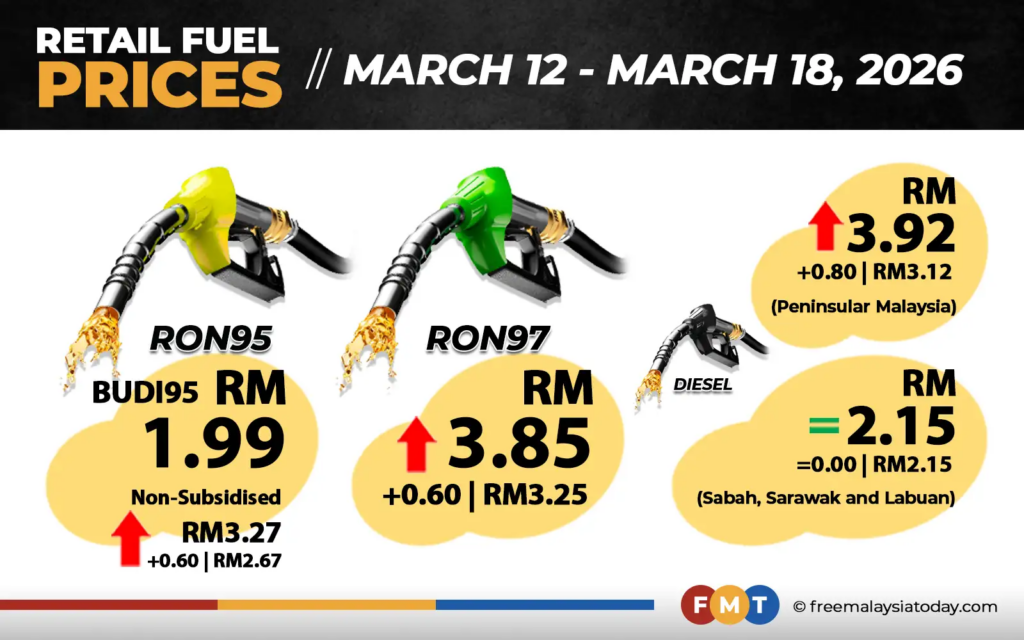
From today, 12 March to 18 March, RON97 and unsubsidised RON95 petrol prices will increase by 60 sen per litre, while diesel prices in Peninsular Malaysia will rise by 80 sen per litre.
Although subsidised RON95 remains capped at RM1.99 per litre, the government's bill for the BUDI95 subsidy will climb. If the ongoing Middle East conflict drags on, the cost could run into billions of ringgit.
Even though Malaysia exports more oil and gas products than it imports overall, global oil prices can still influence domestic fuel prices because the country is a net importer of refined petroleum products, which are the fuels used in vehicles.
"Malaysia imports significant volumes of refined products and has been a net oil importer since 2022 due to declining domestic production.
"Every USD10 per barrel increase in global prices raises the annual fuel subsidy bill by more than RM10 billion, creating substantial fiscal pressure.
"While higher oil prices boost petroleum-related government revenue, the net effect remains negative, forcing the government to either absorb the cost or adjust retail prices upward.
"Thus, Malaysia's integration into global markets means it cannot fully shield domestic consumers from international price volatility," Yeah explained.
4. What do the different oil and gas categories actually mean?
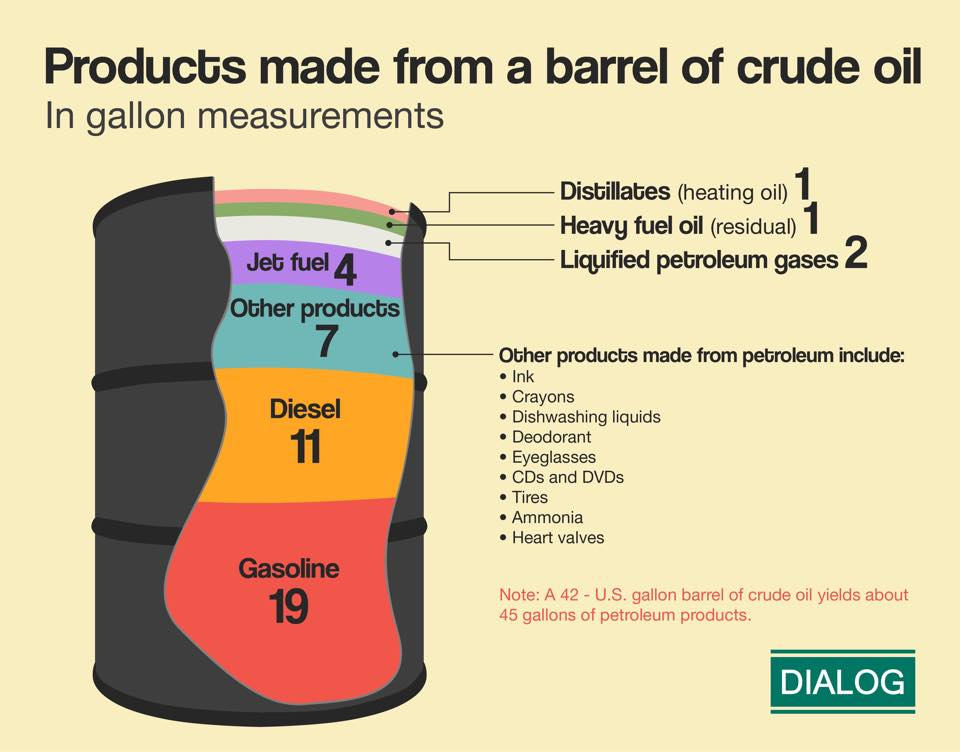
The data from DOSM separates Malaysia's oil and gas trade into three main categories:
- Crude petroleum and condensate
- Refined petroleum products
- Liquefied natural gas (LNG)
Yeah explained that crude petroleum and condensates are raw hydrocarbons extracted from underground before any processing takes place.
These raw materials are then sent to refineries, where they are turned into finished fuels.
Those finished fuels fall under refined petroleum products, which include everyday fuels such as:
- RON95 petrol
- RON97 petrol
- Diesel
"These are finished goods created by processing crude oil and condensates through refinery distillation," he said.
Meanwhile, LNG comes from natural gas, which is cooled to extremely low temperatures until it becomes liquid.
This makes it easier to transport across long distances before being converted back into gas for power generation and industrial use.
5. Why is Singapore Malaysia's biggest exporter and importer of refined petroleum products?
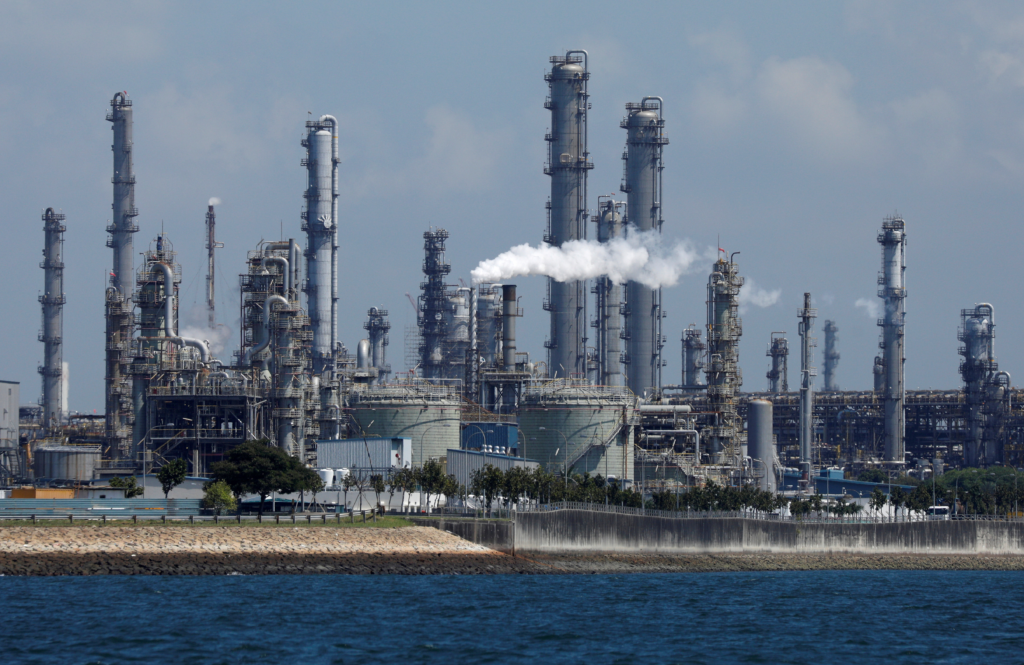
Shell's Pulau Bukom petrochemical complex, Singapore, in July 2019.
Image via Edgar Su/ReutersYeah explained that this is because Singapore essentially operates as a regional fuel bank.
To recap, in 2025, Malaysia exported RM22.4 billion worth of refined petroleum products to Singapore, while importing an even larger RM36.3 billion worth from the country.
Malaysia also exported RM1.3 billion worth of crude petroleum and condensate to Singapore.
According to Yeah, this two-way trade happens because Singapore functions as Southeast Asia's main oil trading and refining hub.
With a refining capacity of around 1.4 million barrels per day, exceeding that of Malaysia, Singapore acts as a central marketplace for oil and fuel across the region.
According to the US Energy Information Administration, over 66% of Singapore's crude oil imports come from the UAE, Qatar, Saudi Arabia, and Kuwait.
Malaysia's exports to Singapore are often sent there for blending, storage, or re-export through the city-state's global trading networks.
Fazrul noted that Singapore's strategic location — something many Malaysians learn about in history classes — continues to play a major role today.
The island nation remains a major shipping hub along global trade routes.
"Singapore is considered one of the biggest traders in the oil and gas industry. They just trade. They buy, they sell… buy and sell, which explains why the nation buys from Malaysia and concurrently sells to Malaysia," he said.
At the same time, Malaysia imports fuels from Singapore when it needs specialised fuel grades or additional supply flexibility that domestic refineries cannot immediately provide, Yeah explained.
This means the trade relationship is complementary rather than competitive, helping keep the regional energy supply chain efficient.
6. Why does Malaysia export crude oil mainly to countries like Thailand, Australia, and Japan?
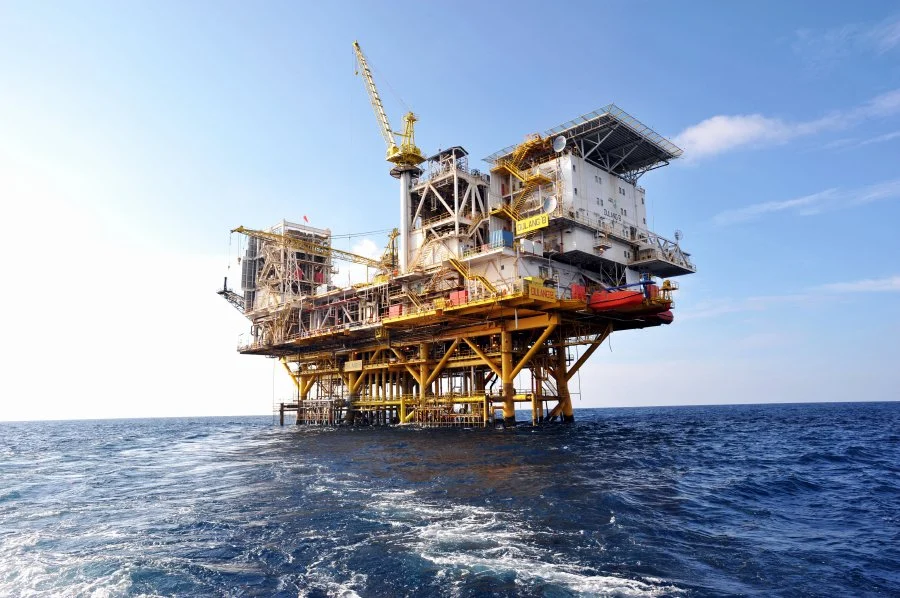
Image for illustration purposes only.
Image via AFP via New Straits TimesThe countries that buy Malaysia's crude oil are not random.
Instead, Yeah says export destinations are usually determined by three main factors:
- Crude oil quality
- Geographic proximity
- Commercial and trading arrangements
Because Malaysia produces high-grade crude oil, countries with refineries that can process light crude efficiently — such as Japan, South Korea, and Australia — are natural buyers.
Their refineries can convert Malaysian crude into higher yields of valuable products such as gasoline and jet fuel.
Neighbouring countries like Thailand and Singapore are also frequent buyers due to shorter shipping distances and well-established logistics networks, said Yeah.
