


 Cover image via Suhaimi Abdullah/NurPhoto/AFP & Roslan Rahman/AFP
Follow us on Instagram, TikTok, and WhatsApp for the latest stories and breaking news.
For years, the strength of the Singapore dollar has been sold as the ultimate Malaysian life hack: cross the Causeway, earn in Singapore dollars — where one SGD puts more than RM3 in your pocket — and fast-track your way to financial stability
But a wave of personal stories now going viral online is telling a very different story: one of burnout, stagnant savings, and a growing number of Malaysians questioning whether the trade-off is still worth it.
Across three separate accounts, Malaysian workers shared what life really looks like behind the numbers, and why some are choosing to walk away.
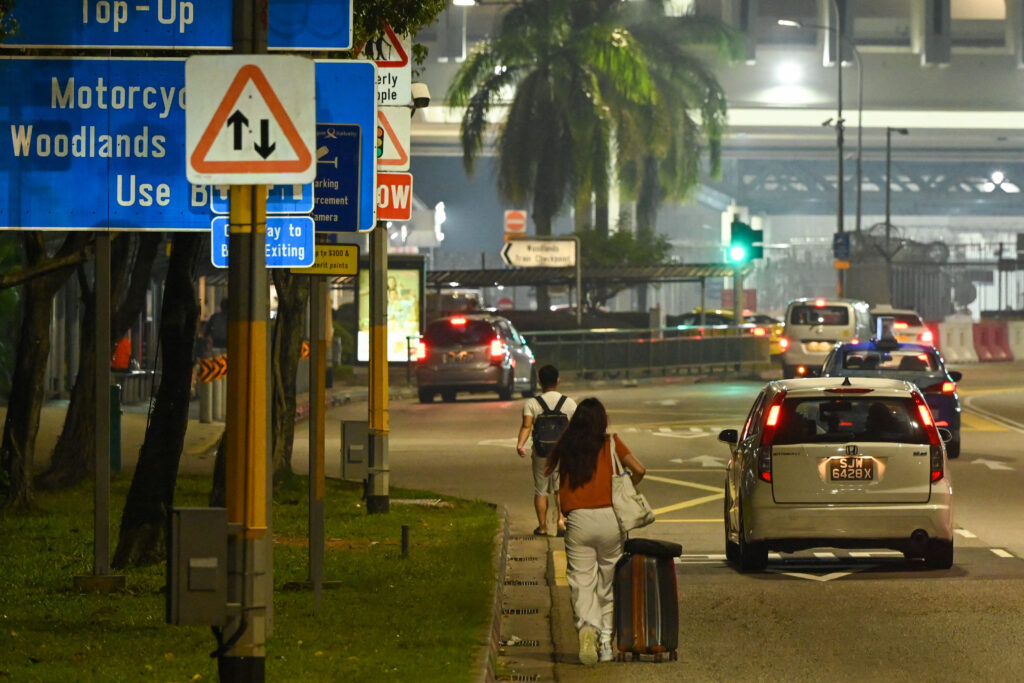
File photo of a woman pulling luggage as she heads to the Woodlands Checkpoint in Singapore.
Image via Roslan Rahman/AFPOne Malaysian woman said she made the difficult decision to leave her job in Singapore without a backup plan, hoping to recover mentally back home in Kuala Lumpur.
Instead, she was met with criticism from her own father, who told her she was "moving from a First World country back to a Third World country".
The comment left her stunned.
She pointed out the contradiction many Malaysians face: being labelled as low-level labour when working abroad, yet judged as making a "step backwards" when they choose to return.
The assumption, she said, is simple: if you have access to Singapore's currency, why would you ever leave?
High salary, low savings
Another Malaysian worker shared that after three years in Singapore earning SGD3,500 (approximately RM11,000) a month, he had less than RM10,000 in total savings.
Despite working overtime, living frugally, and avoiding luxuries, his income was quickly consumed by rent, transport, daily expenses, and money sent back to family in Malaysia.
His biggest concern wasn't just financial; it was psychological.
At 30 years old, he said he felt stuck, unable to see a clear future, and struggled with anxiety and insomnia.
His experience highlights a growing issue: earning in a stronger currency does not automatically translate into financial progress.
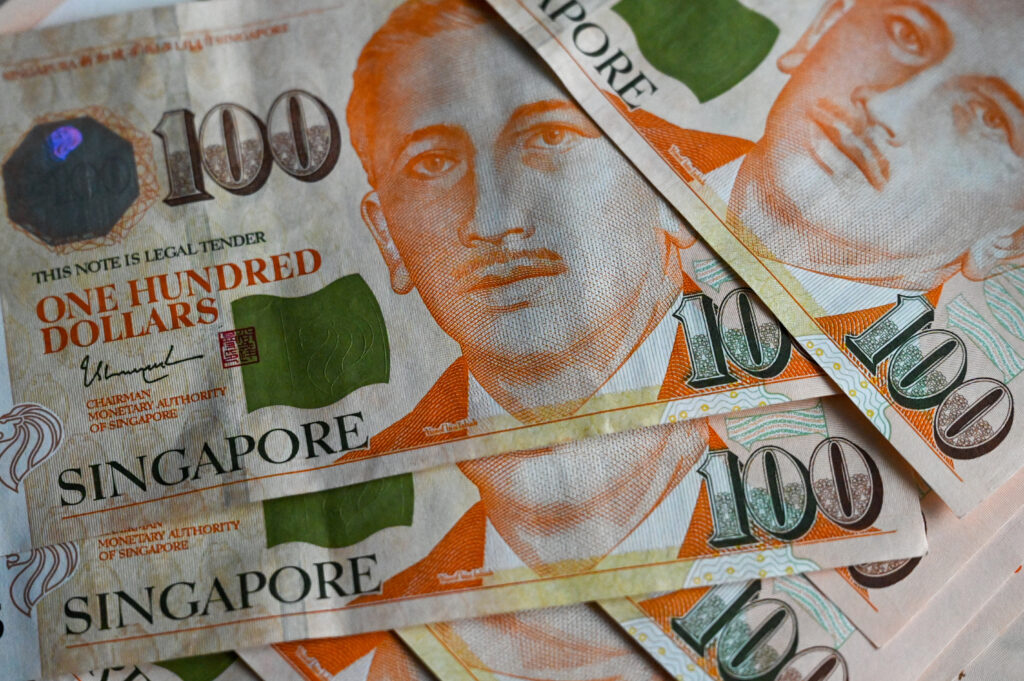
This photo illustration shows Singapore banknotes in Singapore.
Image via Roslan Rahman/AFPThe breaking point
A third story, widely shared online, came from a Malaysian who recently quit after five years of commuting between Johor Bahru and Singapore.
His daily routine was relentless: waking before sunrise, battling traffic and immigration queues, working long hours, and returning home close to midnight.
He estimated he was spending up to 18 hours a day just working and commuting.
Sleep averaged less than six hours.
The exhaustion eventually caught up with him.
"I'm not afraid of hard work," he said, "but I'm more afraid of not living long enough to see my wife and kids."
That realisation pushed him to resign and return to Malaysia, where he now plans to start his own business.
The reality behind the Singapore dollar dream
Taken together, these stories reflect a broader shift in how Malaysians view working in Singapore.
While the exchange rate remains attractive, the hidden costs are becoming harder to ignore:
- Rising rent: Rooms now commonly cost SGD800 to SGD1,000, taking up a large chunk of income
- Daily expenses: Transport and food costs continue to climb
- Family obligations: Many workers send a portion of their salary back home
- Time poverty: Long commutes leave little room for rest or personal life
For many, the equation no longer adds up.
More Malaysians are rethinking what "success" means
The stories also point to a deeper shift, away from purely financial goals and towards quality of life.
Some are choosing to return home despite lower salaries, prioritising:
- Mental and physical health
- Time with family
- A slower, more sustainable pace of life
Others are using their time in Singapore as a stepping stone, building savings or experience before returning to Malaysia to start businesses or reset their careers.
"There isn't one right answer anymore"
What these accounts ultimately show is that the Singapore route is no longer a one-size-fits-all solution.
For some Malaysians, it remains a valuable opportunity to earn and grow.
For others, the cost, financially, physically, and emotionally, is simply too high.
The "three times exchange rate" may still look good on paper. But for a growing number of Malaysians, the real calculation is no longer just about money; it's about whether the life they're living is actually sustainable.

A woman is using an umbrella to protect herself from the sun in Singapore.
Image via Suhaimi Abdullah/NurPhoto/AFP