


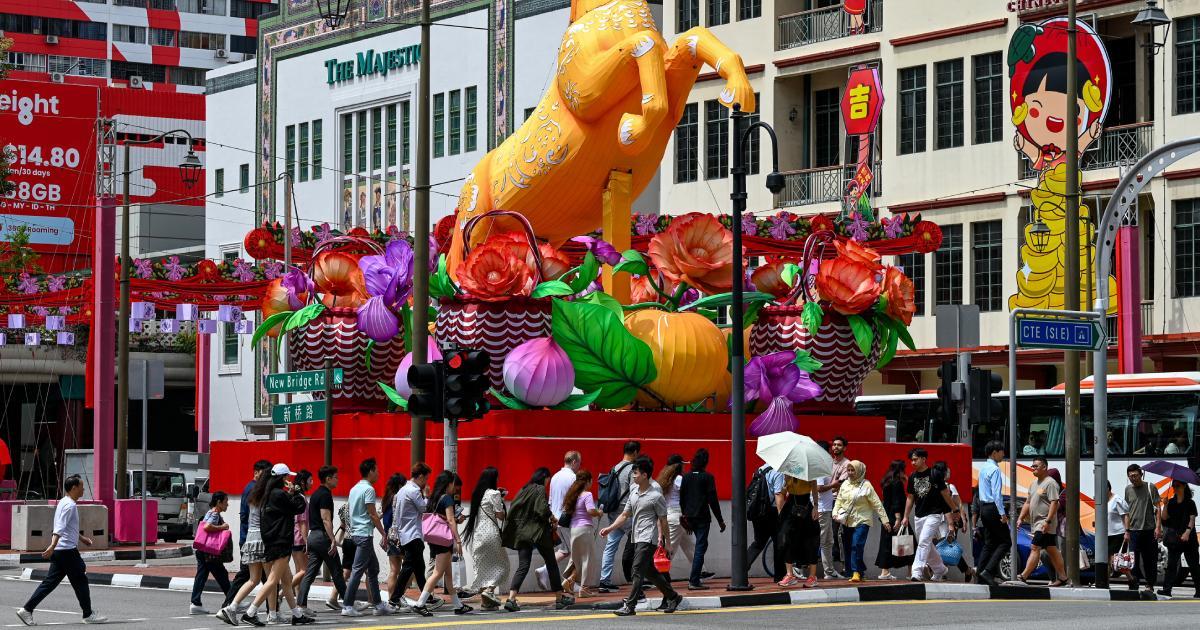
 Cover image via Roslan Rahman/AFP
Follow us on Instagram, TikTok, and WhatsApp for the latest stories and breaking news.
Singapore is preparing to take in significantly more new citizens and permanent residents (PRs) over the next five years
It's a move the Singapore government says is necessary as fewer Singaporeans are getting married and having children.
Speaking in Parliament on 26 February, Deputy Prime Minister Gan Kim Yong laid out what he described as an "existential challenge" facing the country: a rapidly ageing population and a birth rate that continues to fall.

Fewer marriages, fewer babies, and a shrinking future
Gan made it clear that the issue goes beyond just low birth rates.
"Marriage rates have come down; those who are married have fewer children, or no children. Over time, it will be practically impossible to reverse the trend because we will have fewer and fewer women who can bear children."
Singapore recorded just 27,500 births in 2025, the lowest in its history, with its fertility rate dropping to 0.87.
But more importantly, Gan warned that the effects are long-term and compounding.
"You can't overnight… give birth to young people. So you have fewer births, [which] means you have fewer young people for the next two or three decades."
Gan said the decline in births, combined with a rapidly ageing population, could fundamentally reshape Singapore in the decades ahead.
"If no new measures are taken, our citizen population will start to shrink by the early part of the 2040s."
*2025 figure is preliminary.
Source: Department of Statistics Singapore / DPM Gan Kim Yong (Speech on 26 Feb 2026)
Despite the worsening trend, Gan stressed that the government is not backing away from efforts to encourage marriage and parenthood
"[Prime Minister Lawrence Wong] said we have not given up… Let me add one more: we cannot give up."
He acknowledged that the decline is driven by deeper shifts in priorities and lifestyle.
"Attitudes towards marriage and parenthood are shaped by many factors… workplace norms, employer practices, availability of support, and social attitudes."
Singapore has already rolled out measures like expanded parental leave and support for families, but Gan said more needs to be done across society, not just by the government.
At the same time, Singapore is increasing immigration
Even as it tries to reverse the trend, the government is moving ahead with a more immediate solution: bringing in more people.
Gan said Singapore expects to grant between 25,000 and 30,000 new citizenships each year over the next five years, alongside about 40,000 new PRs annually.
That puts the total potential intake at up to 70,000 people a year.
"To stabilise our citizen population and maintain its vitality, we must adjust our immigration intake."
He explained that PRs form the "pipeline" to citizenship, which is why both figures are being increased together.
*Citizen target is a range of 25,000 – 30,000.
Source: DPM Gan Kim Yong (Speech on 26 Feb 2026)
Gan, however, pushed back against the idea that immigration rules would be loosened, stressing that Singapore would remain selective about who it accepts
"Let me be clear: more slots do not mean easier approvals," he said.
He added that applicants will still be assessed individually, with priority given to those who can contribute economically and integrate into Singaporean society.
"We prioritise those who can contribute economically, who are of working age, and most importantly, those who are prepared to sink roots here."
He also confirmed that authorities may review past applicants, including long-term residents who were previously rejected, though decisions would still depend on multiple factors.
"Assimilability remains the key consideration."
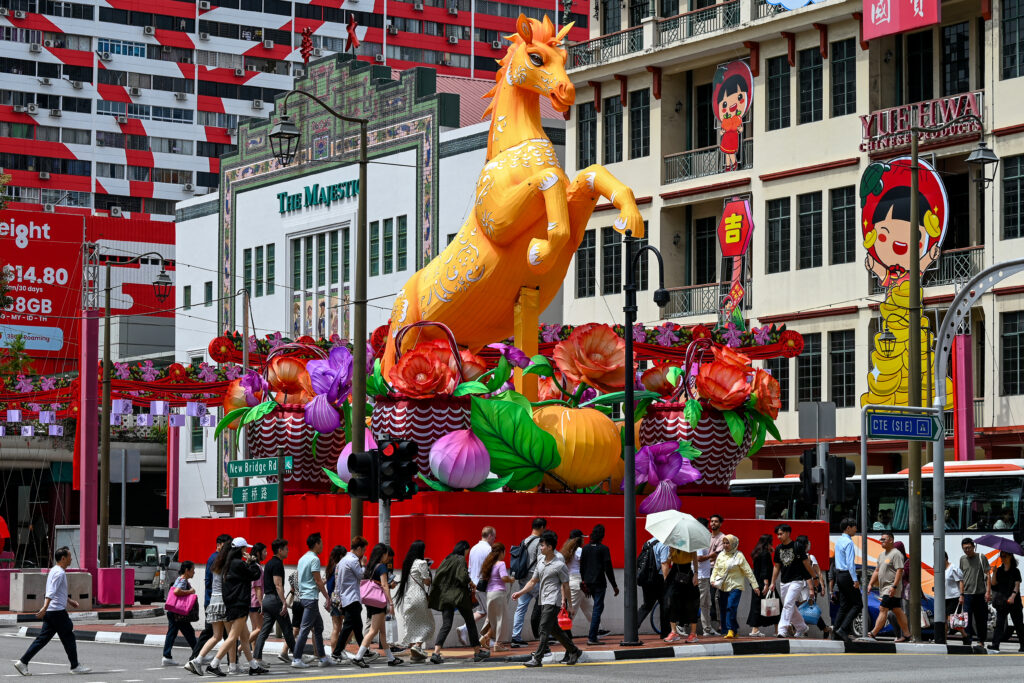
Pedestrians cross a street next to a Lunar New Year of the Horse decoration in the Chinatown district of Singapore.
Image via Roslan Rahman/AFPWhy immigration is becoming unavoidable for Singapore
Gan framed immigration not as a preference but as a necessity.
A shrinking workforce, he said, would mean slower economic growth, weaker income gains, and heavier pressure on younger generations to support an ageing population.
"A smaller working-age base will have to support a rapidly growing elderly population… Our healthcare and social spending will have to increase."
Beyond economics, he said the issue also affects national identity and long-term survival.
"This raises the deeper question of what Singapore will be 50 or 100 years from now. Will we remain vibrant, livable, and relevant? Will we exist?"
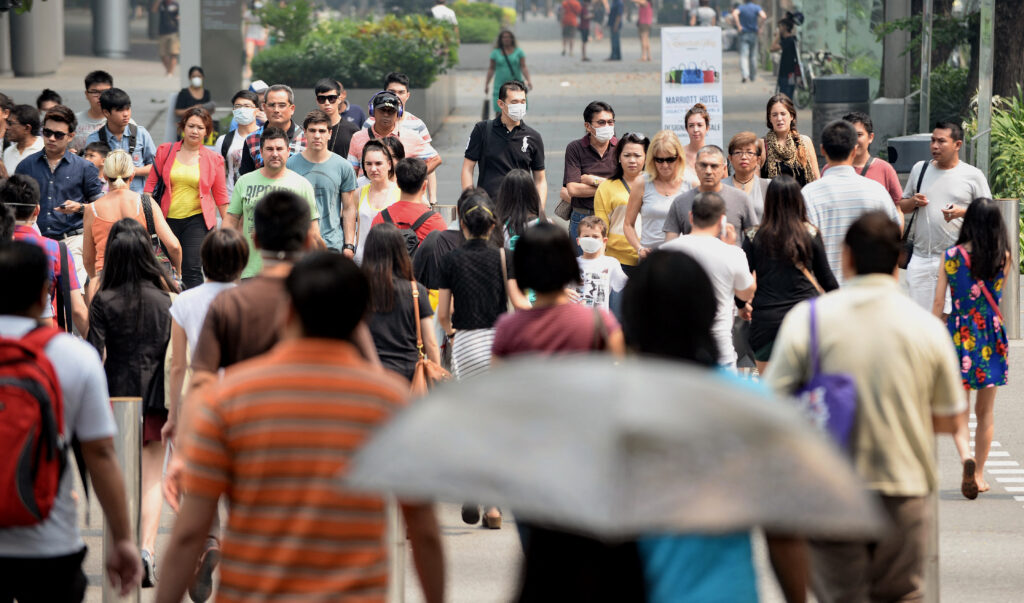
Pedestrians crossing a traffic junction in Singapore
Image via Roslan Rahman/AFPBalancing growth with public concerns
While surveys show many Singaporeans accept the economic need for immigration, Gan acknowledged concerns over job competition and social change.
"Will bringing in immigrants mean fewer job opportunities for us? Will the Singapore that my children grow up in feel vastly different?"
"I understand these concerns, and we take these concerns over competition and our social fabric seriously. We will continue to take steps to address them," he said, adding that Singapore will "maintain the broad ethnic balance" of its population and "composition to preserve the overall texture of our society".
He said the government will continue to manage the pace of immigration carefully, ensuring infrastructure, housing, and integration efforts keep up.
"We will also continue to be selective about who we bring in," he said, highlighting that many of the immigrants that Singapore takes in today either share family ties with Singaporeans or have studied, worked, or lived in Singapore for some time.
"The majority of our immigrants are also of working age, contributing to our economy."
Singapore's strategy now is essentially two-track
The first is encouraging more marriages and births, and the second is to increase immigration to avoid a near-term population crunch.
But the tone of Gan's speech suggests the government is realistic about the limits of reversing demographic trends quickly.
In essence, Singapore's move highlights how countries with ageing populations are increasingly turning to immigration to sustain growth.
Rather than relying solely on boosting birth rates, which can take decades to recover — if they recover at all — the government is accelerating its intake of new residents to stabilise its population in the near term.
And for Singapore, as Gan noted, the choice appears to be less about preference and more about survival.
"Our falling total fertility rate presents a serious and profound existential challenge to our society, economy, and our security.
"The government must and will do its utmost to address this challenge. This is our commitment to all Singaporeans."
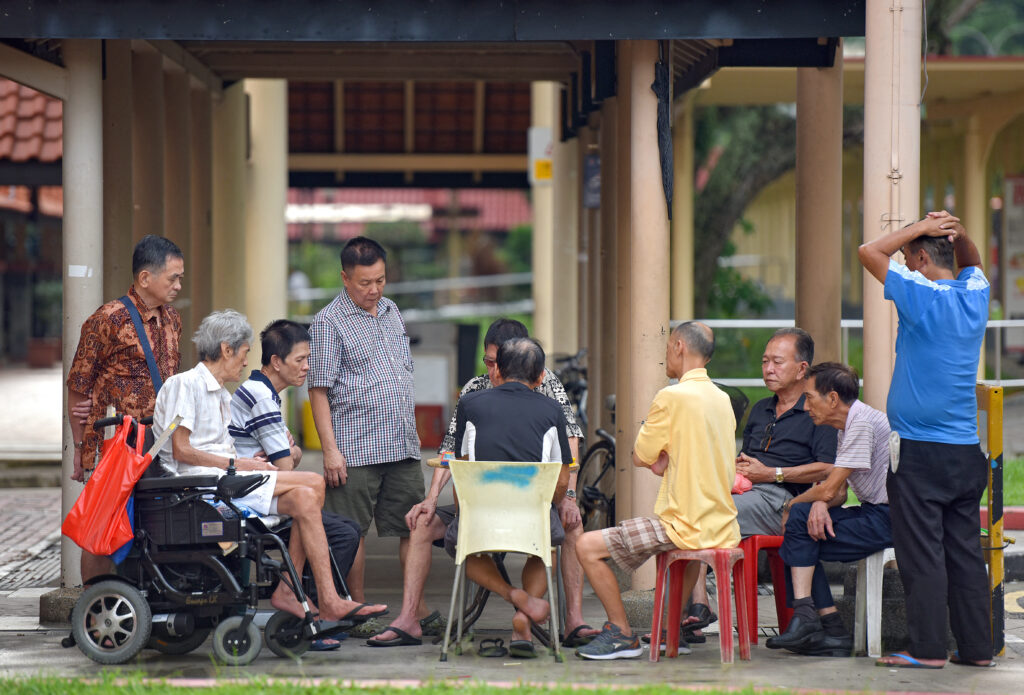
Generic picture of a group of elderly men watching a game of chess at Toa Payoh Central.
Image via Feline Lim/ST/SPM Media/AFP