


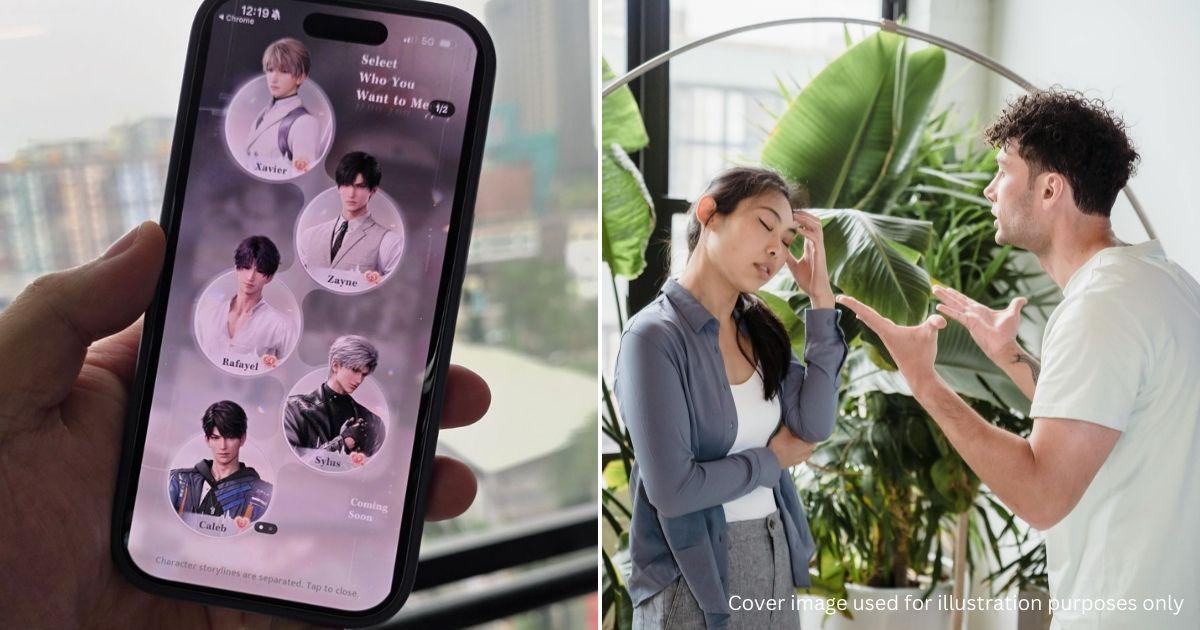
 Cover image via
Follow us on Instagram, TikTok, and WhatsApp for the latest stories and breaking news.
The line between virtual romance and real-life commitment is blurring in China, as the viral otome dating sim Love and Deepspace stirs unprecedented friction in marriages
An otome is a story-based romance video game targeted towards women with a female protagonist as the player character. In particular, Love and Deepspace's hyper-realistic "heartthrobs" — Xavier, Zayne, Rafayel, Caleb, and Sylus — have become so central to some players' lives that husbands are resorting to drastic measures.
In one viral case, a husband reportedly offered his wife 20,000 yuan (RM11,631) to quit the game for a year. While she initially accepted the money, the pull of the virtual world proved too strong; she redownloaded the app as soon as a new collectible "card" for her favourite character was released.
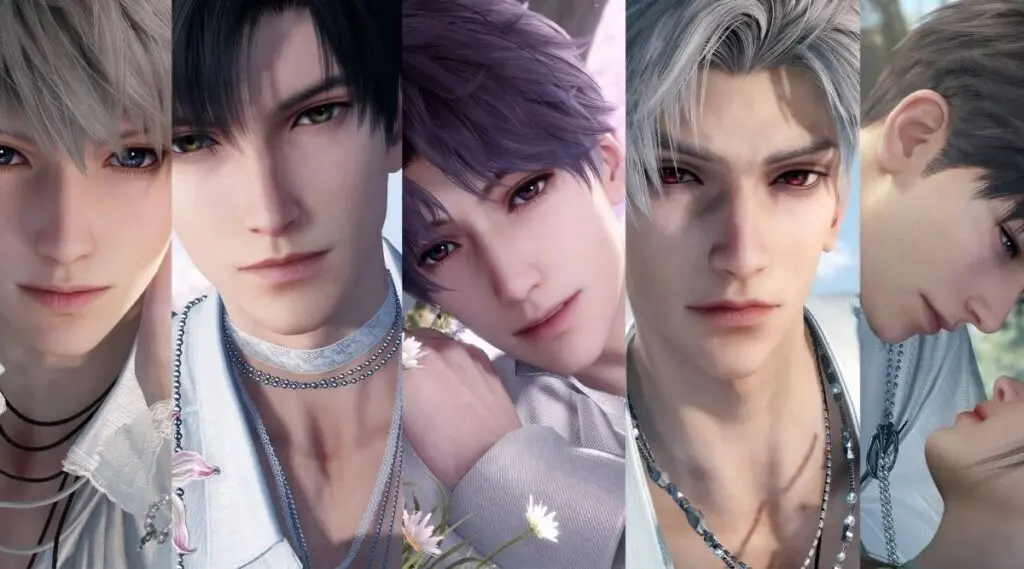
'Love and Deepspace' sweethearts: Xavier, Zayne, Rafayel, Sylus, and Caleb.
Image via But Why Tho?What sets Love and Deepspace apart from earlier dating sims is its high-tech approach to intimacy
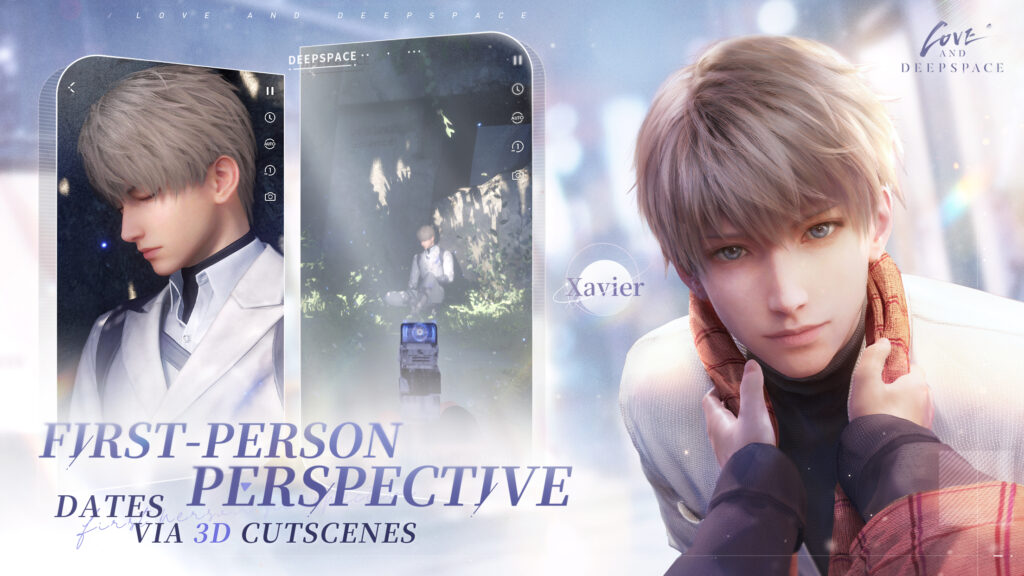
Developed by Papergames, the title utilises 3D motion capture and AR "companion modes" to place these characters in a player's actual environment, complete with realistic lighting and movements.
Most significantly, the game integrates AI-powered voice chatting, allowing users to hold open-ended conversations with their digital paramours.
According to Kr-ASIA, some players have even taken the experience a step further by using ChatGPT and local Chinese AI apps to create 24/7 "AI agents" of the characters, leading one woman to admit that she would "lose her mind" if the game were ever deleted.
This emotional depth has left many real-life partners feeling sidelined
On Chinese social media, men have expressed feelings of being "cheated on" in favour of fictional characters who never argue, always listen, and provide "perfect" emotional support.
Developers have defended this intensity, stating that their goal is to provide "real romantic feelings" rather than just a simulation.
The obsession is even fuelling a secondary market for future technology, with some fans already saving money for projected humanoid android versions of the characters, hoping to bring their virtual romance into the physical world permanently.
The phenomenon is part of a broader, often startling trend of AI-human relationships as we head into 2026
Beyond mobile games, ChatGPT and similar large language models have been cited in a growing number of breakups and divorces.
Reports from 2025 included a woman getting "engaged" to an AI chatbot she built herself, and another bride who "married" an AI chatbot after her human wedding was cancelled.
As some users begin raising virtual "children" with their chatbots, the traditional structure of human relationships is facing its most complex challenge yet: the concept of the "perfect" digital partner.
