 Cover image via SAYS Philippines
A tornado slowly formed in Port, Manila past 4:30 p.m. on Sunday amid stormy weather brought about by the southwest monsoon or "habagat" said a report of the Philippine Star
The tornado blew into Quiapo and Sampaloc districts where people said they saw debris and peeled off roofs swirling in the air
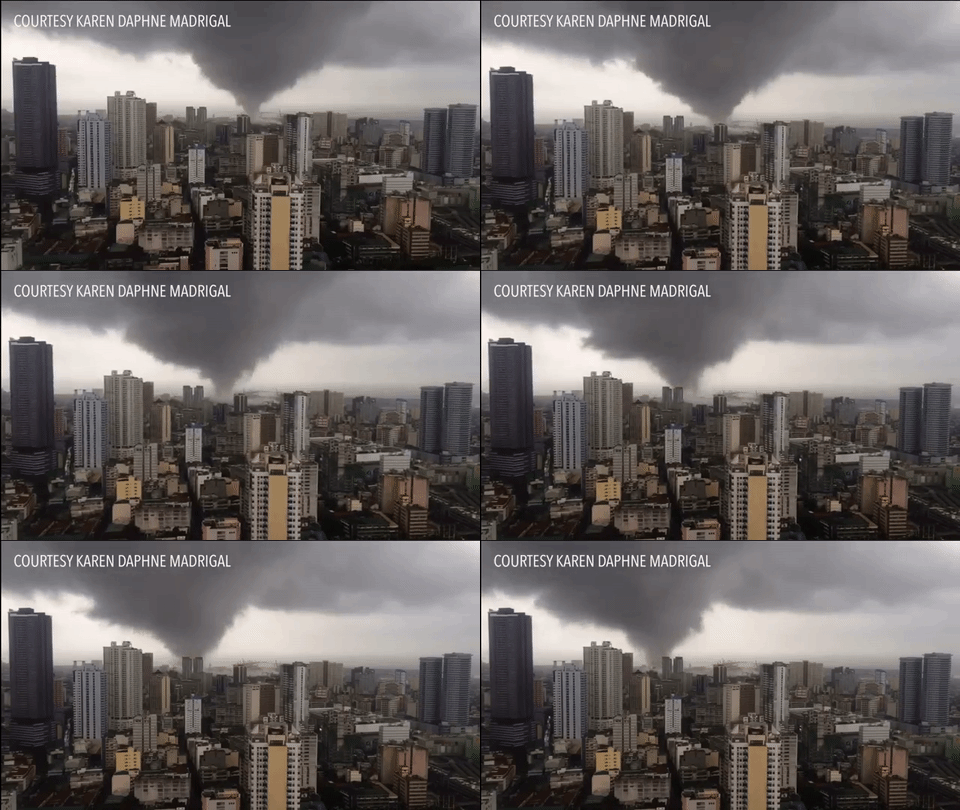
Aldczar Aurelio of the state weather bureau told the radio station later in the afternoon that the tornado might have been caused by the severe thunderstorm that hit Manila past 4 p.m.
Is it common to have tornado in the Philippines?
Tornadoes have been recorded on all continents except Antarctica and are most common in the middle latitudes where conditions are often favorable for convective storm development.[ The United States has the most tornadoes of any country, as well as the strongest and most violent tornadoes. A large portion of these tornadoes form in an area of the central United States popularly known as Tornado Alley. Other areas of the world that have frequent tornadoes include significant portions of Europe, South Africa, Bangladesh, parts of Argentina, Uruguay, and southern Brazil, New Zealand, and far eastern Asia.
According to [Wikipedia](https://en.wikipedia.org/wiki/Tornado_climatology#Asia) Bangladesh and the eastern parts of India are very exposed to destructive tornadoes causing higher deaths and injuries. Bangladesh, Philippines, and Japan has the highest number of reported tornadoes in Asia.
**In the Philippines, there are no known cases of destructive tornadoes, but this one seems an exception.**
In June of 2016, a storm producing multiple tornadoes and hail struck a densely populated area of farms and factories near the city of Yancheng in Jiangsu province, about 800 kilometers (500 miles) south of Beijing, killing at least 78 people and destroying buildings. Nearly 500 people were injured, 200 of them critically, the official Xinhua News Agency reported.
Here's how Manila looks like after the tornado:
Because of that, we came up with ways on how you can stay safe wherever you are!
If you are at home during a tornado:
1. Go to a windowless interior room on lowest level of your house. Go to a storm cellar or basement if your house has one. If there is no basement, go to an inner hallway or a smaller inner room without windows, such as a bathroom or closet.
2. Please stay away from the windows.
3. Go to the center of the room. Stay away from corners because they tend to attract debris.
4. Get under a piece of sturdy furniture such as a workbench or heavy table or desk and hold on to it.
5. Use your arms to protect head and neck.
6. If you are in a mobile home, get out and find shelter elsewhere.
If you are at work or school during a tornado:

1. Go to the basement or to an inside hallway at the lowest level.
2. Avoid places with wide-span roofs such as auditoriums, cafeterias, large hallways, or shopping malls.
3. Get under a piece of sturdy furniture such as a workbench or heavy table or desk and hold on to it.
4. Use your arms to protect head and neck.
If you are outdoors during a tornado:
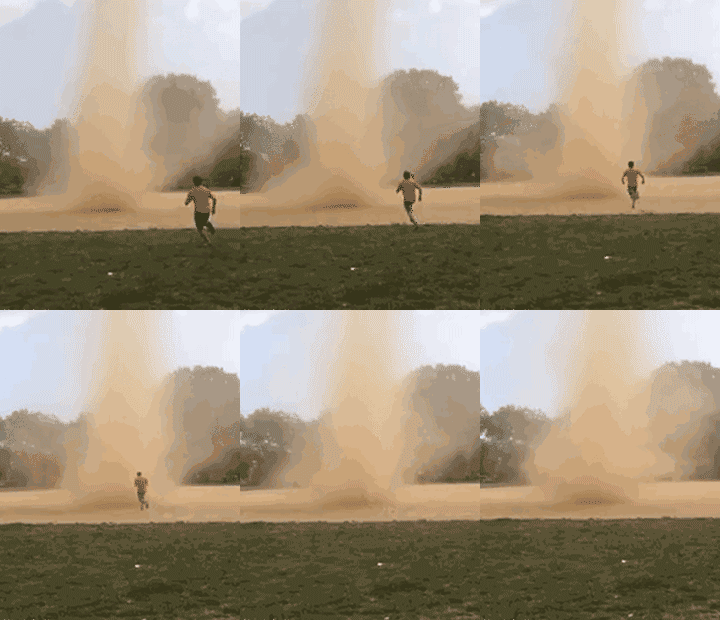
1. If possible, get inside a building.
2. If shelter is not available or there is no time to get indoors, lie in a ditch or low-lying area or crouch near a strong building.
3. Look out for flood waters which may also fill low areas. Use your arms to protect head and neck.
If you are in a car during a tornado:
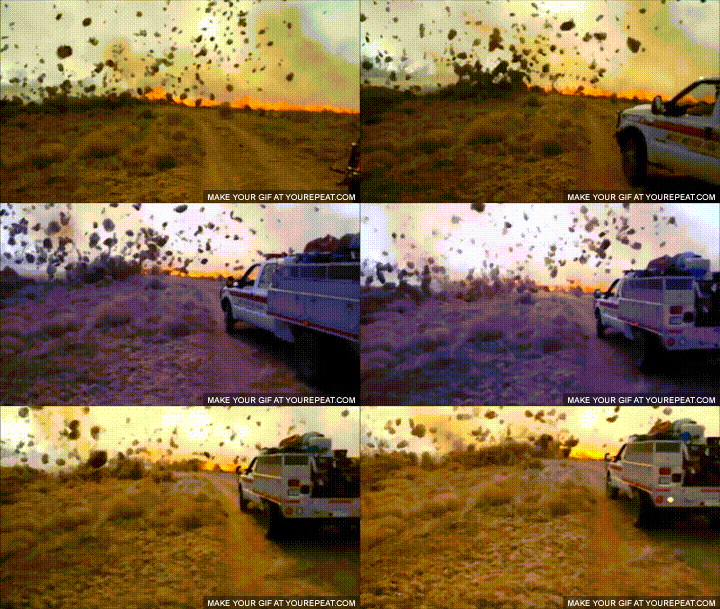
1. Never try to drive faster than a tornado in a car or truck. Tornadoes can change direction quickly and can lift up a car or truck and toss it through the air.
2. Get out of the car immediately and take shelter in a nearby building.
3. If there is no time to get indoors, get out of the car and lie in a ditch or low-lying area away from the vehicle. Be aware of the potential for flooding.