



Follow us on Instagram, TikTok, and WhatsApp for the latest stories and breaking news.
A human skull unearthed in China in 1990 has been digitally reconstructed and analysed, with findings that could reshape our understanding of human evolution
The fossil, named Yunxian 2, was so badly crushed during fossilisation that its significance remained unclear for decades.
New research indicates the skull, which is between 940,000 and 1.1 million years old, belongs to an early branch of a sister lineage to our species, Homo sapiens.
Previously classified as Homo erectus, a new analysis shows it has features that set it apart, Reuters reported.
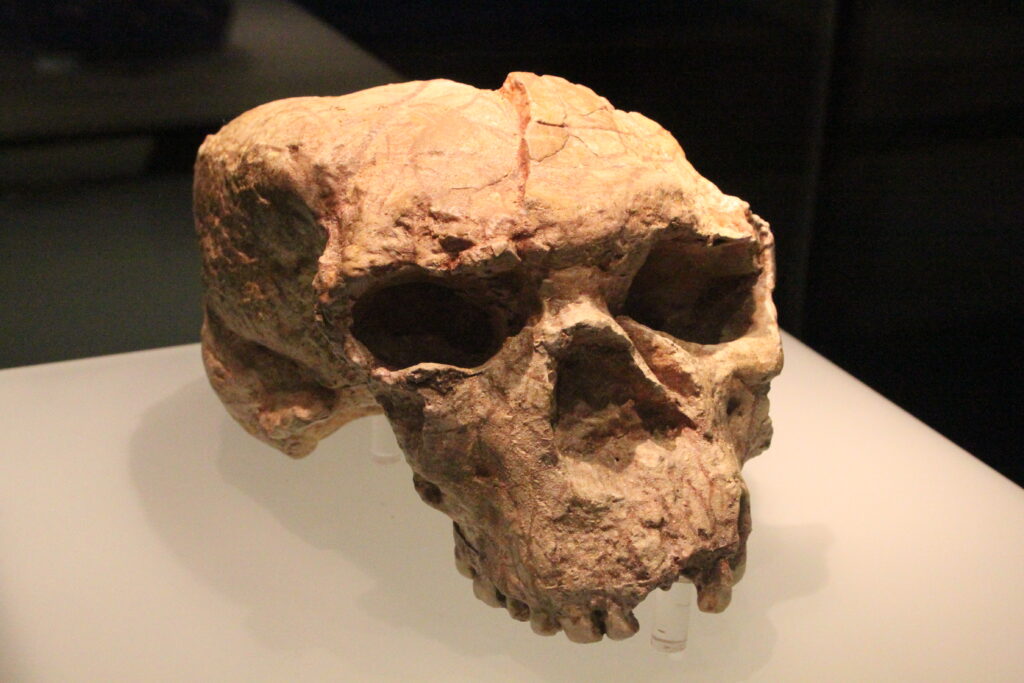
The Yunxian 2 skull.
Image via WikipediaResearchers say it appears to be the oldest-known member of an evolutionary line that includes the mysterious Denisovans, who roamed Asia and interbred with early humans
The skull is believed to have belonged to a man aged between 30 and 40.
It has a long, low shape and a strong brow ridge, but its estimated brain size is the largest for any hominin of that era.
"The face is big but with flat and forward-facing cheekbones, and a large nose with a projecting nasal bridge, but without the midfacial prominence we find in Neanderthals," said anthropologist and study co-author Chris Stringer of the Natural History Museum in London.
According to the study's lead palaeoanthropologist, Xijun Ni, the skull shares key features with this Asian lineage, including a broad palate and flat cheekbones.

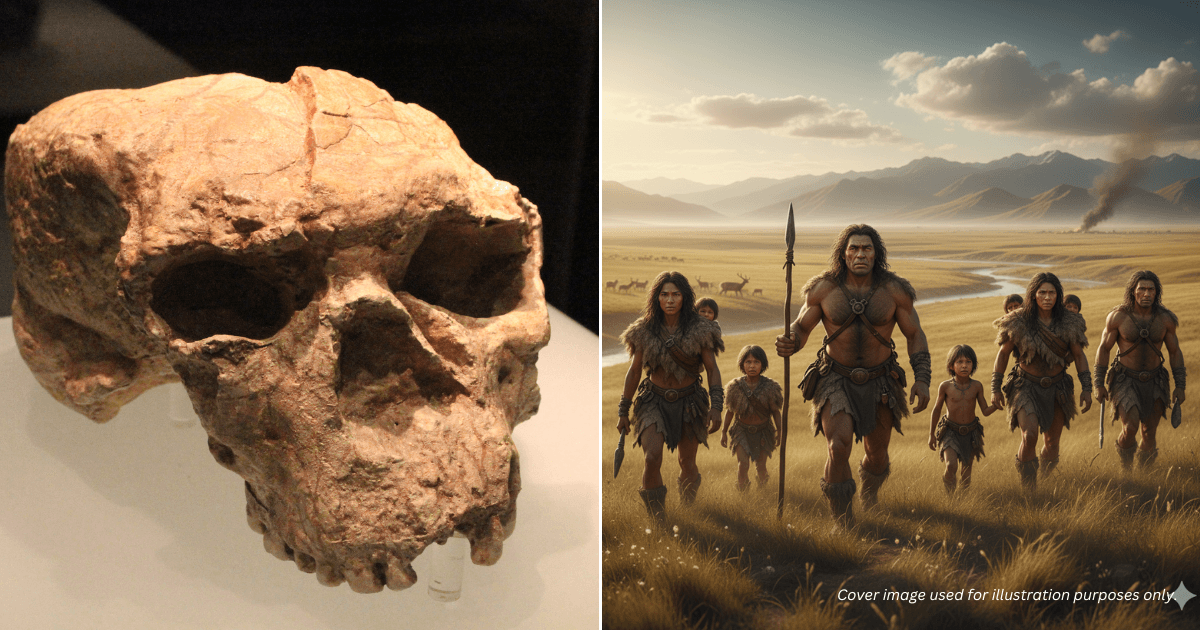
An AI-generated image of Denisovans roaming the plains of Asia.
Image via GeminiThe existence of Denisovans was only confirmed in 2010 from remains found in a Siberian cave. This discovery challenges the old timelines of human evolution.
The researchers propose that five major branches of large-brained humans in Africa, Europe, and Asia began diverging from each other more than one million years ago.
This suggests that the lineage leading to our own species may have split off from other hominins much earlier than previously thought.
Stringer added that the skull might help solve a dilemma known as the 'Muddle in the Middle', which refers to a perplexing array of human fossils from between 300,000 and one million years old.
If the Yunxian 2 skull is close to the origins of both the Denisovan and Homo sapiens lineages, it "may represent one of the most important windows yet into the evolutionary processes that shaped our genus around one million years ago," Stringer concluded.
