


 Cover image via
Concerns over rising medical costs have intensified in recent weeks, with experts warning that private clinic fees in Malaysia could increase by as much as 30% in the coming months
Some industry professionals believe patients may start feeling the effects as early as August.
While medical inflation, often cited by insurance companies, remains a contributing factor, recent government efforts to enhance price transparency may also be driving the potential hike.
Three primary concerns have emerged as the root causes of the anticipated cost hike:
1. Itemisation of medical charges
2. The requirement for clinics to display medicine prices
3. Stagnant general practitioner (GP) consultation fees
Here is a breakdown of each of the concerns:
1. Itemised billing: a shift that could raise costs
According to the New Straits Times, the Federation of Private Medical Practitioners' Associations Malaysia (FPMPAM) has attributed the projected 30% increase in clinic fees to the requirement for itemised billing.
The policy mandates that healthcare providers list individual charges, such as those for consultation, treatment, and medication, that were previously bundled under a single fee.
FPMPAM president Dr Shanmuganathan TV Ganeson claimed that the new rule could disrupt the existing billing system, in which consultation, treatment, and medication were charged together.
While itemised billing is currently only required upon patient request, the possibility of future enforcement has raised concerns among private healthcare providers.
The issue came to public attention following a live TikTok session hosted by the Health Ministry (MOH), which created confusion regarding the itemisation policy, reported CodeBlue.
During the session, an MOH representative encouraged patients to compare itemised invoices against the drug price lists displayed at private GP and specialist clinics. If there are any discrepancies, they are advised to report them to the Domestic Trade and Cost of Living Ministry (KPDN).
Although the policy is not mandatory at present, Dr Shanmuganathan cautioned that full implementation would compel GPs to list individual charges for basic instruments, consumables, and procedures, ultimately increasing patient bills.
"Charges at private clinics are currently bundled; it is a cheaper system compared to [itemised bills].
"If there is no decision from MOH… FPMPAM expects that patients will begin to feel the increase in costs as early as August.
"This is because clinics need to start separating costs that have been included in one overall charge. This means that patients will start seeing a list of charges," he said.

Image via FMT
2. Mandatory display of medicine prices sparks protest
On 1 May, the government implemented a new requirement mandating private clinics to display medicine prices under the Price Control and Anti-Profiteering Act 2011 (Act 723).
This policy triggered a protest involving 200 doctors and medical practitioners at Laman Perdana, Putrajaya on 6 May, reported Utusan Malaysia.
Led by Malaysian Medical Association (MMA) president-elect Datuk Dr R Thirunavukarasu, the protestors submitted a memorandum urging the government to revise Act 723.
Medical groups argue that healthcare services should be regulated under healthcare-specific laws, such as the Medical Act 1971 and the Private Healthcare Facilities and Services Act 1998 (Act 586), rather than retail-focused legislation.
In response to the policy, some medical associations are considering introducing new fees. The Private Medical Practitioners' Association of Selangor and Kuala Lumpur (PMPASKL) is set to decide whether to advise members to charge patients a facility fee, reported CodeBlue.
A facility fee in healthcare refers to a charge that covers the operational costs of a hospital or clinic. It includes expenses such as the use of exam rooms, medical equipment, supplies, nursing and technician services, and other administrative costs. This fee is separate from the doctor's charge for their services.
PMPASKL's consideration comes after a similar move by its Sarawak counterpart. Since 1 May, the Society of Private Medical Practitioners Sarawak (SPMPS) has advised clinics to optionally adopt three additional charges: a prescription fee (RM5–RM10), a registration fee (RM5–RM10), and a regulatory compliance charge (RM5–RM20), on top of the standard consultation fee.
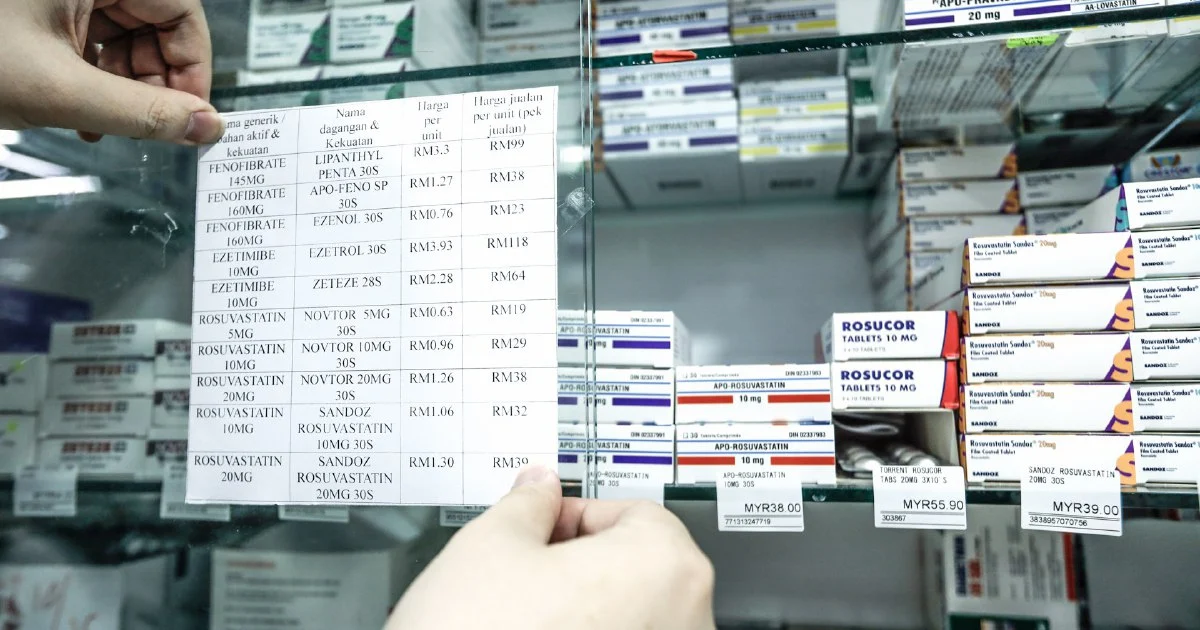
Image via New Straits Times
3. GP consultation fees are lower than the cost of a haircut
The situation is compounded by long-standing grievances over GP consultation fees, which have been capped at RM10 to RM35 for 33 years, reported the Straits Times.
Doctors have been calling for a review, citing rising operational costs.
"After years of study, we're charging RM10 to RM35 (for consultation) – while barbers already charge RM25 nowadays," Dr Hakim Mahdi told the Singaporean daily.
The government has since agreed to revise these fees, with an announcement anticipated. FPMPAM has proposed a new range of RM50 to RM150 for consultations, reported CodeBlue.
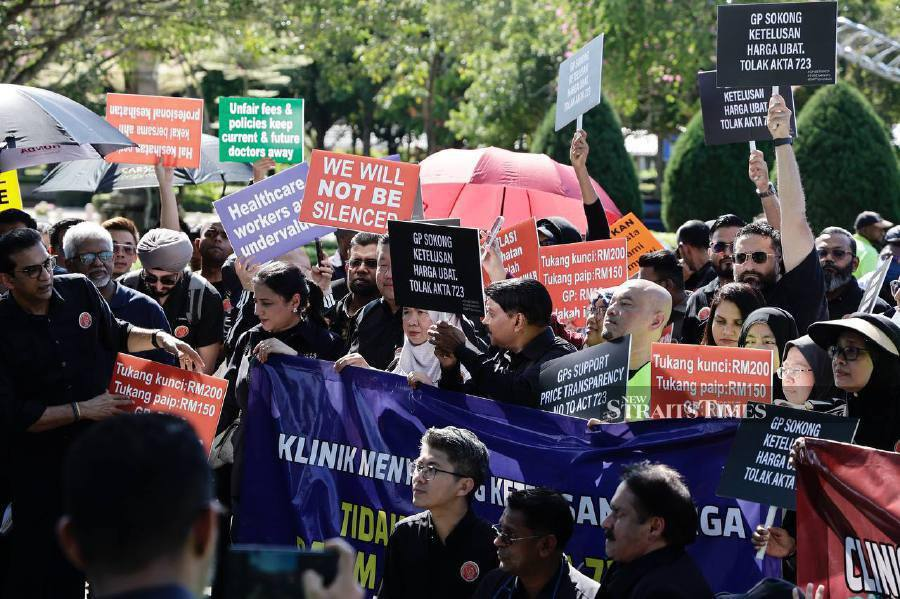
Image via Aizuddin Saad/New Straits Times

