


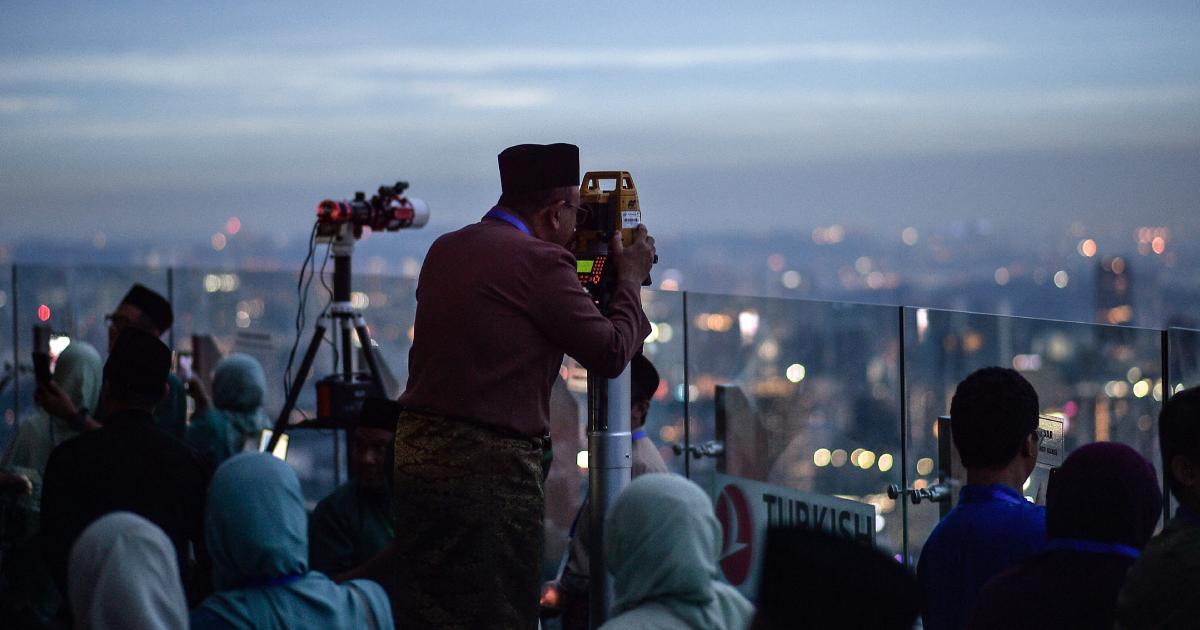
 Cover image via Arif Kartono/AFP
Follow us on Instagram, TikTok, and WhatsApp for the latest stories and breaking news.
UPDATE:
It's Official: Malaysians Will Celebrate Raya This Saturday
As Hari Raya Aidilfitri draws close, eyes across Malaysia turn to the western sky this evening, where the sighting of a thin crescent moon will determine whether celebrations fall tomorrow, 20 March, or on Saturday, 21 March
The decision hinges on the rukyah hilal, or new moon sighting process, carried out in line with procedures set by the Department of Islamic Development Malaysia.
According to the New Straits Times, Malaysia uses the Imkanur Rukyah method, which blends physical observation with astronomical calculations to determine the start of Islamic months, including Syawal.
In practice, this means experts first calculate whether the crescent moon is likely to be visible at sunset. These calculations take into account factors such as the moon's age, its height above the horizon, and its angular distance from the sun.
Under the Imkanur Rukyah criteria, the moon must meet specific thresholds to even be considered visible. It needs to be at least three degrees above the horizon and have an elongation of at least 6.4 degrees at sunset.
Once these conditions are assessed, the actual observation begins.
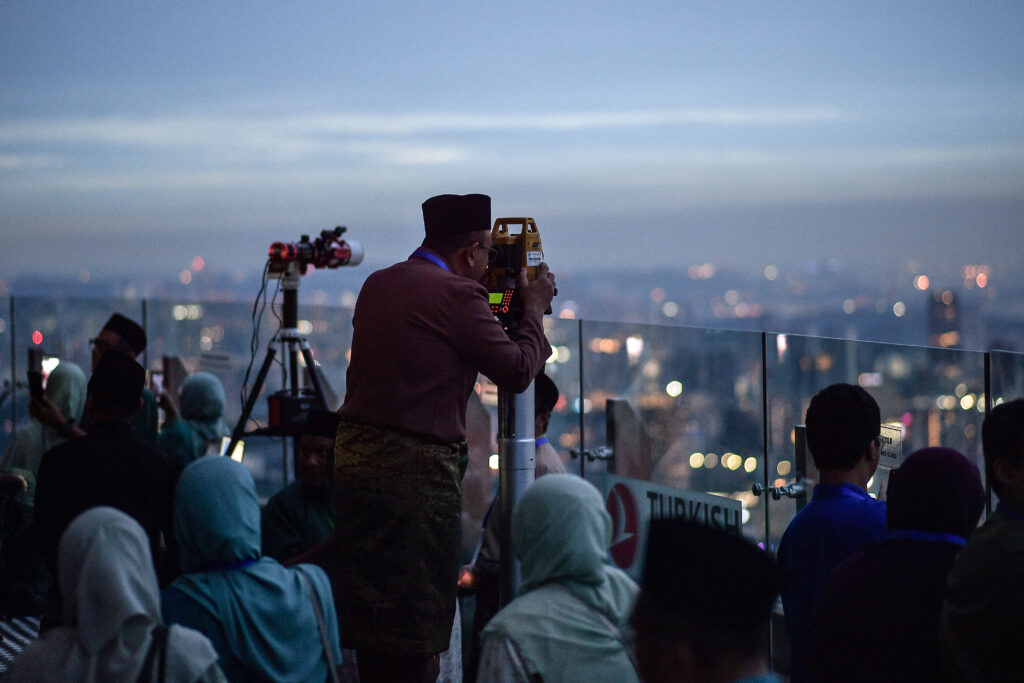
Malaysia's religious department member uses a telescope to perform 'Rukyah', the sighting of the new moon to mark the start of Islam's holy month of Ramadan in Kuala Lumpur on 17 February.
Image via Arif Kartono/AFPThe moon sighting is carried out at 29 designated locations nationwide, including Kuala Lumpur Tower, Al-Khawarizmi Observatory, and Baitul Hilal Complex, all chosen for their clear views of the western horizon
Observers typically consist of religious officials from state mufti departments, supported by astronomers and technical teams. While the traditional method relies on the naked eye, modern tools like telescopes and imaging devices are often used to improve accuracy.
Even then, visibility is not guaranteed.
Weather conditions play a major role, with cloud cover, haze, and light pollution potentially obscuring the crescent, even if it meets all the scientific criteria.
Once observations are completed, the findings are submitted to the Keeper of the Rulers' Seal, Tan Sri Syed Danial Syed Ahmad. The official announcement will then be made after receiving consent from the Conference of Rulers.
Until then, it all comes down to whether the moon shows itself tonight, 19 March.
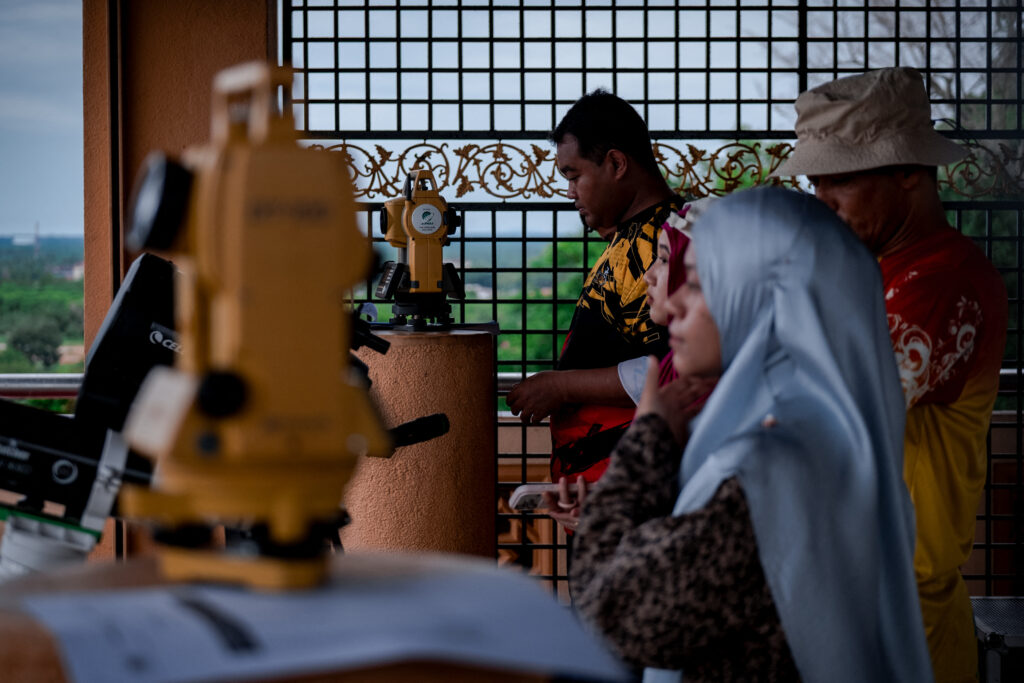
Representatives from the Selangor Islamic Religious Department (JAIS) and the Department of Survey and Mapping Malaysia (JUPEM) are observing the crescent moon sighting ceremony to mark the first day of Ramadan at Baitulhillah Bukit Melawati in Selangor on 17 February.
Image via Syaiful Redzuan/Anadolu/AFP