


 Cover image via Oriental Daily
Criticisms about the Malaysian education system have always been in the limelight. This time around, the issue of abolishing vernacular schools have sprung up, sparking a revived debate among Malaysians on the topic.
This popularly discussed issue, made headlines again when the "red shirts" protesters carried banners that read, **"Hapuskan SJKC" (abolish Chinese schools)** during the racially charged rally that was held on Malaysia Day, 16 September.
Taking the lead in responding against the anti-Chinese schools banner, Barisan Nasional's coalition member, the **Malaysian Chinese Association (MCA)** have spoken for the nation's Chinese Schools, saying that they have produced some of Malaysia's most excellent students.

The "reds" holding up a banner that reads: "Hapuskan SJKC" (Abolish Chinese Schools) during the Himpunan Rakyat Bersatu, or popularly known as the "red shirts" rally that was held during Malaysia Day.
Image via Malaysiakini


Slamming the "reds" for wanting to abolish Chinese-medium schools, Quek cited Article 152 of the Federal Constitution that gives Malaysians the freedom to choose the type of schools they wish to attend
The current Malaysian education system is based on the Razak Report, that was tabled in 1956, leading up to the independence of Malaya in 1957
The Razak Report, named after the then Education minister, Tun Abdul Razak, which was eventually incorporated into Section 3 of the Education Ordinance of 1957, allows the retention of Chinese and Tamil medium schools while introducing Bahasa Malaysia as the medium of instruction in national schools.
While the term 'national school' is used to describe all the Malay-medium schools in the country, 'national-type school' is the term coined for both Chinese and Tamil schools.

Tun Abdul Razak Hussein was also the second prime minister of Malaysia and is the father of current prime minister Datuk Seri Naijb Razak and famous banker, Nazir Razak.
Image via Straits Times
The "reds" have since garnered support to abolish vernacular schools from certain members of the political community that blame the vernacular schools for racial disharmony


Harussani went on to justify his support for the closure of vernacular schools by saying that a single-system school would help the non-Malays learn Bahasa Malaysia

Agreeing with Harussani, Deputy Prime Minister Datuk Seri Ahmad Zahid Hamidi also thinks that getting rid of vernacular schools will help foster racial unity among Malaysians


On the contrary, Malaysian education groups think it is unconstitutional to close down the vernacular schools
**Act 550, Education Act 1996** allows the existence of 'national-type' schools. The Chinese and Tamil medium schools are allowed to use their respective mother tongues as a mode of communication, provided that **English and Bahasa Malaysia are compulsory subjects.**

Image via The Malaysian Insider
Rubbishing the talks of abolishing vernacular schools to promote unity, DAP vice-chairman M Kula Segaran, instead, blames the Malaysian political system for racial issues heating up in Malaysia

"People say vernacular schools should be abolished because they are not multiracial. But Chinese schools are becoming even more multiracial than national schools now."
**DAP MP Zairil Khir Johari,** while shedding light on why shutting down vernacular schools would be a bad idea, said that **demographics** play a major role in how multi-racial the students of a national school are.

Zairil Khir Johari leads DAP's debates on national education policies in Dewan Rakyat.
Image via The Malaysian Insider
Meanwhile, the Education Ministry announced on 28 August, that a new module named, "Bina Bangsa" aimed to promote racial unity in vernacular schools, will be implemented in 2016, starting with schools in Klang Valley
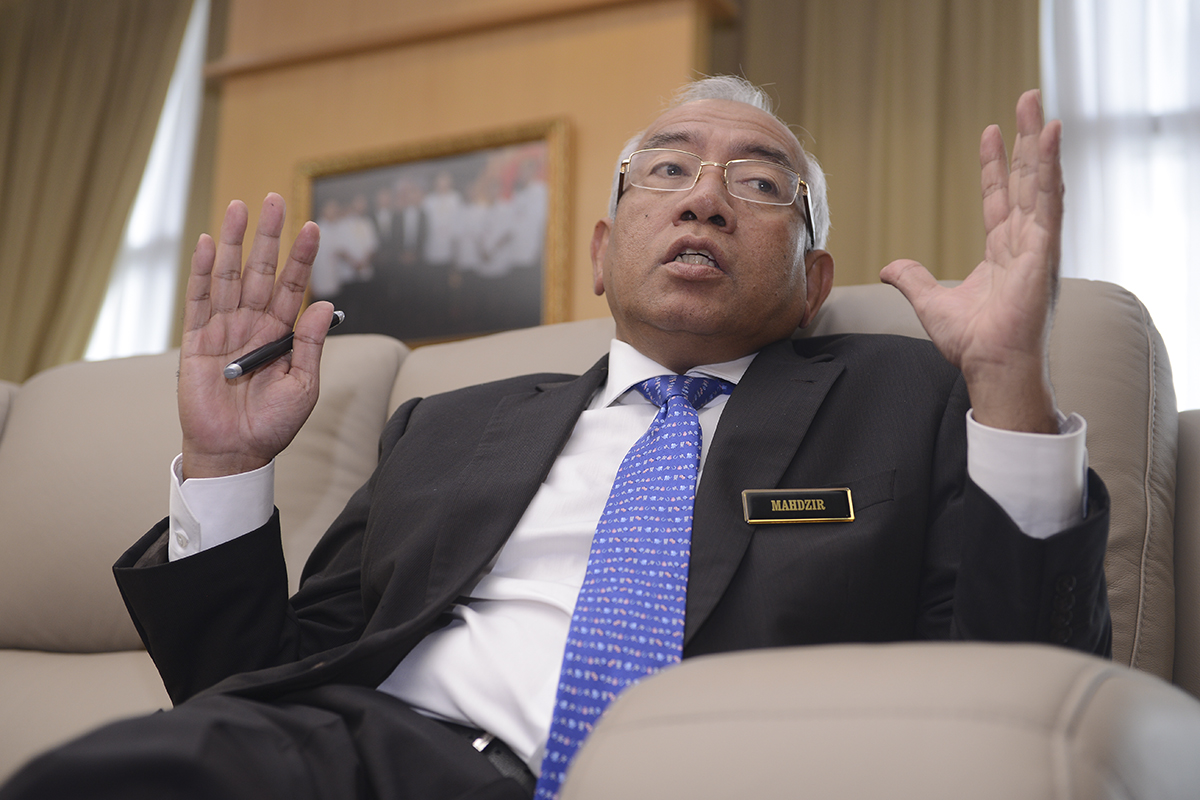
Refuting Mahdzir's claims about vernacular schools having problems with diversity, DAP MP Zairil, provided statistics from the Malaysian Education Blueprint (MEB) that reflects on how Chinese-medium schools are more multi-racial than national schools

In a turn of events, MIC Youth leader C Sivarraajh, broke the silence on behalf of MIC on the vernacular schools debate by describing the arguments against race-based schools as a "sacrilege"

In the midst of arguments about abolishing vernacular schools, Hindraf Makkal Sakthi has urged the government to grant 'national school' status to vernacular schools

Following all the debacle about the pros and cons of vernacular schools, a Malay family has slammed the "reds" for wanting Chinese schools to be closed
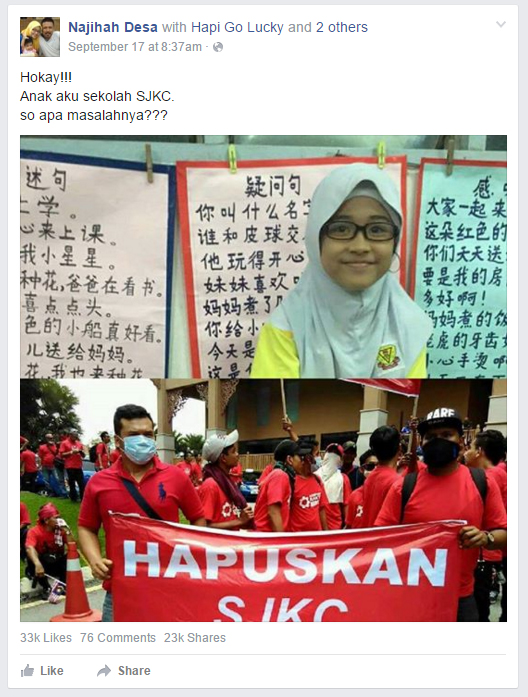
On 21 September, Najihah posted a photo of her daughter, Husna in her school's classroom along with a photo of the "red shirts" rally protesters holding a banner that says: "Hapuskan SJKC" (Abolish Chinese schools)
