


 Cover image via
Are you curious about the Mobility Beyond Imagination (MBI) Ponzi scam that has been making headlines over the past few years, with increased attention in recent weeks?
This article presents seven key facts to get you up to speed.
1. What is MBI?
MBI, or its full name, Mobility Beyond Imagination (MBI) Group International, was founded in 2009 by Tedy Teow Wooi Huat, a businessman with a long history of brushes with the law, reported the New Straits Times.
The company initially presented a facade of being a property firm, allegedly engaged in luxury residential and retail spaces in Malaysia and Danok, Thailand.
Three years later, MBI Group International introduced a pyramid scheme called MFC, promoting it as a platform for a digital currency called M-Coin.
The scheme started in Malaysia and later expanded to other countries, including China, Taiwan, Japan, and New Zealand.
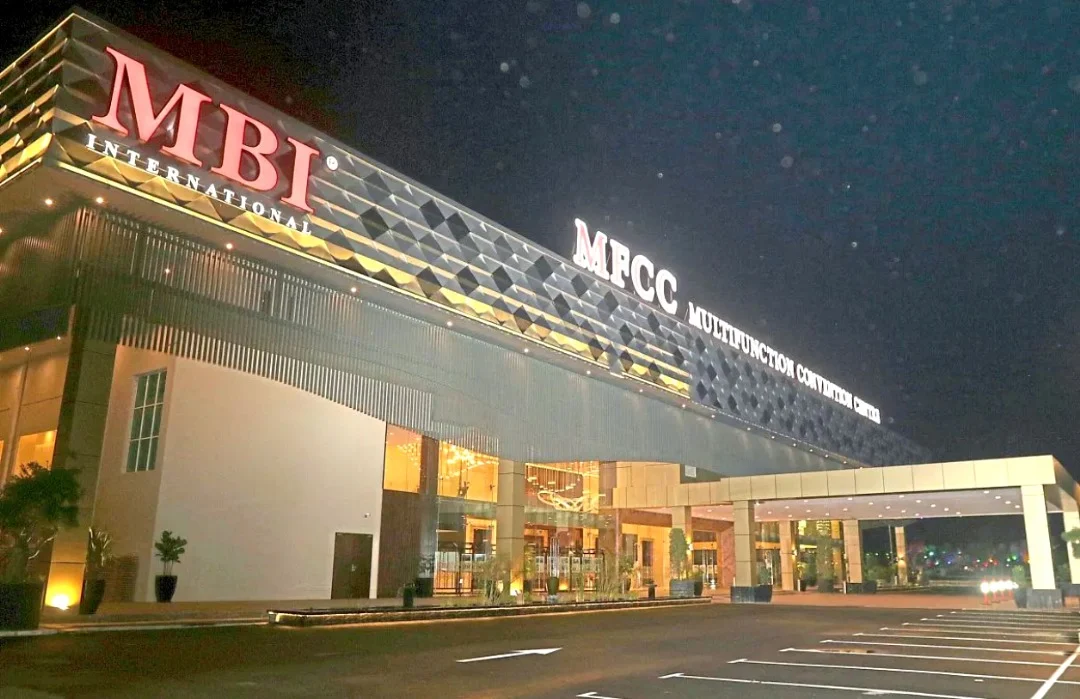
Image via Kwong Wah Daily
2. How does the Ponzi scheme work?
In an infographic published by The Edge last month, the scheme had eight steps:
Step 1: Pay USD100 (RM439.40) to USD35,000 (RM153,800) to join the scheme. Payment is converted into "Registration Points" at RM4.50 per USD1.
Step 2: Payment is made to the upline, who registers the individual as a new investor. They will receive a receipt of payment confirmation upon logging into the MFC websites.
Step 3: The upline provides login details for the MFC websites for the individual to manage investments and monitor members. There are five websites that MFC operates.
Step 4: Investments are converted into units valued in US dollars, with unit prices typically rising as new members join and transaction volumes increase.
Step 5: The units will split when they reach a set price threshold, doubling or tripling their quantity within months, especially in the early years of the scheme.
Step 6: Investors can cash out 55% of their units as MCredit Points to the platform, or their upline or downline. Alternatively, the units can also be sold to new investors. They can also convert the MCredit Points to M-Coin to be used at MBI-affiliated merchants.
Step 7: Of the remaining 45%, 10% goes to the platform, 30% is reinvested, and 5% is converted into M-Coins for purchases.
Step 8: Transactions between the upline and downline use a lower exchange rate (RM3.80 per USD1), encouraging investors to stay within the ecosystem.

Image via Financial Workshop Kits
3. How many people were victims of the MBI Ponzi scheme?
Citing a recent Red Notice issued by Interpol, Bukit Aman's Anti-Money Laundering Crime Investigation (AMLA) Unit said MBI had defrauded more than 11 million victims over the past eight years.
AMLA chief Datuk Muhammed Hasbullah Ali this week said that the majority of the victims were from a neighbouring country, reported the New Straits Times.
He did not reveal which neighbouring country he was referring to.
However, a recent news report noted that Teow's fraudulent operation allegedly defrauded over two million people in China.

4. When did local authorities start taking action against MBI?
Bank Negara Malaysia raided its headquarters in Penang and the Klang Valley in 2017, arresting Teow, his son, Ee Meng, and several others, reported the New Straits Times.
A total of 91 bank accounts containing RM177 million were also frozen.
The next year, Teow, two MBI-affiliated companies, and a director, Kau Fong Seng, were charged with promoting pyramid schemes, money laundering, and illegal electronic payments. They were fined RM20 million.
In August 2011, Teow and his son, Chee Chow, received a one-day jail sentence and were fined RM160,000 for defrauding and deceiving investors through the Island Red Cafe franchise scheme between 2008 and 2010.
While Teow's whereabouts after his 2018 sentence remain uncertain, he was listed on Interpol's global wanted list two years later.
In 2022, Thai authorities detained him at his company's headquarters in Danok. Known also by the name Zhang Yufa, Teow was extradited to China in August last year.
Muhammed Hasbullah confirmed this week that Teow, dubbed "Jho Low 2" by some news portals, is still in China. The AMLA chief said the priority is not to extradite him to Malaysia, but to complete investigations in Malaysia.
"We also need to consider that Malaysia only has extradition treaties with certain countries, so we must assess what follow-up actions can be taken.
"If necessary, we may seek assistance from our counterparts there through mutual legal cooperation to bring the suspect back for further investigation," he said.

5. What is the latest update now?
The recent Red Notice issued by Interpol has prompted Malaysian authorities to launch the Northern Star operation, which plays a part in ongoing cross-border enforcement efforts.
On 11 April, the media reported that eight individuals were arrested, including four men with 'Datuk' titles, two of whom are lawyers.
The Star reported today, 24 April, that a third 'Tan Sri' is suspected to be connected to the scam.
This follows the arrest of two 'Tan Sris' — one in Penang and the other in Kuala Lumpur. All three individuals were businessmen allegedly connected to the case.
A 'Datuk Seri' was also arrested, suspected of being both a partner and a proxy in the scam operations, reported Malay Mail.
The case is currently being investigated under the Anti-Money Laundering, Anti-Terrorism Financing, and Proceeds of Unlawful Activities Act 2001.

Image via Bernama via New Straits Times
6. What has been seized so far?
As of Tuesday, 22 April, Malay Mail reported that the total estimated value of all frozen or seized assets has reached RM3,513,304,957.84.
Here are some of the assets that have been seized or frozen in two operations:
– 638 bank and share accounts with a total value of RM1.16 billion
– 35 properties valued at RM2 billion
– 22 luxury cars
– 13 luxury watches
– Three durian orchards estimated to be worth RM223.6 million in Raub, Pahang; Jawi, Penang; and Tasek, Kedah
– Another 299 bank accounts with a total value of RM123.6 million

Image via New Straits Times
7. What's next?
Neither the police nor media reports have indicated the next steps, but criminal charges, including money laundering, are expected to be brought against the arrested individuals.
Under Section 4(1) of the Anti-Money Laundering, Anti-Terrorism Financing, and Proceeds of Unlawful Activities Act 2001, suspects may face up to 15 years of imprisonment and a fine of either five times the amount involved in the unlawful activity or RM5 million — whichever is higher — upon conviction.
This case has earned notoriety as one of Malaysia's largest investment scams, with Teow being likened to Jho Low — a comparison that highlights the scandal's vast scale and international reach.
Although the case appeared to have concluded several years ago with Teow's detention in China, its revival in March revealed the depth of the scam, which allegedly implicates at least two 'Tan Sris', a 'Datuk Seri', and four 'Datuks'.

