


 Cover image via
Follow us on Instagram, TikTok, and WhatsApp for the latest stories and breaking news.
Editor's note: This story was written on 12 September and does not reflect any further developments in this volatile situation.
In just a few days, Nepal has seen unprecedented chaos
Tens of thousands of demonstrators rioted on the streets, leaving at least 22 dead. Nepalese Prime Minister KP Sharma Oli resigned and fled the country, while Parliament was stormed and set ablaze.
Homes of politicians and other government buildings have been attacked. Several ministers and their families made dramatic escapes, some hanging from helicopters in multiple viral videos.
To top it off, the Nepalese Army claimed it would take charge to restore order, following the leadership crisis caused by Oli's escape and the apparent collapse of much of the civilian government.
It is the worst violence the Himalayan country has seen since the 10-year Nepalese Civil War, which ended in 2006 and claimed around 18,000 lives.
To understand how the "Gen Z Protests" unfolded so quickly, it is important to look back at the conditions that led to them.
Anger had been brewing for years over systemic corruption and economic inequality in Nepal
The Corruption Perception Index (CPI), published annually by anti-corruption nonprofit Transparency International, ranks Nepal as 117th out of 180 countries in terms of corruption (for context, Malaysia ranks 57th).
Corruption in the country is widespread, extending from the government to all aspects of life, including healthcare, security, and education, according to The Record.
Public funds are alleged to be mismanaged by the government, among other issues.
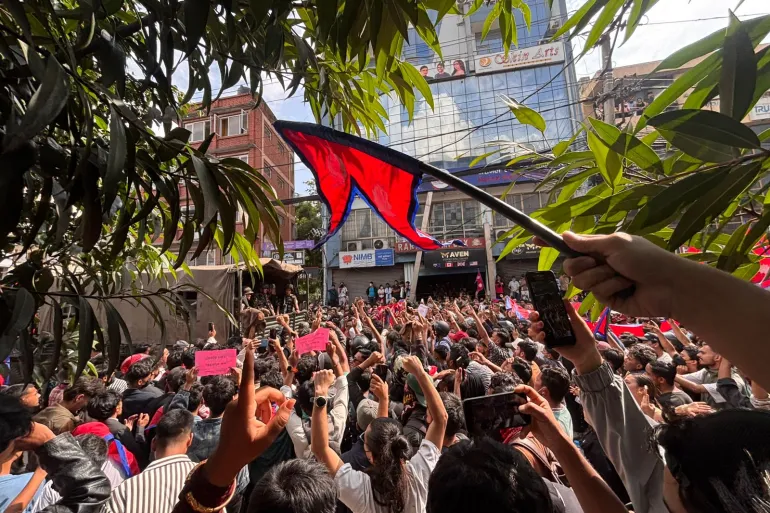
Protesters in Kathmandu earlier this week.
Image via Samik Kharel / Al-JazeeraThere was also widespread anger over the lavish lifestyles of the children of Nepal's political elite
In a country where the average monthly wage is NPR 32,000 (RM1,000) as of 2025, the families of government officials were often seen as flaunting their wealth and lifestyles on social media.
According to Time, an online movement emerged in which Nepalese netizens highlighted the stark differences between the lives of ordinary people and the children of the elite. These posts were tagged with #nepobabies and #nepokids, among other similar hashtags.
They went viral on platforms like TikTok and Reddit, where the children of politicians were accused of funding their lavish lifestyles with taxpayer money.
Some of the viral posts can be viewed here and here.

Saugat Thapa, the son of a minister who went viral for posing in front of a Christmas tree made from luxury goods.
Image via @Saugat Thapa / FacebookThe final straw was the banning of several social media sites in the country, including Instagram, Facebook, X, and WhatsApp
In total, 26 social media platforms and messaging apps were banned last week, after missing a government registration deadline under new regulations that would have allowed them to continue operating.
On Monday, 8 September, tens of thousands of protesters took to the streets, organising themselves under the banner of the "Gen Z protests" due to their predominantly younger demographic.
The ban was lifted the following day, but it did little to calm an angry populace. According to the Guardian, while frustration over the social media ban was one factor, it soon became clear that protesters were calling for an end to the perceived corruption, nepotism, and authoritarianism of Oli's government.
Protests escalated after police and security forces responded with force, using tear gas, water cannons, and rubber bullets on crowds, who proceeded to break through barricades.
At least 19 people died on this first day.
Live ammunition was also allegedly used against protesters, according to Amnesty International.

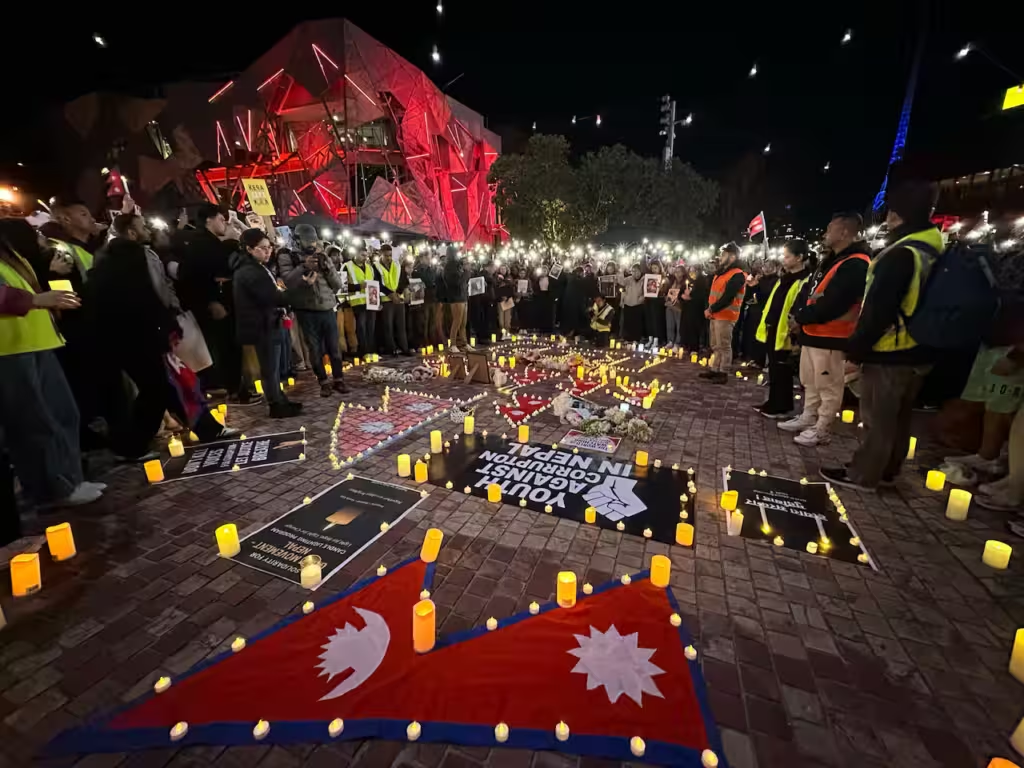
A vigil for protesters who were killed.
Image via Abhas Parajuli / SBS NewsThe protests gained mass traction, and several government buildings as well as the homes of politicians were attacked
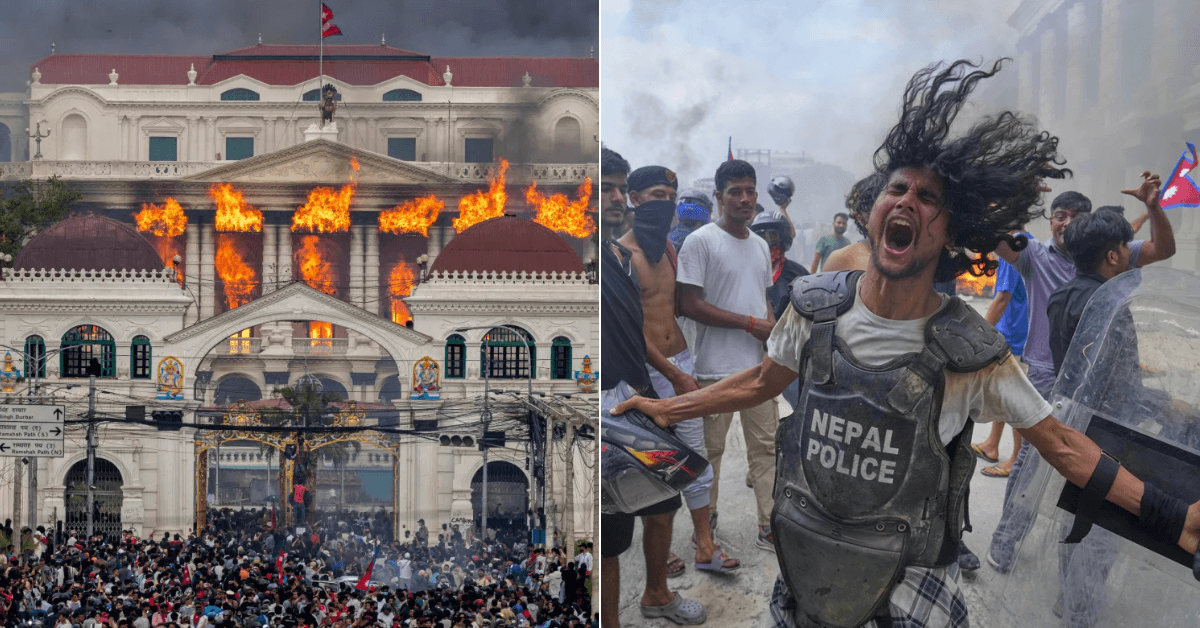
On 9 September, Parliament was stormed by rioting crowds, who proceeded to set the building on fire.
According to the Indian Express, jails in all 77 of Nepal's districts were also broken into, with around 13,000 prisoners escaping.
Protesters also seized weapons from the Army.
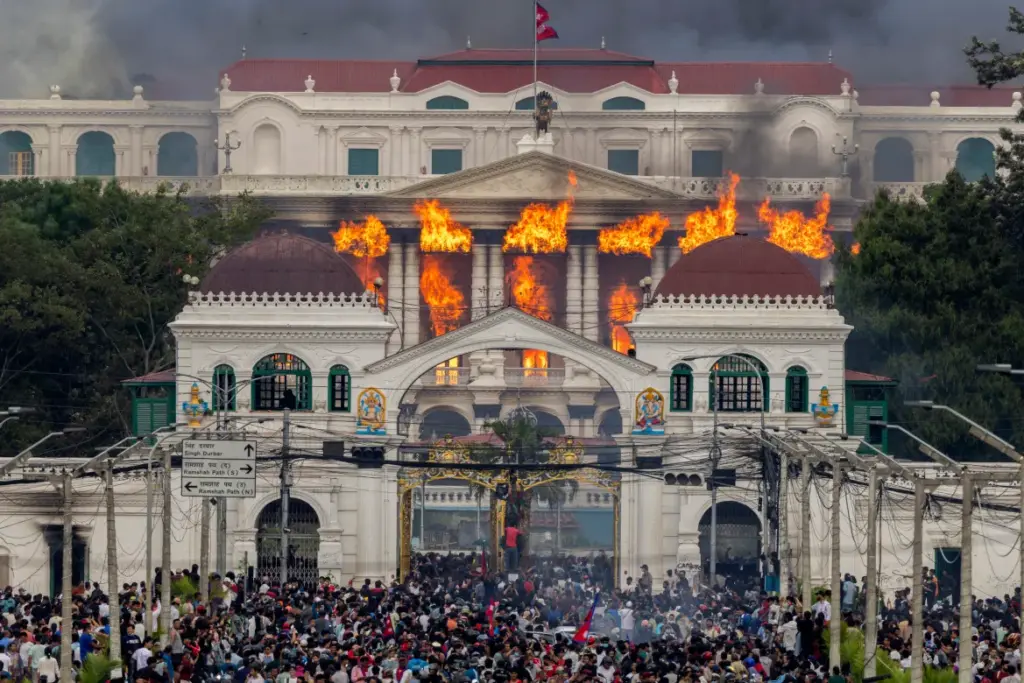
The Singha Durbar Palace, which housed government and parliament buildings, was set on fire.
Image via Narendra Shrestha / EPA via Al-Jazeera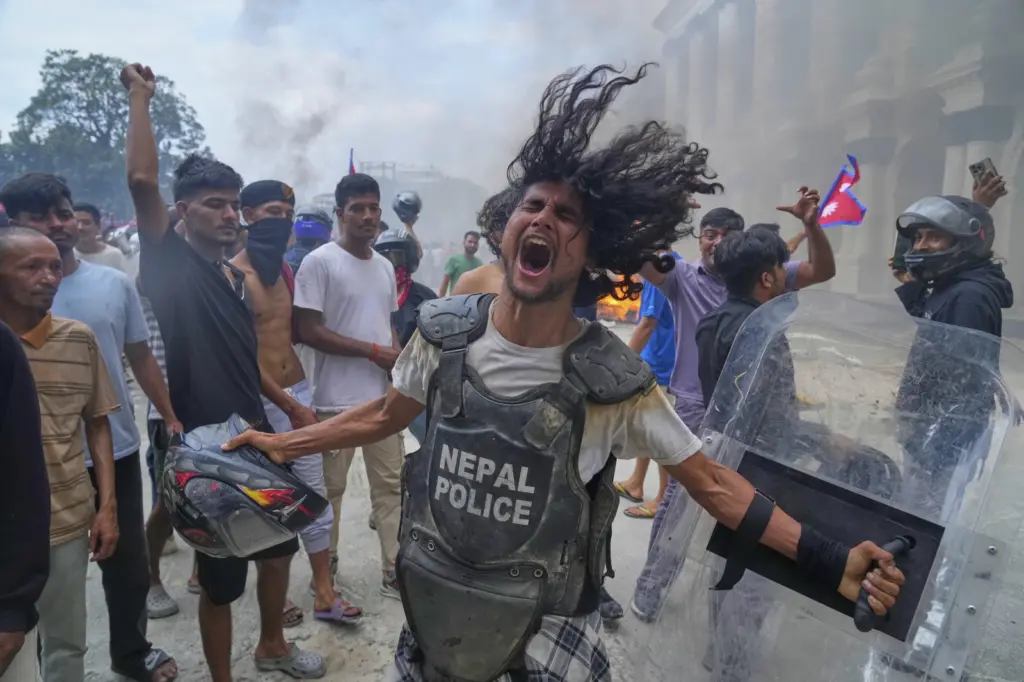
A protester wearing a flak jacket and wielding a shield taken from a police officer.
Image via Niranjan Shrestha / AP NewsProtesters have also targeted politicians and their families
Violent rioters allegedly broke into the home of five-time former prime minister Sher Bahadur Deuba and his wife, Foreign Minister Arzu Rana Deuba. Both were captured on video being beaten by crowds, according to the Hindustan Times.
Rajyalaxmi Chitrakar, the wife of another former prime minister, Jhalanath Khanal, reportedly died after their house was set on fire with her still inside, according to the Times of India.
Media outlets and schools were set ablaze, and the Ministry of Health and Population was reportedly destroyed, according to the UN.
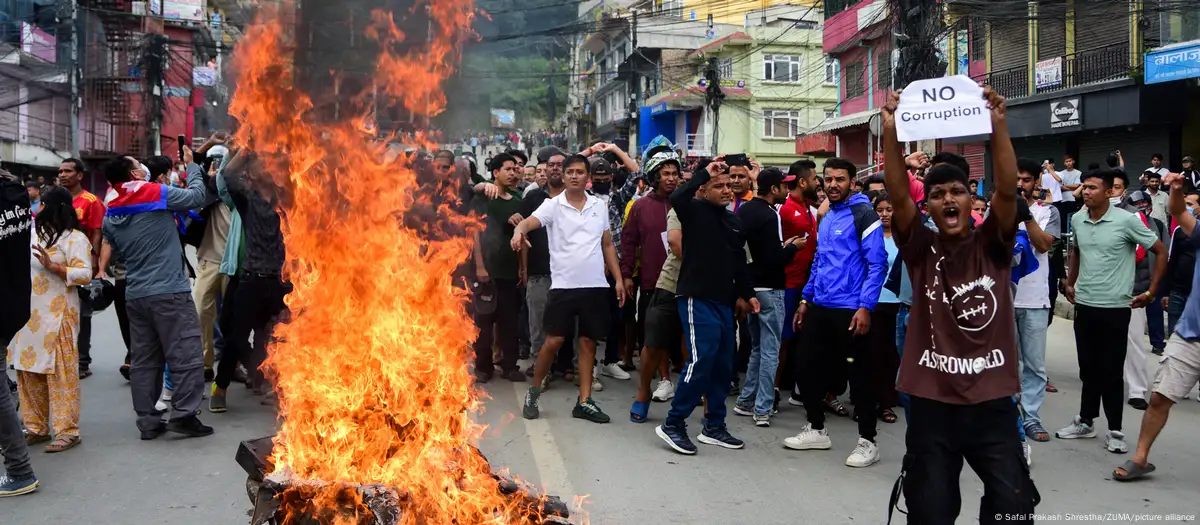
Youth protesters set fires as they rallied against corruption.
Image via Safal Prakash Shrestha/ZUMA/picture alliance via DWWithin a day of the protests, Oli resigned and fled the country — and other politicians soon followed suit
Dramatic videos circulated on social media showed ministers and their families allegedly escaping Nepal at such a frantic pace that they hung onto helicopter ropes to escape the angry mob.
One of these videos can be viewed here.
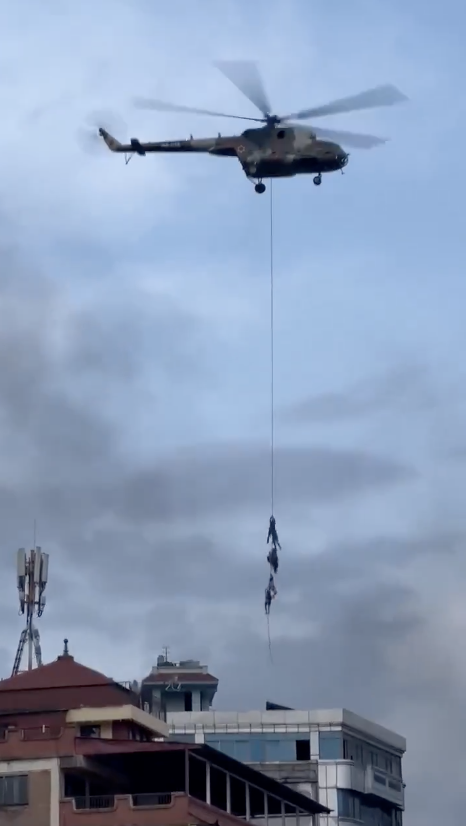
Alleged politicians escaped angry protesters by hanging onto ropes from emergency helicopters.
Image via @JBMuwonge / XAs of 12 September, the remnants of Nepal's political establishment are still scrambling to form a new government.
What happens next for Nepal is still up in the air
According to UN News, the military claimed to have taken control of nationwide security, deploying troops across the country to maintain order until a new government is established.
Youth groups have reportedly returned not only stolen weapons to the Army, but also other stolen items, as seen in this X post.
Hindustan Times reported that protesters have been cleaning up after the riots, sweeping debris and ashes left by fires.
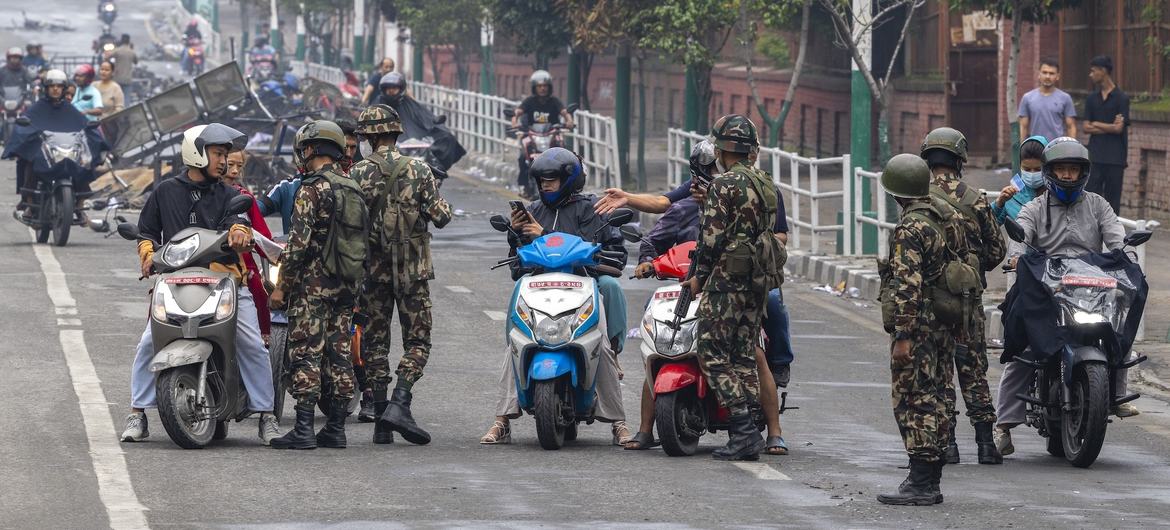
Nepalese soldiers conducting checks at a Kathmandu checkpoint.
Image via Narendra Shrestha / UN NewsWhat happens next in Nepal's unstable situation remains uncertain, but according to Al-Jazeera, the Army is now in talks with the protest movement to appoint an interim leader.
For now, an uneasy calm has settled over Nepal.
