


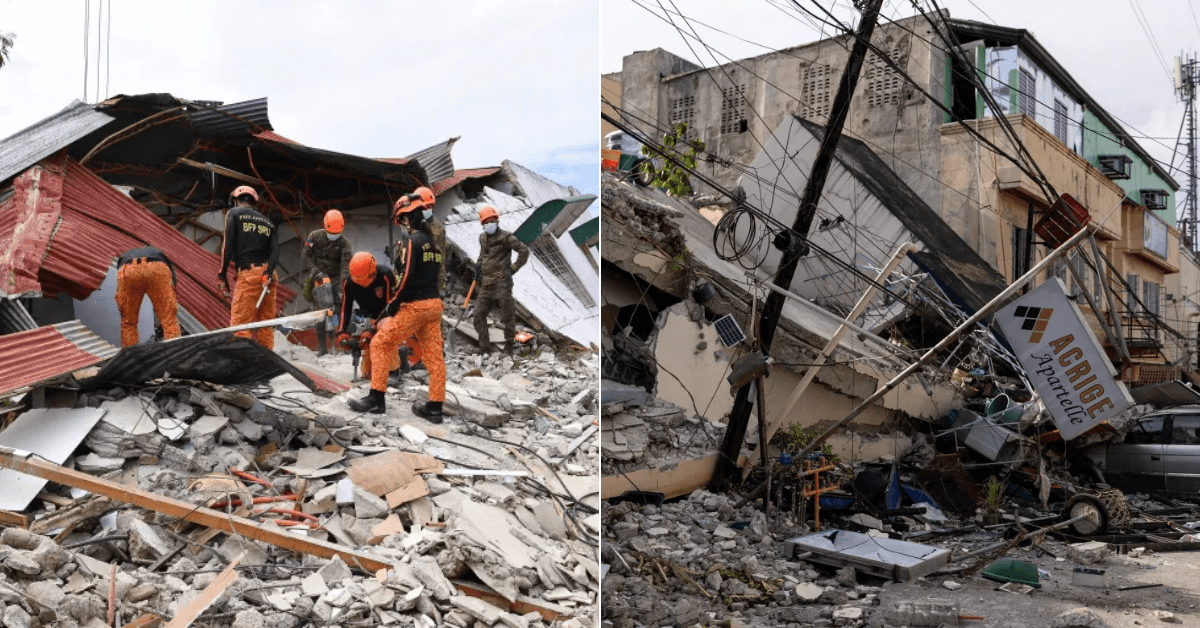
 Cover image via
Follow us on Instagram, TikTok, and WhatsApp for the latest stories and breaking news.
A powerful earthquake struck Cebu Province in the Philippines earlier this week, on 30 September
Measuring 6.9 on the Richter scale, the quake occurred just before 10am local time off the coast of Bogo City, Cebu.
According to Time, the quake's shallow depth meant its energy did not need to travel far before it struck infrastructure, amplifying the amount of damage done.
Multiple buildings collapsed in the disaster, and a tsunami warning was declared for several regions in the Philippines, before being lifted on 2 October.
Exacerbating the disaster were landslides that followed, as well as heavy rains which hampered rescue efforts. Four aftershocks, measuring magnitude 5 and higher, were also recorded by the United States Geological Survey (USGS).
It has been declared the deadliest earthquake in the country in over a decade.
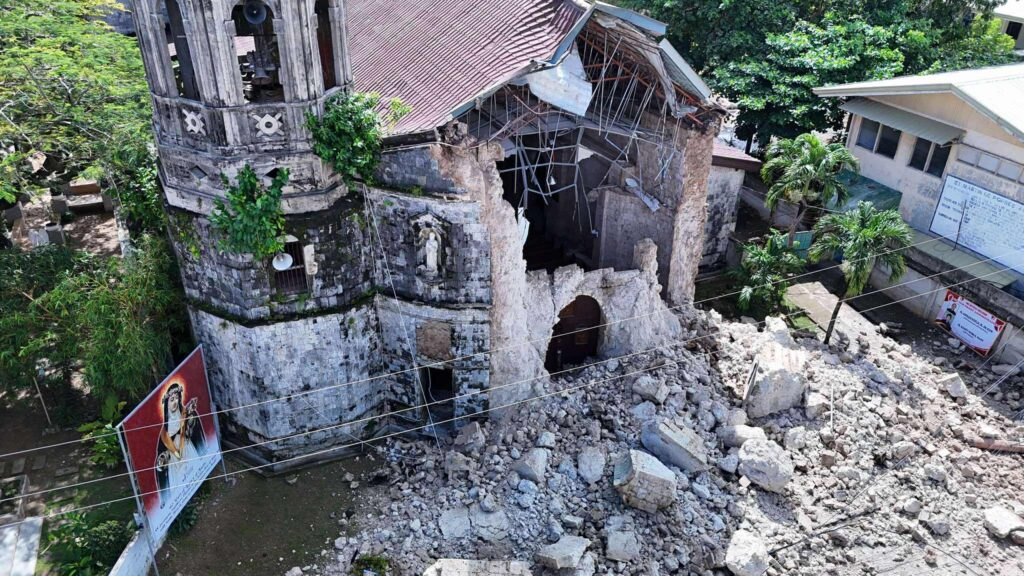
A century-old church damaged by the earthquake.
Image via Philstar / X via The Freeman/Romeo Marantal20,000 people have been displaced, and over 300 injured reported
According to AP News, around 170,000 individuals across Cebu and neighbouring islands have been affected in one way or another — whether through damaged homes, loss of power and services, and infrastructure collapse.
Hospitals are reportedly overwhelmed.
Furthermore, many survivors refused to return home, out of fear of aftershocks.
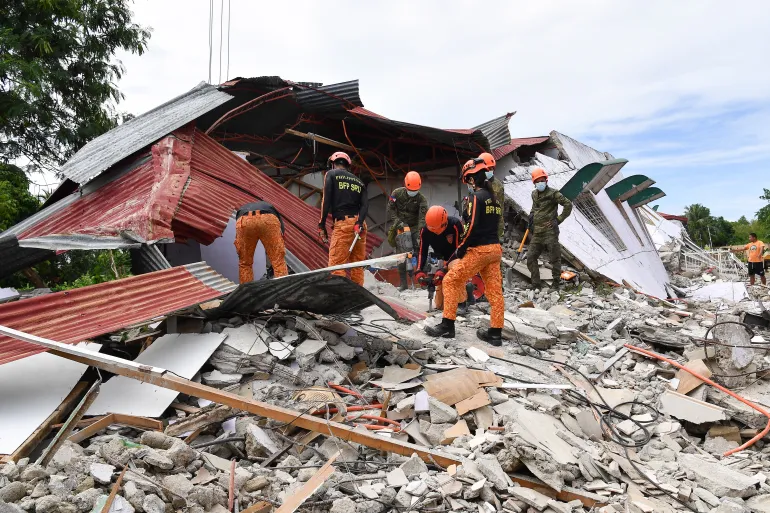
Emergency workers search a ruined house after the earthquake.
Image via Ted Aljibe/AFP via Al-JazeeraAs of 2 October, Filipino officials have announced the cessation of search-and-rescue operations, as the number of dead was not expected to go much higher
According to Reuters, the priority will now be on relief for survivors and displaced peoples, as all reported missing peoples have been accounted for.
The death toll was reportedly worsened by the earthquake happening at night, as this meant people in the impact zone would have been asleep and slower to react to the disaster.
An intense tropical storm that had battered the country only days ago also intensified damage. According to Philippine Institute of Volcanology and Seismology director Teresito Bacolcol, the heavy rain caused mudslides to become more likely in the event of heavy seismic activity such as an earthquake.
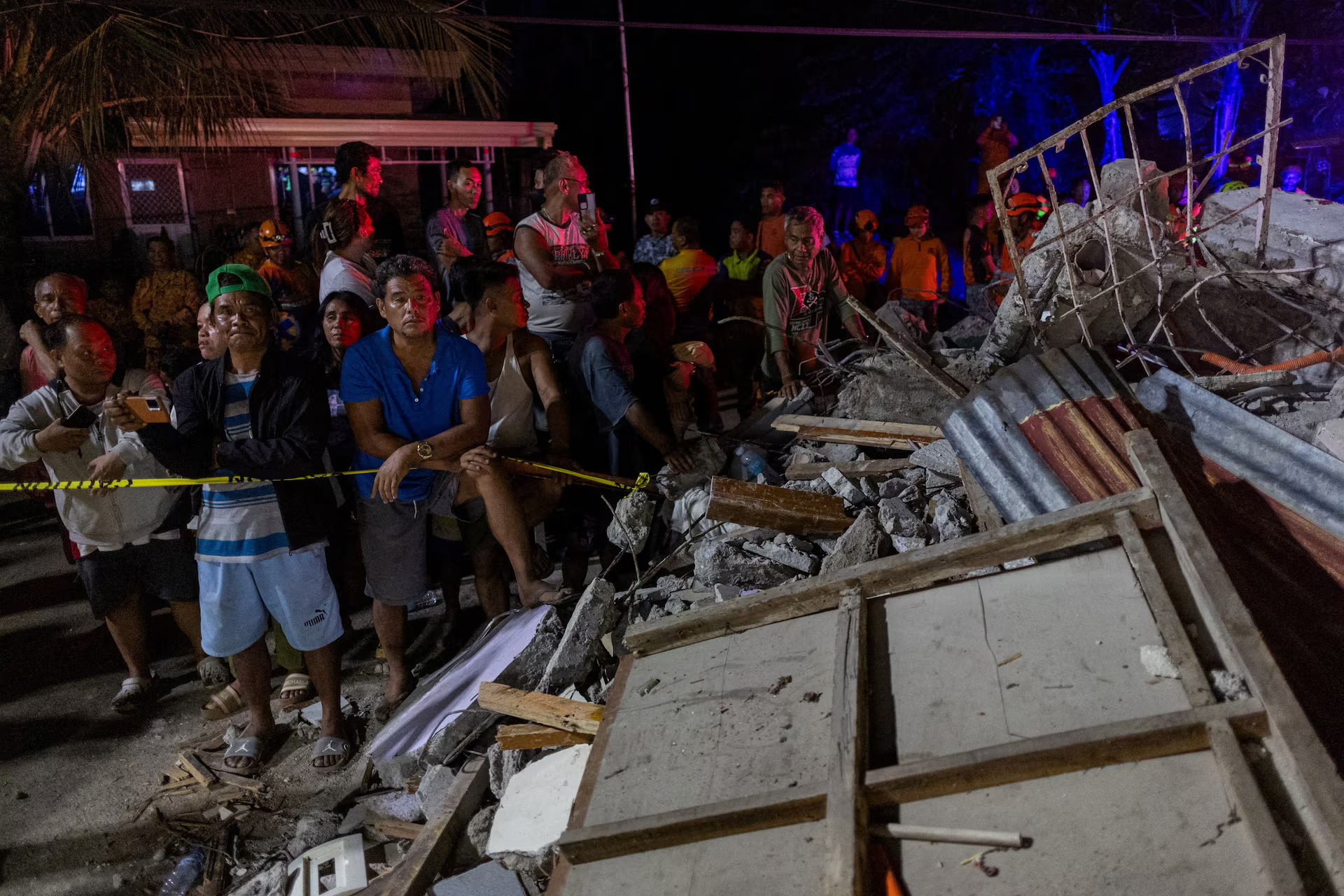
Residents watch as rescuers retrieve the bodies of victims from a collapsed building.
Image via Eloisa Lopez/ReutersThe Philippines is more vulnerable to natural disasters than most countries on Earth
This is because the country sits at the epicentre of the Ring of Fire, an arc of volcanoes and seismic faults around the Pacific Ocean.
Mild earthquakes and volcanic activity are an almost daily occurrence in the country, as countries in this region are particularly sensitive to the movement of the Earth's tectonic plates sliding or colliding with each other.
Indonesia, New Zealand, and Japan are some of the other countries that lie within the Ring of Fire, which is where up to 90% of the Earth's earthquakes occur.
