


 Cover image via P. Kamalanathan
Universiti Teknologi Malaysia (UTM) has come under fire for its Islamic and Asian Civilisation Studies (TITAS) teaching module that made erroneous claims about Hinduism and Sikhism
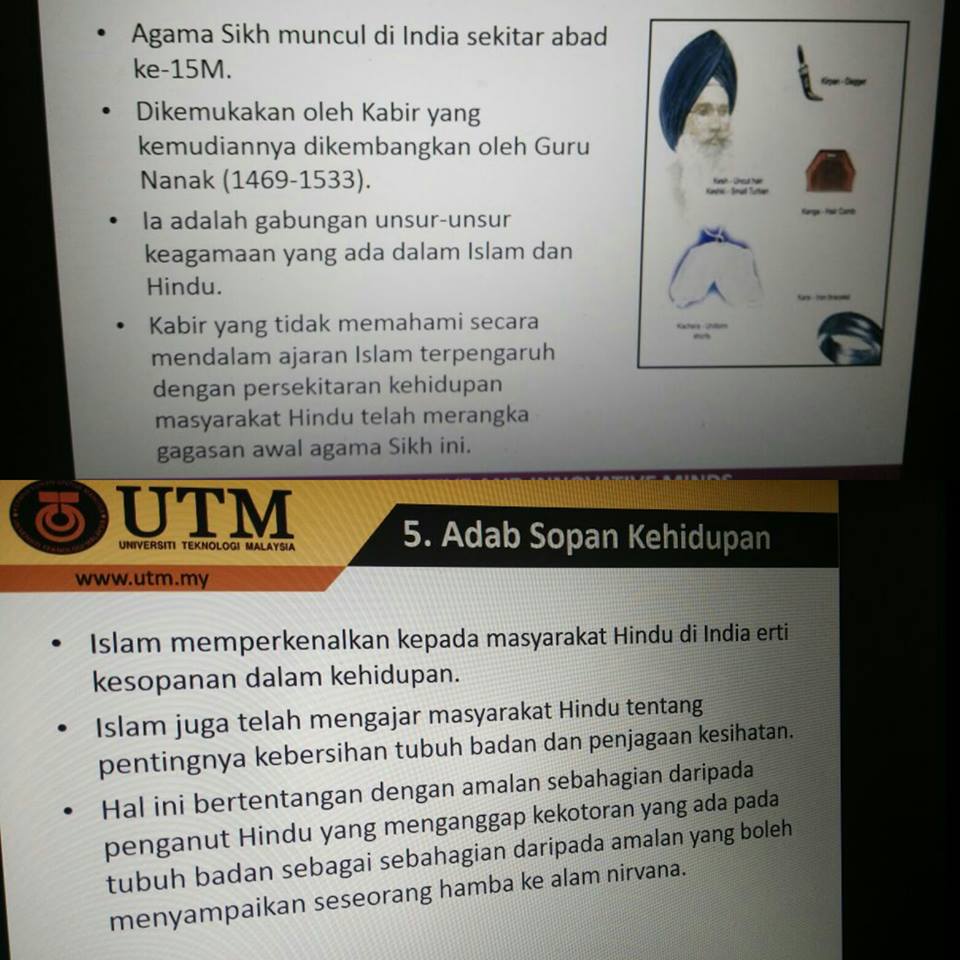
Image via P. Kamalanathan
This comes after photos of two presentation slides bearing UTM's logo went viral on social media.
**The module claimed that Islam had introduced civility to the lives of the Hindu community in India.**
The slides showed that Hindus preferred to be "dirty", adding that Islam had taught former Hindu followers the importance of cleanliness and healthcare.
It also stated that the teachings of Islam had contradicted the practices of some Hindus as they "believe that dirt on the body is a form of ritual which could lead to the attainment of nirvana".

A police report has been lodged against UTM by a NGO for its irresponsible and derogatory teaching module
According to Malaysian Indian Progressive Association (MIPAS) secretary-general S Barathidasan, the chairman of Malaysia Hindu Dharma Mamandram's Sungai Petani branch made the report.
**"MIPAS asks that the UTM authorities work together to conduct more thorough research beforehand and ensure the facts are correct and accurate with Hindu religious organisations, NGOs and academic experts before releasing any teaching modules," Barathidasan said in a statement, as reported by [The Star Online](http://www.thestar.com.my/news/nation/2016/06/14/police-report-lodged-over-university-teaching-module/).**
He added that UTM should immediately remove the said learning modules and has also demanded for a public apology from UTM to all Malaysian Hindus.
Responding to the matter, Deputy Education Minister P Kamalanathan said that he has already informed UTM's vice chancellor about the misinformation
Kamalanathan said in a [Facebook post](https://www.facebook.com/ybPKamalanathan/photos/a.644260572284986.1073741830.615125715198472/1204846699559701/?type=3) yesterday, 13 June, that UTM's vice-chancellor has "acknowledged the mistake" after the issue was made known to him.
"He (the vice-chancellor) has also stated that the necessary changes to the module concerned will be corrected expeditiously," Kamalanathan said.
The Hulu Selangor MP also added that the vice chancellor had "totally agreed" to his reminder of ensuring that such errors will be repeated in the future.
A quick check on UTM's website identifies Professor Datuk Ir. Dr. Wahid Omar as the local institution's vice-chancellor.
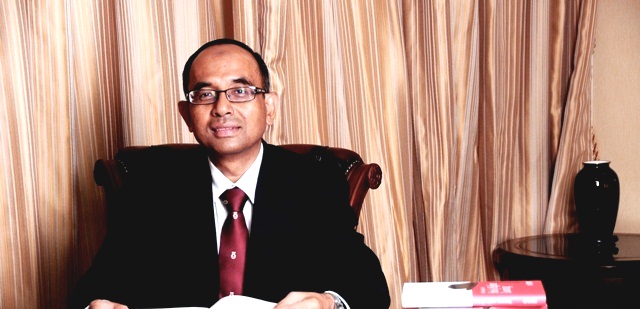
UTM stands as one of the top local universities in Malaysia, boasting of more than 18,000 students and 2,600 academic staffs
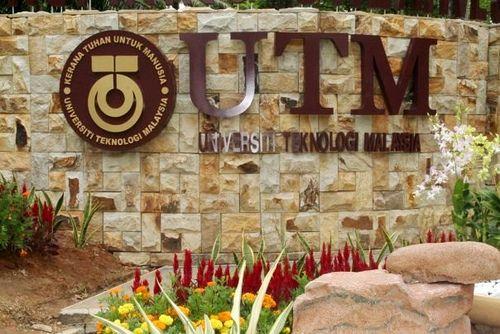
Image via Glassdoor
In the latest ranking by the London-based education group QS Quacquarelli Symonds, UTM was ranked 63rd in the 2016 instalment of the QS University Rankings: Asia.
**There are only five Malaysian universities among the region's top 100.**
In a separate Facebook post, Kamalanathan expressed his utmost disappointment over the inaccurate information about Sikhism and Hinduism fed into the religious studies module at UTM

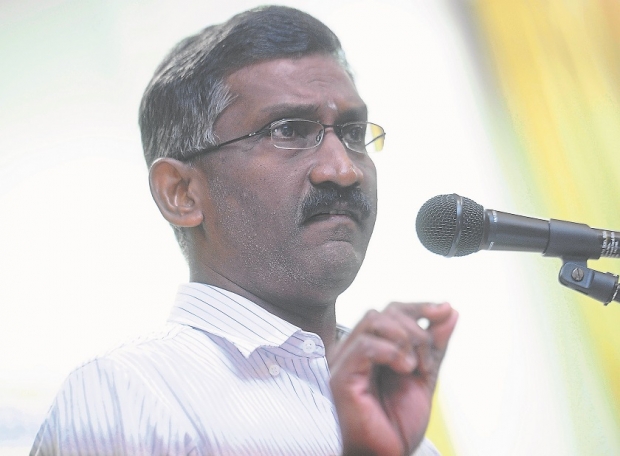
TITAS has been a compulsory module for all Malaysian tertiary students since the year 2013. Its introduction became a subject of controversy as many claimed that it was an agenda to push Islamic supremacy in the country.
Tan Sri Muhyiddin Yassin, who was the Deputy Prime Minister then, sparked controversy when he announced in July 2013 that TITAS will become mandatory for local students, regardless of their religion, at private institutions of higher learning (IPTS) starting in September 2013.
Critics argued that the subject will be on Islam and that students risk being taught by religious fanatics with little exposure to other religions, adding that it was another step forward in the Islamisation of the country
However, Muhyiddin defended the move, saying that the introduction of TITAS as a compulsory subject was meant to streamline the requirements between public and private tertiary institutions.

Image via Carousell
