


 Cover image via Soumyabrata Roy/NurPhoto/AFP & Ceng Shou Yi/NurPhoto/AFP
Follow us on Instagram, TikTok, and WhatsApp for the latest stories and breaking news.
Malaysians may soon have to pay more for chicken and eggs, as rising costs linked to the Iran war are expected to ripple through the country's poultry industry
Producers say increasing prices for animal feed, fuel, and fertilisers could eventually drive up production costs, with the impact likely to be felt at supermarkets and wet markets in the coming weeks and months.
Malaysians are among the world's top consumers of both poultry and eggs. As of 2026, the data shows that chicken and eggs remain the primary and most affordable protein sources for the population, with Malaysians consuming a whopping 50kg of chicken and over 430 eggs per person annually.
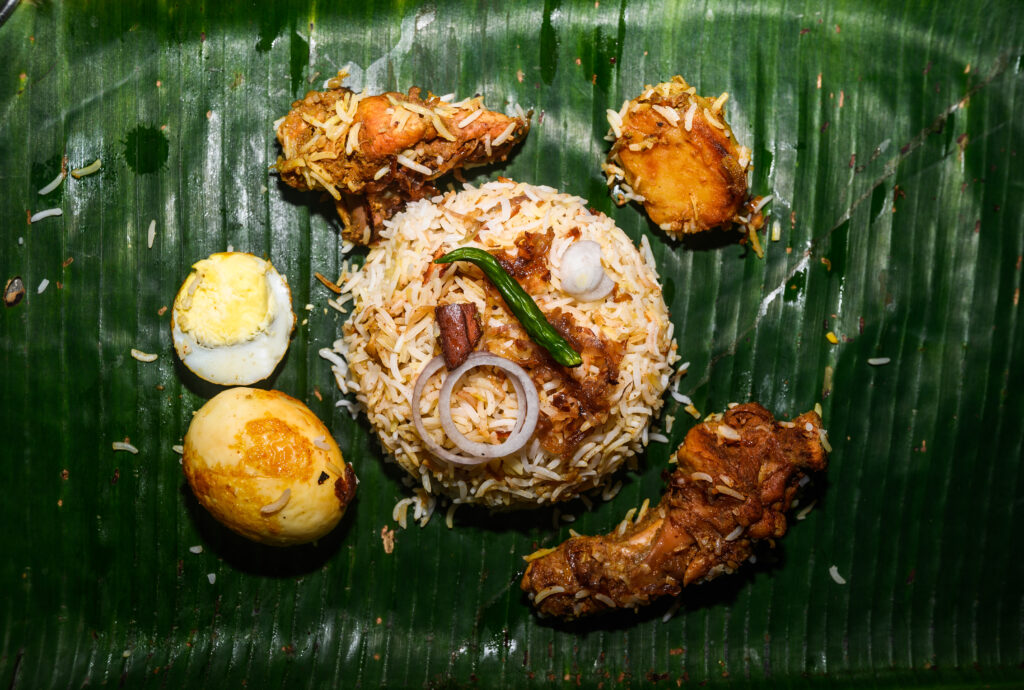
Biryani, a popular mixed rice dish from India, made with Indian spices, rice, and meat, with variations including eggs and vegetables like fried potatoes. Similar dishes are also made in countries like Iran, Iraq, Myanmar, Thailand, and Malaysia.
Image via Soumyabrata Roy/NurPhoto/AFPWhy prices of these affordable protein sources could go up
The main pressure point is animal feed, the single biggest cost in poultry farming.
Feed typically accounts for about 60 to 70% of total production costs, and Malaysia relies heavily on imported ingredients such as corn and soybean meal, according to a CodeBlue report.
"Malaysia relies heavily on imported feed ingredients, particularly corn and soybean meal sourced from major agricultural exporters such as Brazil, Argentina, and the US," said Dr Saravanakumar S Pillai, a former senior deputy director at the Department of Veterinary Services (DVS).
"When global prices of these commodities increase, the cost of feed production rises almost immediately for local feed millers. This eventually translates into higher production costs for poultry farmers."
The Iran war has added pressure to global markets, with concerns over energy supply and shipping routes pushing up prices of fuel and fertilisers.
Fertiliser costs, in particular, have already surged in recent weeks, raising the cost of growing crops like corn and soybeans, which are used in animal feed.
Because chickens grow quickly, reaching market weight in about 35 to 40 days, any increase in feed costs can show up relatively fast
"Any increase in feed price during that period directly affects the cost per kilogramme of live bird produced," Dr Saravanakumar was quoted as saying.
This means chicken prices could start adjusting within a single production cycle, or roughly five to six weeks.
Egg prices, on the other hand, may take longer to reflect cost increases, as laying hens remain in production for extended periods.
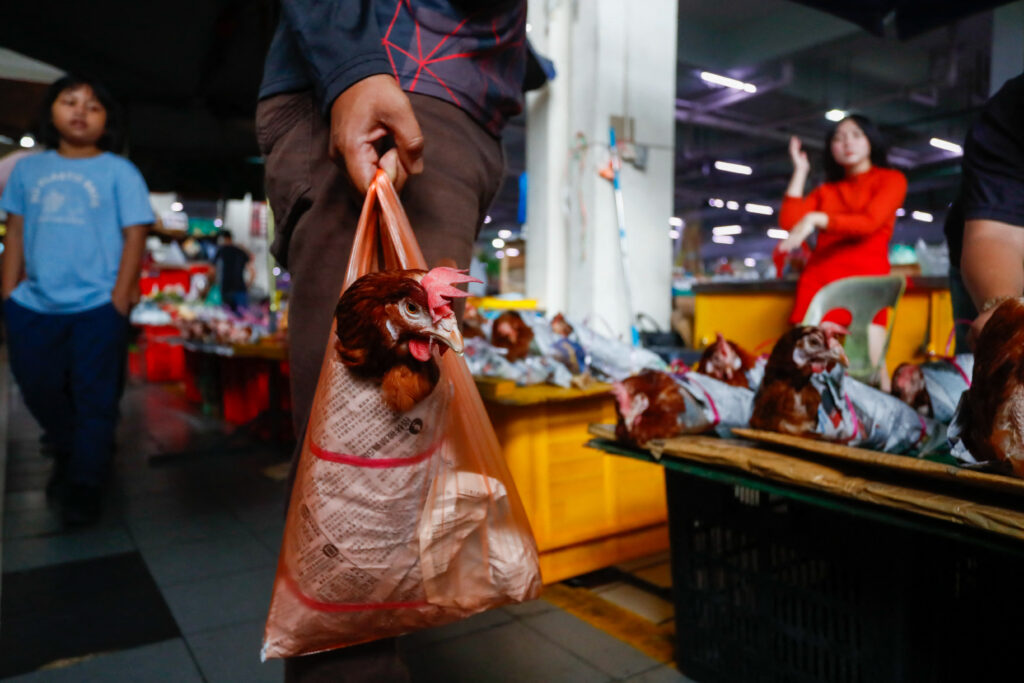
Live chickens wrapped in used newspapers are sitting next to partially-roasted chickens for sale at a shop in Sibu Central Market, in Sarawak.
Image via Ceng Shou Yi/NurPhoto/AFP