


 Cover image via The Star Online
As if the rising temperature was not enough to discourage Malaysians from going out, a great jellyfish invasion, no thanks to the current El Niño phenomenon, on beaches here have also taken away any option of some outdoor fun and frolic from their lives

Image via tumblr
In fact, the jellyfish invasion at the popular Tanjung Aru beach in Sabah is showing absolutely no sign of abating. On Saturday, 30 January, a 9-year-old girl became the latest victim of a jellyfish sting, bringing the total reported cases to a total 22 so far this month.
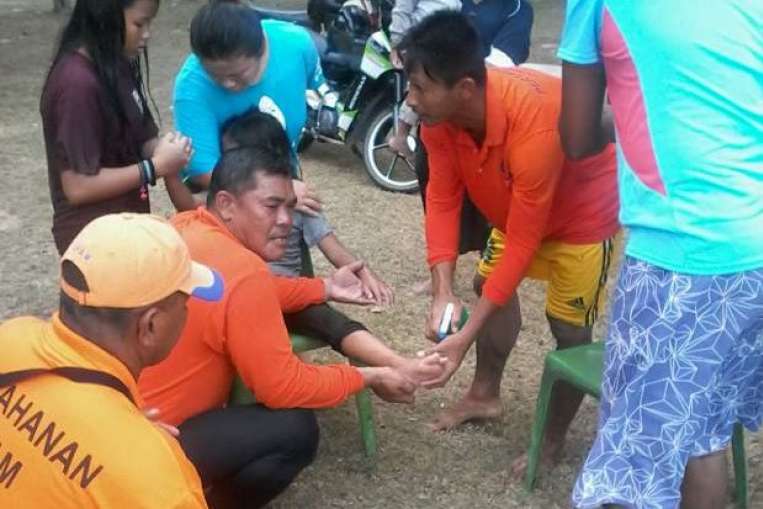
Lifeguards giving first aid to Marshada Shirlin after she was stung by a jellyfish at the popular Tanjung Aru beach in Kota Kinabalu on Saturday.
Image via The Star Online
Earlier on 20 January, the Sabah Fisheries Department sent a team of experts from the Likas Fisheries Centre to investigate reports of jellyfish sting incidents and found two species
One of the species was identified as the chironomid box jellyfish (chorpsalmus quadrigatus) locally known as *obor-obor api*, which are known to be highly venomous and are neurotoxic, cardiotoxic and dermatonecrotic.
The other species is locally known as *obor-obor pasir*, a black spotted jellyfish similar to the Catostylus townsendi species.
Stings from their tentacles can cause itch and/or allergic reactions upon contact with skin, leading to inflammation and swelling on the affected part of the victim.
