


 Cover image via Mark Rober (YouTube)
NASA engineer-turned-YouTuber Mark Rober recently designed a test to challenge the effectiveness of Tesla's driver aids
The test compared Tesla's camera-based Autopilot system with a vehicle using LiDAR, which is short for Light Detection and Ranging, a light-based radar-like system. Tesla's camera-based Autopilot system with a vehicle using LiDAR, which is short for Light Detection and Ranging, a light-based radar-like system.
He set up a fake road painted on a wall, similar to something you'd see from a cartoon show, to see if the cars would automatically stop before hitting it. The video reached 10 million views on YouTube, albeit with a mixed response.
Check out the full video below:
Rober began his experiment by testing how well two cars could detect a stationary mannequin on the road
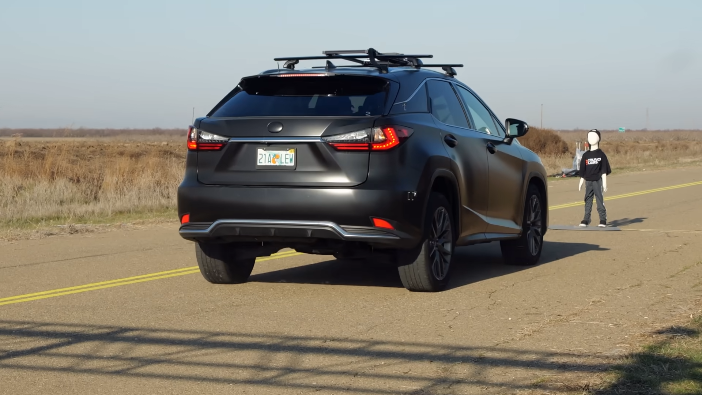
Image via Mark Rober (YouTube)
He drove a Lexus car equipped with LiDAR, and a Tesla, which relied on its camera-based system, towards a child-sized dummy at 64km/h. The LiDAR-equipped car quickly detected the obstacle and came to a safe stop.
In contrast, the Tesla, when relying solely on its optical-based driver aid failed to recognise the mannequin and collided with it. However, with Autopilot activated, the Tesla managed to slow down, indicating a difference in how the systems operate.
To further evaluate the vehicles' capabilities, Rober introduced more complex scenarios. In one test, a mannequin suddenly appeared from behind a parked car. Both the Lexus and the Tesla successfully avoided it.

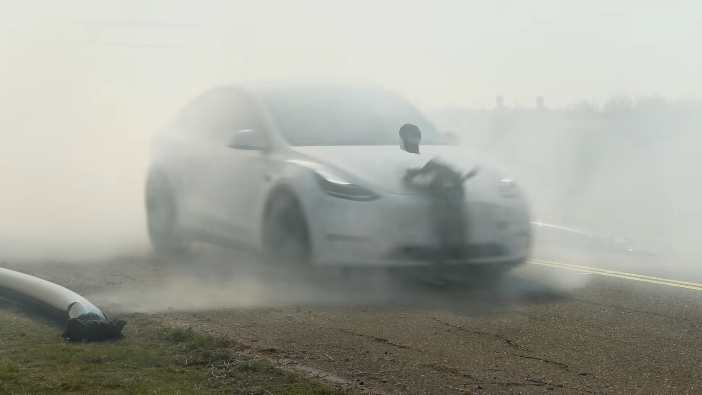
Image via Mark Rober (YouTube)
However, the Tesla struggled significantly in adverse weather conditions. In thick rain and fog, the Tesla was unable to detect the obstacle, while the LiDAR-equipped Lexus braked without issue. Interestingly, the Tesla performed well in a test simulating blinding sunlight, managing to brake in time. These results suggest that LiDAR technology offers advantages in challenging weather, while camera-based systems can face limitations under certain environmental conditions.
In his final test, Rober used a large foam wall designed to blend into the background, mimicking a classic movie set trick
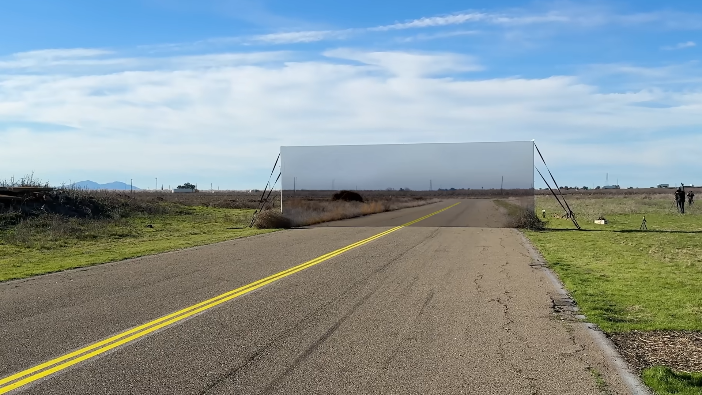
Image via Mark Rober (YouTube)
The Lexus, using its LiDAR, instantly recognised the wall as a solid obstacle and stopped safely. The Tesla, however, failed to detect the wall and crashed into the mannequin placed in front of it. This test further highlighted the difference between LiDAR and camera-based systems in perceiving and reacting to obstacles, especially when visual illusions are involved.
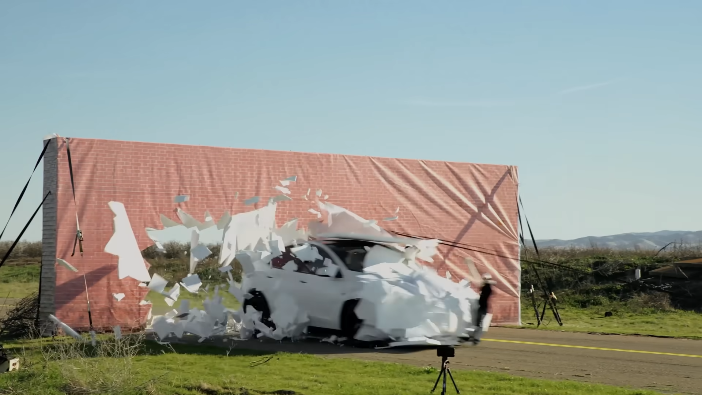
Image via Mark Rober (YouTube)
It was clear that the LiDAR-assisted car performed better than the Tesla in all tests
However, it's important to remember that Rober's video, while informative, is primarily entertainment. It's a YouTube production, not a formal scientific study. As some viewers have pointed out, there are inconsistencies in the testing. So, while the video provides a good demonstration, it's best to view it with a degree of scepticism.

