


 Cover image via
In 2015, a Singaporean man crossed over to Johor to buy 105 packets of Ramly beef patties to sell them at night market shops in Woodlands
The 105 packets of Ramly beef patties at the time had cost him RM400.
The then-47-year-old businessman, Mohamed Dawood R M Abdul Sukkur, was hoping to turn a quick profit during the holy month of Ramadan and support his 10 children, according to The Straits Times.
Here's where it gets interesting: the way he tried to smuggle the patties into Singapore.
He hid them under a spare tyre in the boot of his rented black BMW, then fled from the Tuas Checkpoint to avoid a full inspection, triggering a two-hour manhunt that ended in his arrest.
Why did he have to hide Ramly beef patties?
Because, first of all, he did not have a licence to import beef into the country; secondly, and most importantly, the original Ramly beef patties are banned from being imported and/or sold in Singapore.
So, realising that the police were closing in and the Ramly beef patties would incriminate him, he dumped them into an open drain in a last-ditch attempt to get rid of the evidence.
However, Mohamed Dawood was caught and a year later, he was sentenced to nine months in jail and banned from driving all vehicles for three years after his release. He also had to pay a fine of RM27,000.

Image via Miss Tam Chiak
Wait, why has Singapore banned the Ramly beef patties?
Firstly, the ban has been in place for several decades, so this isn't exactly new information.
However, according to a 2004 article in the now-defunct The Sunday Times, a spokesperson from Ramly Food Processing had stated that it was "very keen" to market the beef and chicken patties in Singapore.
"We're doing the necessary paperwork and checks, and hopefully, in a year or two, we'll be applying for [the Singapore Food Agency's (SFA)] approval," the spokesperson was quoted as saying.
That was two decades ago, and Singapore's ban on Ramly burger patties remains in place.
The issue is not so much with Ramly burgers themselves, but with the source of the beef used in the iconic Malaysian street favourite. Ramly imports its beef from India, a country not on SFA's list of approved beef sources. For a country to be approved, its meat processing facilities must meet Singapore's stringent food safety and animal health standards.
In 2019, Cilisos interviewed a Ramly representative, who stated that Ramly does not export its beef or chicken patties to Singapore because they have not yet met the specific production standards.
Crucially, she also clarified that the ban is specific to the patties.
Other Ramly products, such as their sauces, mayonnaise, and some frozen goods like frankfurters and nuggets, are officially approved and legally sold in Singapore. This makes it clear that the issue isn't with the Ramly brand itself, but specifically with the raw meat patties that made the burgers famous.

So, what are the 'Ramly' burgers sold in Singapore?
If the original patties are banned, what exactly are you eating at the pasar malam?
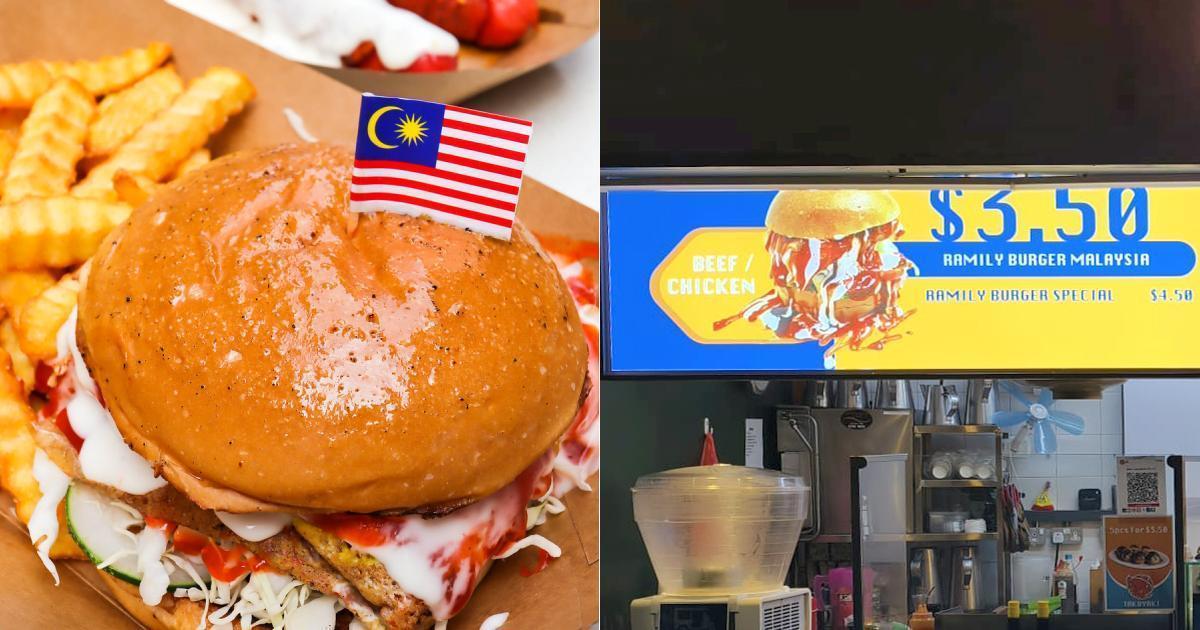
The 'Ramly' burgers sold by street vendors and cafés in Singapore are, in fact, 'Ramly-style' burgers. While they follow the classic Malaysian preparation — a patty wrapped in a sauce-drenched omelette, tucked into a toasted bun — the core ingredient is different.
To get around the import restrictions, local vendors use burger patties from other brands that are approved for sale in Singapore. Popular choices include brands like Tasty, Sultan Burger, and Armiya.
These patties are halal and produced in SFA-approved facilities, making them perfectly legal to sell.
Some dedicated vendors, like Chef Wong Kok Chin of the popular Mr Burger, even import their buns and sauces directly from Malaysia to get as close as possible to the authentic taste. He claims to have found a Singapore-approved patty that is "about 80% similar in taste to that of the original Ramly Brand".
After facing significant financial challenges, Mr Burger has now partnered with the local food chain Ananas Cafe to sell his popular Ramly-style burgers at several MRT stations, reported CNA Lifestyle last year.
Does it taste the same?
For many who have tried both, the difference is noticeable.
Fans of the original Malaysian Ramly burger often point out that the taste and texture of the beef patty are distinct. The "real" Ramly patty is known for its unique seasoning and juiciness, which the Singapore-approved alternatives aim to replicate, but don't always capture perfectly.
Ultimately, the burgers you enjoy in Singapore are a localised version of a Malaysian classic — a delicious tribute, but not the authentic flavour bomb that melts in your mouth.


