


 Cover image via Sinar Harian
Follow us on Instagram, TikTok, and WhatsApp for the latest stories and breaking news.
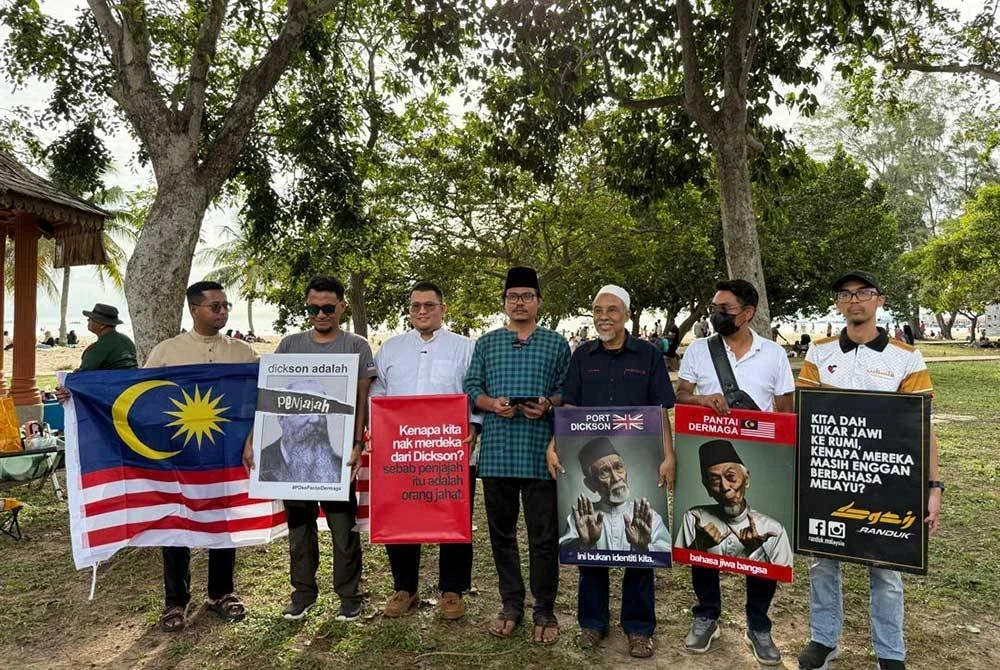
A group of NGOs has launched a petition to change the name of Port Dickson to Pantai Dermaga, as part of efforts to shed colonial-era names from the nation's identity
Speaking to Sinar Harian on 16 September, Pertubuhan Pemerkasaan Identiti Malaysia (IDENTITI) chairperson Islah Wahyudi Zainudin said the area was once a Malay village known as Tanjung Kemuning before it was seized by British colonial officer Sir John Frederick Dickson, who renamed it Port Dickson around 1889.
"Many people don't know that Dickson seized Tanjung Kemuning, a Malay village that has now completely disappeared. The only remaining trace of Kampung Bahasa Kapor today is an old mosque, Masjid Lama Port Dickson in Kampung Bahasa Kapor, located near the Port Dickson district police headquarters.
"This is not something that deserves to be celebrated or glorified. Instead, the name of a coloniser has been elevated as part of our national identity. To me, this is unacceptable," Islah said.
He added that although Malaysia has been independent from British colonial rule for 68 years, it is disappointing that many colonial-era names remain part of the nation's geographical identity.
"The effort to remove colonial names actually began soon after independence. For example, North Borneo was renamed Sabah (1963), Jesselton became Kota Kinabalu (1965), Port Swettenham was changed to Port Klang (1972), Province Wellesley to Seberang Perai (1972), Telok Anson to Teluk Intan (1982), and Port Weld to Kuala Sepetang (1982).
"Why did this effort stop? Why was it not continued to restore the original identity and remove colonial names that do not reflect our true history?" he asked.
The NGOs involved in the petition include Pertubuhan-Pertubuhan Pembela Islam (Pembela), Ikatan Muslimin Malaysia (ISMA), Gabungan Nasionalis (GN), and Majlis Perundingan Melayu (MPM).
What is the state government's response to the petition?
On 10 September, Negeri Sembilan Menteri Besar Datuk Seri Aminuddin Harun criticised the NGOs for lobbying to change Port Dickson's name, reported Berita Harian.
He argued that such a move would be problematic, noting that many other places in Malaysia, such as George Town and Port Klang, would also require renaming.
He sarcastically suggested that the NGOs might as well campaign for a nationwide overhaul of place names.
Aminuddin said the name should remain unchanged, noting that Port Dickson is well known for its resort beach and has carried the same name since his birth.
The Malaysian Tourism Federation (MTF) echoed Aminuddin's sentiment, stating that changing the name would weaken brand recognition and undermine investor confidence, reported FMT.
However, Universiti Kebangsaan Malaysia (UKM) senior lecturer Dr Al-Amril Othman urged Aminuddin to view the petition from a different perspective.
He said it should not be seen as an attempt to erase history, but rather as part of a broader effort to reclaim a place's original identity, reported The Vibes.
What is the origin of Port Dickson?
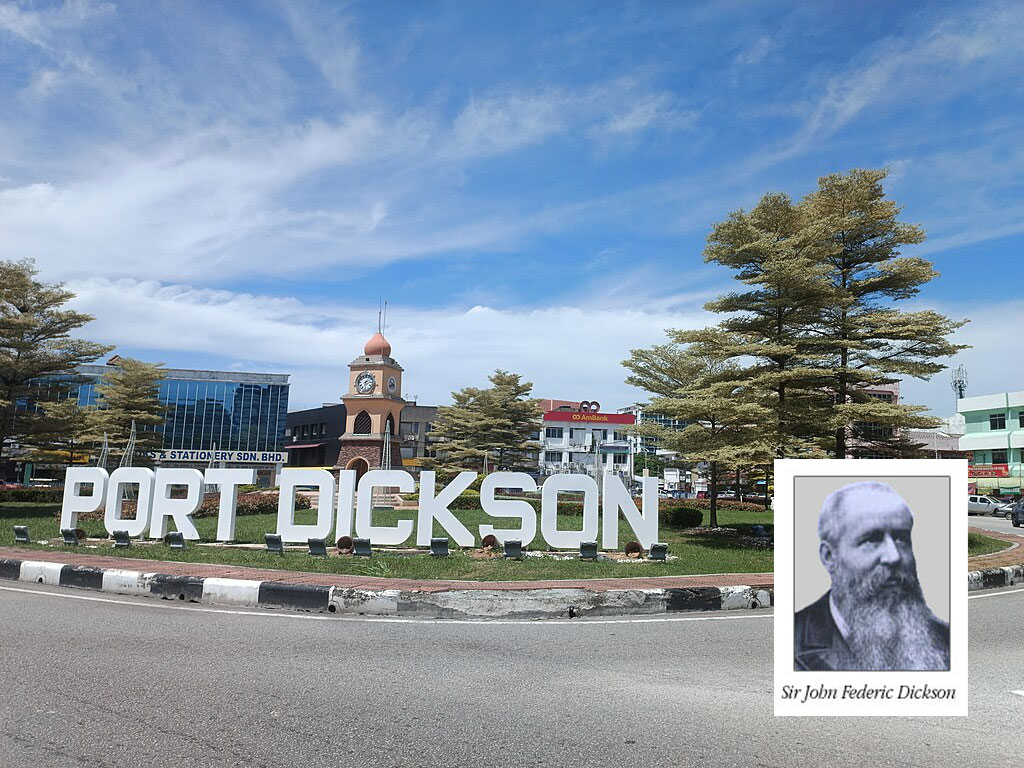
According to the Port Dickson Municipal Council (MPPD), the name Port Dickson originated from British officer Sir John Frederick Dickson in the late 19th century, replacing the local names Tanjung (used by the Malay community) and Arang (used by the Chinese and Indian communities).
Recognising its strategic location along the Straits of Malacca, the British developed Tanjung into a seaport and retreat, capitalising on lucrative trade between India and China.
In 1891, a railway linking Tanjung to Sungai Ujong (now Seremban) was built by labourers from India to boost tin exports.
Dickson, then secretary of the federated states, officiated the opening of the railway, formally renaming Tanjung as Port Dickson.
By the mid-1890s, Port Dickson had grown rapidly into a busy port town, complete with customs facilities, brick shop houses, and a thriving trading hub.
