


 Cover image via
Follow us on Instagram, TikTok, and WhatsApp for the latest stories and breaking news.
A new scam tactic has been making the rounds just in time for Chinese New Year, and it involves something many people wouldn't think twice about: a red ang pow packet with real cash inside
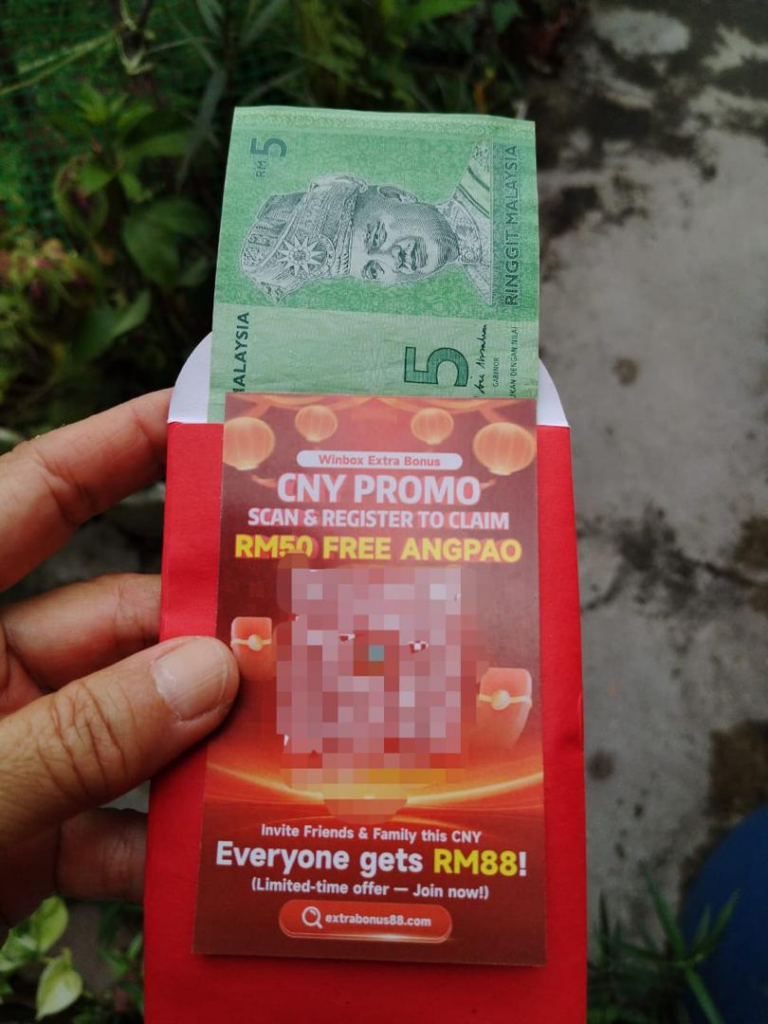
According to netizens, red packets containing an RM5 note and a card with a QR code have been randomly delivered to houses in certain residential areas.
While the money is real, the QR code is where the danger lies.
Several people have warned others not to scan the code, as it is believed to be part of a new scam method designed to steal personal and banking information
One such incident was reportedly shared by a resident in Kuching, where ang pows were allegedly dropped off throughout a housing area. Similar cases were also mentioned in nearby areas, including Padawan.
A post in a Sarawak community Facebook group claimed that scammers are ramping up so-called "e-ang pow" or gift scams by exploiting people's trust in free money, especially during festive seasons.
"Scammers ramp up 'e-angpow' or gift scams in housing areas like those in Kuching and Padawan. Similar doorstep packages with QR codes have been reported nationwide, targeting trust in free money.
"QR codes in these packets typically lead to phishing sites requesting bank details, personal info, or app downloads that steal data or authorise fraudulent transfers. Victims may see fake 'RM200 voucher' promises, but scanning enables 'quishing' (QR phishing), which has risen in Malaysia, including Sarawak," read the post.
A similar warning has also been circulating on WhatsApp
One message claimed that ang pows were delivered to every house in a neighbourhood, each containing RM5 and a red card with a QR code.
The message read: "My friend's housing area received ang pows in every house. Inside got RM5 and this red card with a QR code. DON'T SCAN THE QR — it's a new scam method."
Scanning unknown QR codes can lead to phishing websites, malicious app downloads, or even unauthorised bank transactions.
If you come across one of these ang pows, the safest thing to do is not scan the QR code, avoid sharing any personal information, and warn others in your area, especially elderly family members who may be more vulnerable to such scams.

Image for illustration purposes only.
Image via New Straits TimesThe warning also comes as authorities remind the public to stay extra cautious during festive periods, which are often peak times for scam activity
According to the New Straits Times, Communications Minister Datuk Fahmi Fadzil said scammers tend to become more active when people are withdrawing cash and spending more, especially around aid distributions and major celebrations like Chinese New Year and Hari Raya Aidilfitri.
With the rollout of the Sumbangan Asas Rahmah (SARA) assistance happening close to the festive season this year, he warned that scammers see this period as an opportunity to trick unsuspecting victims.
He also reminded the public not to click on suspicious links received via SMS, noting that official messages no longer include clickable links following a directive by the Malaysian Communications and Multimedia Commission (MCMC)
Any SMS that still contains a link should be treated as a red flag.
According to him, some scammers may even use fake mobile base stations to send out fraudulent messages to people within a specific area.
Those who have fallen victim to scams are urged to contact the National Scam Response Centre immediately by calling 997.
Reporting a scam within 30 minutes can significantly increase the chances of stopping money from being transferred out and recovering lost funds, as the centre now operates 24 hours a day.
