


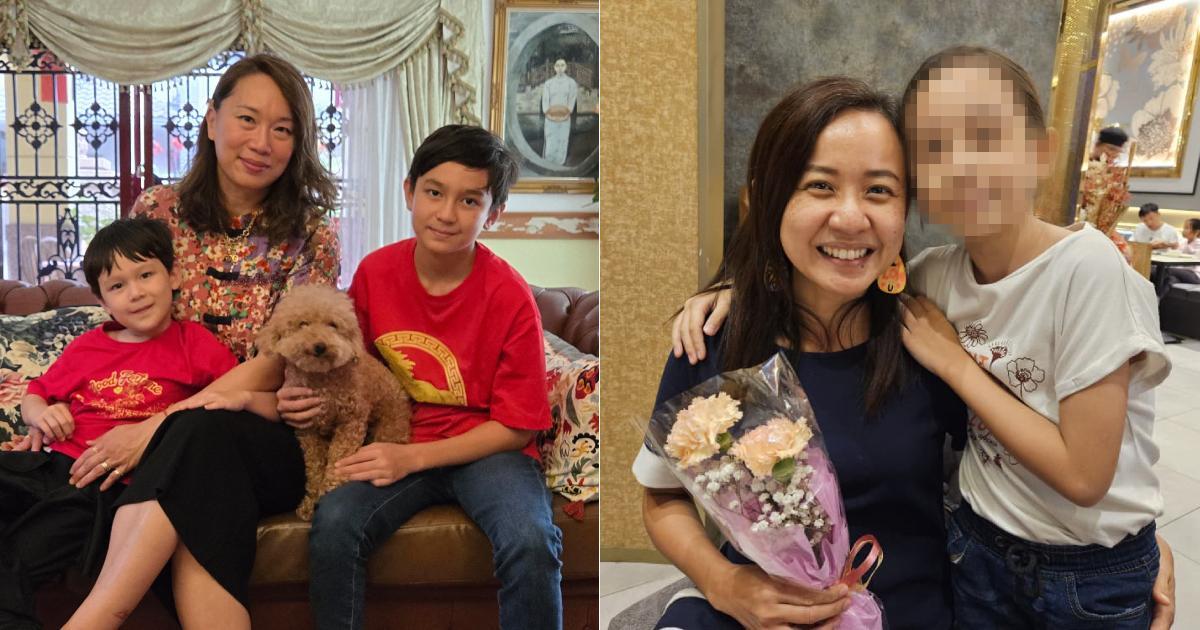
 Cover image via Rachel Ng (Provided to SAYS) & Alison (Provided to SAYS)
Follow us on Instagram, TikTok, and WhatsApp for the latest stories and breaking news.
For Rachel Ng, Mother's Day this year carries a weight that flowers and breakfast in bed cannot quite capture
It is the first one in a long time where she does not have to wonder whether both her sons truly belong to the same country.
Her elder son, born in the UK to her Irish former husband, finally received his Malaysian citizenship in 2024, on his 10th birthday, after a decade-long application process that included one rejection with no explanation given.
"For 10 years, there was always this underlying uncertainty hanging over us," the 42-year-old advertising professional, based in Petaling Jaya, told SAYS.
That uncertainty is what the Constitution (Amendment) Bill 2024 is meant to permanently end.
Passed by Dewan Rakyat on 17 October 2024 and subsequently cleared by Dewan Negara, the bill addresses citizenship provisions that have long treated Malaysian mothers as second-class citizens when it comes to passing nationality to their overseas-born children.
As of early May 2026, it is in the final phase of obtaining royal assent from the Yang di-Pertuan Agong before it can be gazetted and brought into force.
Home Minister Datuk Seri Saifuddin Nasution Ismail has stated that the government is targeting 1 June 2026 as the implementation date.
When it does come into force, Malaysian mothers will for the first time be able to automatically pass citizenship to their overseas-born children — the same right Malaysian fathers have held since independence.
For families like Rachel's and Alison's — two mothers SAYS spoke to for this Mother's Day feature — it is a milestone that arrives with complicated emotions: relief, yes, but also the quiet grief of knowing how long it took, and what it cost to get here.
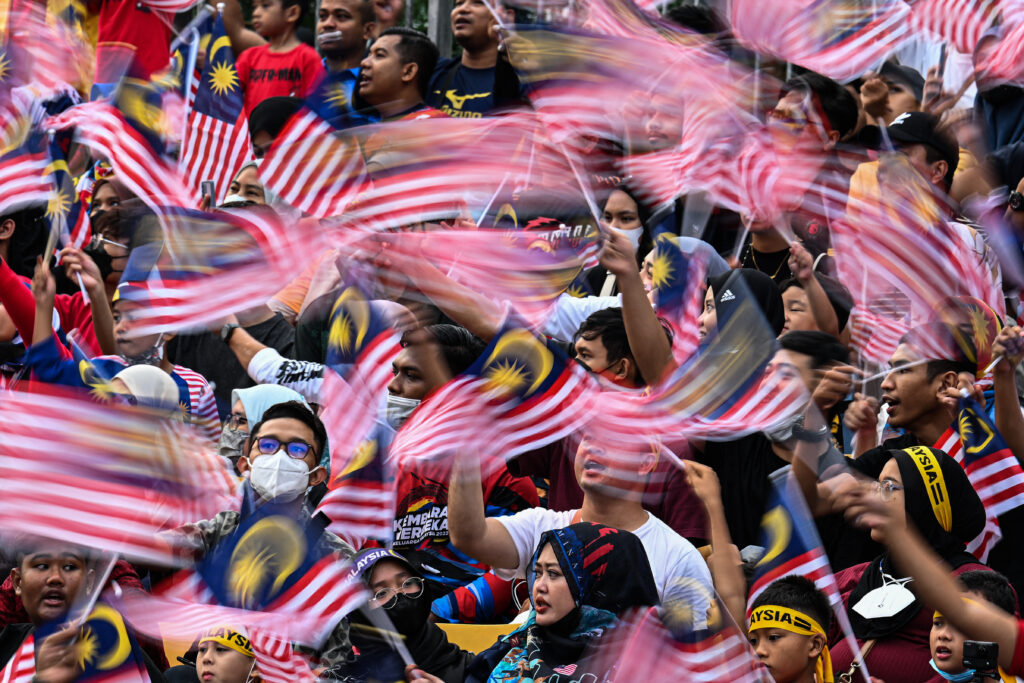
People wave Malaysian flags.
Image via Mohd Rasfan/AFPRachel has two sons. One was born in Malaysia, the other in the UK.
They grew up in the same house, under the same roof, with the same mother. But for a decade, the law saw them differently.
When her elder son was young, Rachel kept the explanation simple. She told him the difference was because he was born in the UK.
She did not want him carrying the emotional weight of understanding that the law itself treated Malaysian women differently from Malaysian men.
In the beginning, she had no community to turn to. She convinced herself that this was simply "the system" and that all she could do was comply with it and hope for the best.
It was only when she found Family Frontiers, the advocacy group that has been at the centre of the legal fight for equal citizenship rights for Malaysian mothers, that things shifted.
"For the first time, I realised I was not alone, and that what we were experiencing was not just unfortunate bureaucracy, it was a form of gender discrimination that affected thousands of Malaysian women and children," she said.
"As a mother, there is no difference between my children. Yet legally, one child belonged automatically, while the other had to wait years to be recognised."
The gap between those two realities showed up constantly, in ways both big and small.
Enrolling her elder son in school as a non-citizen became administratively and emotionally exhausting. She could afford to place him in an international school, and eventually chose that route because the bureaucracy became too overwhelming.
Before he turned seven, he could stay in Malaysia on a Long-Term Social Visit Pass (LTSVP) linked to her as his mother. After seven, the only way he could legally remain in the country was through a student visa tied to his school.
As her elder son grew older, Rachel became more honest with him about the reality of the law and why they were fighting to change it. He began joining her at advocacy events, slowly understanding the weight of what their family had been carrying.
"He is my child — my flesh and blood. Yet legally, his right to stay in the country depended on an institution, not on his Malaysian mother," Rachel said.
There were other reminders, too.
Her sons travelled on different passports. At immigration counters, officers sometimes questioned her about whether she was both children's biological mother, or whether they shared the same father.
"Those questions may seem casual to some people, but to affected mothers, they can feel deeply humiliating and insensitive," she said.
"It reinforces this idea that our families are somehow unusual, questionable, or less legitimate simply because the law failed to recognise us equally."
Her elder son carried the uncertainty in his own way, too.
He had separation anxiety and, from time to time, would ask her: "Am I a Malaysian yet?"
Rachel sometimes found drawings he had made about his citizenship situation.
"I guess that's how he copes," she said.
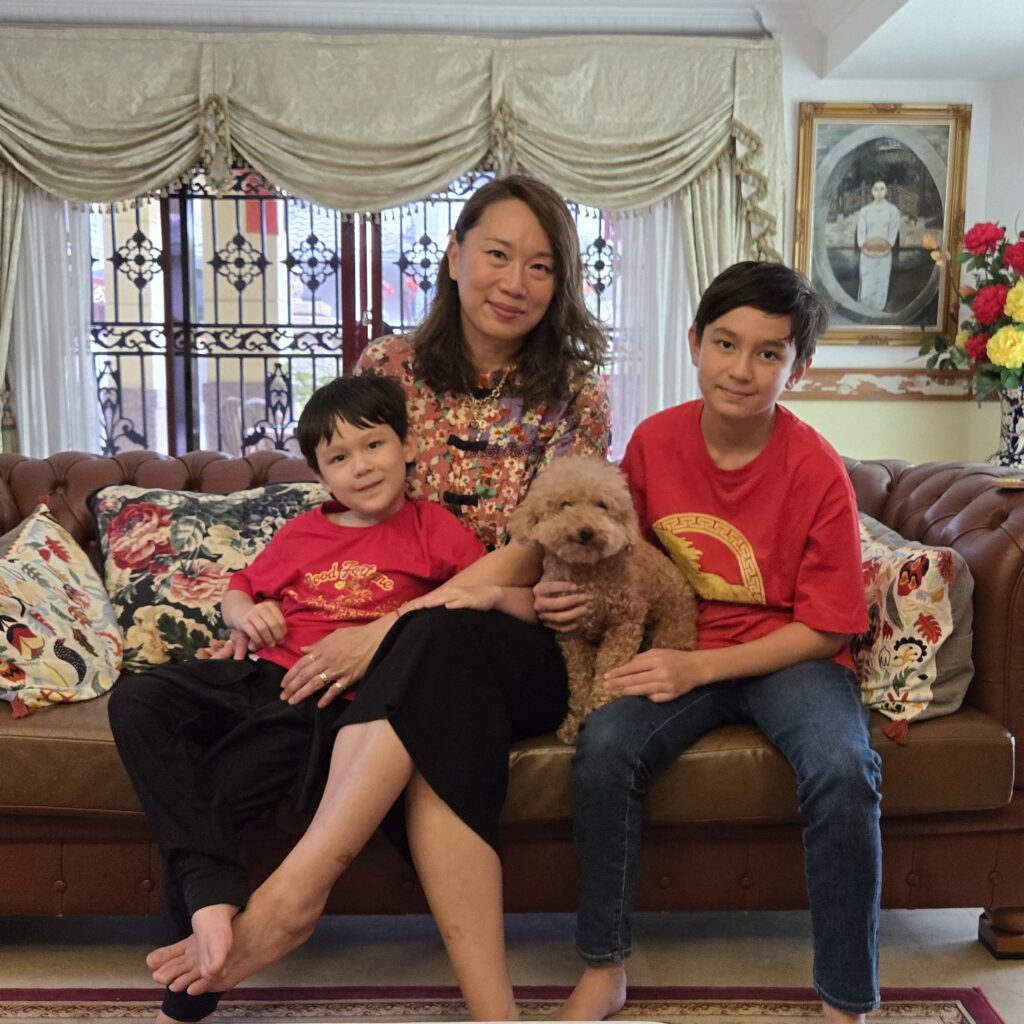
Rachel with her two sons.
Image via Rachel Ng (Provided to SAYS)For Alison, an educator also based in Malaysia, the law made itself felt in a different way, one that cut much closer to home
During the pandemic, her daughter, who was born in China, was in Malaysia on a tourist visa.
Every few months, Alison had to take her to the Thai border just to stamp her passport and turn back, so the visa could be renewed for another three months.
Her mother would come along on those trips — three generations of them, Alison, her daughter, and her own mother, taking the train up to the border and back.
At the same time, Alison was trying to secure an LTSVP for her daughter through the immigration office in Penang. The process was long, the documents never quite complete, and the trips back and forth endless.
"At that time, I just felt so exhausted," the single mother told us.
"The pandemic was challenging by itself already, so adding the visa issue on top of that was very exhausting. But I had to bite down and just try to find the energy to go through with all this paperwork," she said.
Then came something harder.
As the pandemic wound down, Alison and her then-husband were contemplating a divorce. And the question of her daughter's citizenship, still unresolved, hung over every decision she had to make.
"I was always under the fear of losing my daughter," she said.
"I wanted to settle down in Malaysia, close to family, close to my support network. But if my daughter had a foreign passport, how could I keep her with me?"
She found herself asking questions no mother should have to ask.
Whether she should stay in an unhappy marriage.
Whether leaving meant risking custody.
Whether the law would ultimately decide the shape of her family for her.
"Citizenship is not just the practical aspect," Alison said.
"It's also the mental health aspect, and it also dictates our life decisions."
Her daughter received her Malaysian citizenship in 2024 when she was seven, just as she was entering primary school.
Alison and her ex-husband are now co-parenting amicably. But the weight of that period, the border runs, the paperwork, the fear, does not simply disappear.
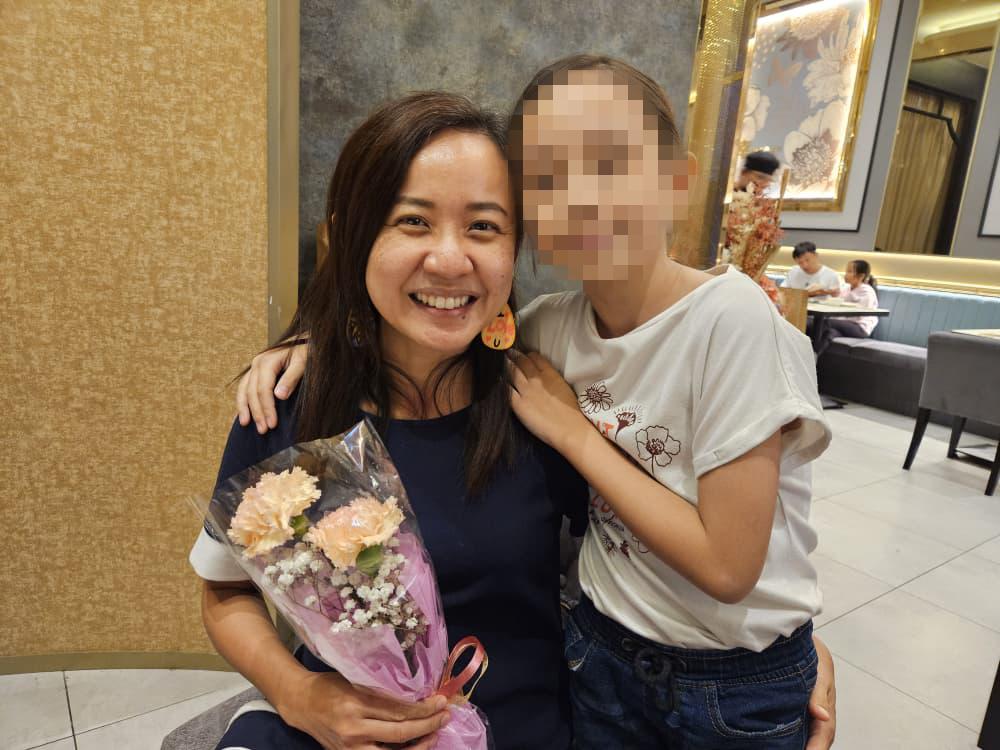
In this photo shared with SAYS by Alison, she is wearing earrings her daughter made for her for last year's Mother's Day.
Image via Alison (Provided to SAYS)What does it mean, now, to have it resolved?
For Alison, the change has been profound and deeply ordinary at the same time.
Her daughter identifies as Malaysian, and as her other nationality too, but Alison says she can see the true Malaysian in her.
She speaks like a Malaysian, loves Malaysian food, and if you ask her where she wants to grow up, she would tell you here.
She goes to school like any other kid in her class, with the same benefits and treatment, minus any conditions.
"It's mostly the mindset change," Alison said.
"It gives us a very steady feeling, a very stable feeling. It eased our minds, and we are at peace with the situation now."
This Mother's Day, she will celebrate with her daughter, her daughter's godmother, her sister, her sister-in-law, and her mother in Penang.
It is the kind of gathering that sounds ordinary because it is, and that is exactly the point
"We couldn't have done that if we hadn't settled down here. And we couldn't settle down here if she didn't have the citizenship," Alison said.
"Having the citizenship brought us closer to friends and family, and we are very, very grateful for that."
For Rachel, the feelings are layered
She welcomes the amendment wholeheartedly. But she also thinks often about those it does not reach.
The Constitution (Amendment) Bill 2024 is not retrospective.
Automatic citizenship will only apply to children born overseas to Malaysian mothers after the law is officially gazetted. Children born before that date must still apply through registration under Article 15(2) of the Federal Constitution. For families whose children are now adults, the path remains unclear.
Rachel thinks about them often, the children who spent their entire childhoods and formative years in legal limbo, now adults, for whom this change may still offer no resolution.
"While we celebrate this historic milestone, we also carry the stories of those who spent decades in limbo, those who aged out of eligibility, and those who endured years of uncertainty before this change finally arrived," she said.
"Their experiences should not be forgotten simply because progress is now happening."
She also thinks about the guilt that many affected mothers carried — quietly, privately — even though none of it was their fault. The self-questioning that came with every year of waiting. Whether giving birth overseas had made life harder for their child. Whether loving someone from another country had been a wrong turn.
"Even when you know intellectually that the law is discriminatory, emotionally it is hard not to internalise that burden as a mother," Rachel said.
Today, as part of Family Frontiers, Rachel said she feels proud of what affected mothers and families have achieved together, that ordinary people, when they persist long enough, can help reshape laws for future generations.
When she thinks about Mother's Day now, and about the future she wants for both her sons, it comes down to something simple.
"What I wanted was actually something very simple: for them to just be brothers," she said.
"To grow up side by side without bureaucracy or legal status interfering with their bond."
Her elder son is 11 now. He is Malaysian. And this year, for the first time, that is not something either of them has to fight for.
The Constitution (Amendment) Bill 2024 is currently in the final phase of obtaining royal assent before it can be gazetted and brought into force
Beyond granting Malaysian mothers the automatic right to pass citizenship to their overseas-born children, the bill also lowers the age limit for certain citizenship applications under Article 15A from 21 years to 18 years, aligning it with Malaysia's lowered voting age and the definition of a minor under the Child Act.
In preparation for the law's implementation, the government is finalising amendments to the Citizenship Regulations 1964, developing an online pre-registration system, and briefing Malaysian diplomatic missions worldwide.
Meanwhile, the backlog of citizenship cases, which stood at nearly 50,000 at the start of the current administration, has been reduced to fewer than 4,000.
