


 Cover image via
Follow us on Instagram, TikTok, and WhatsApp for the latest stories and breaking news.
Two earthquakes rattled Johor yesterday morning, 24 August
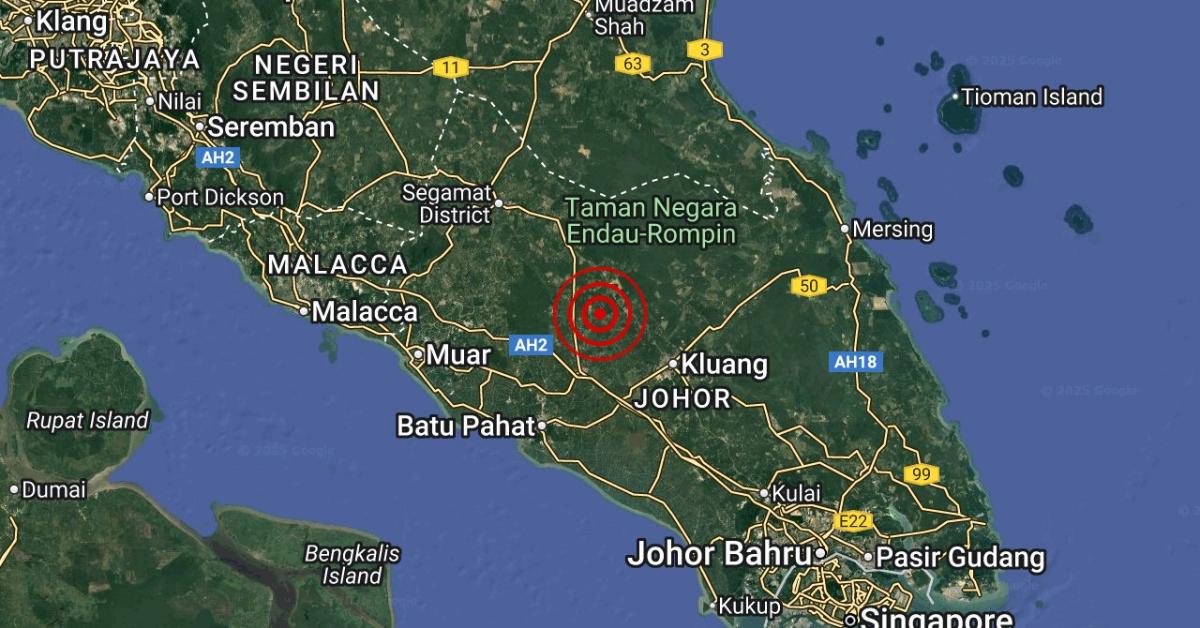
According to the Malaysian Meteorological Department (METMalaysia), the first quake with a magnitude of 4.1 struck at 6.13am about 5km from Segamat.
A second, weaker quake followed at 9am, measuring 2.8 in magnitude, about 28km northwest of Kluang.
Tremors were felt across Johor, Negeri Sembilan, Melaka, and southern Pahang, and the quakes were also detected by Indonesia's Meteorology, Climatology, and Geophysical Agency.
In a statement yesterday, METMalaysia director-general Dr Mohd Hisham Mohd Anip confirmed that both quakes occurred within the Mersing Fault Zone.
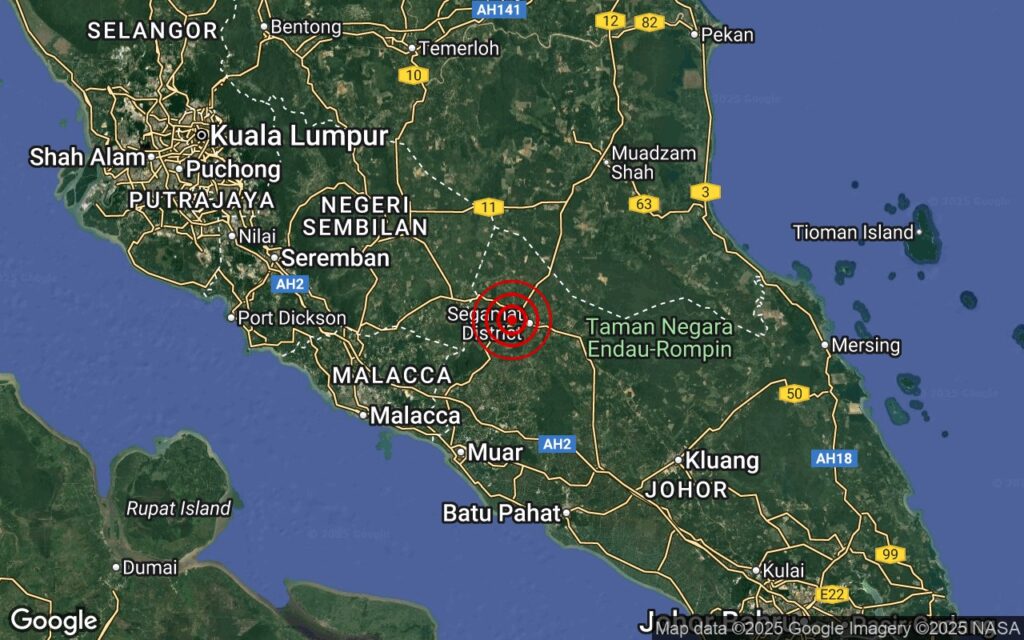
The first quake with a magnitude of 4.1 struck at 6.13am about 5km from Segamat.
Image via Malaysian Meteorological Department (Facebook)But what does that mean? What's a fault zone?
Well, we need to look at how earthquakes normally happen.
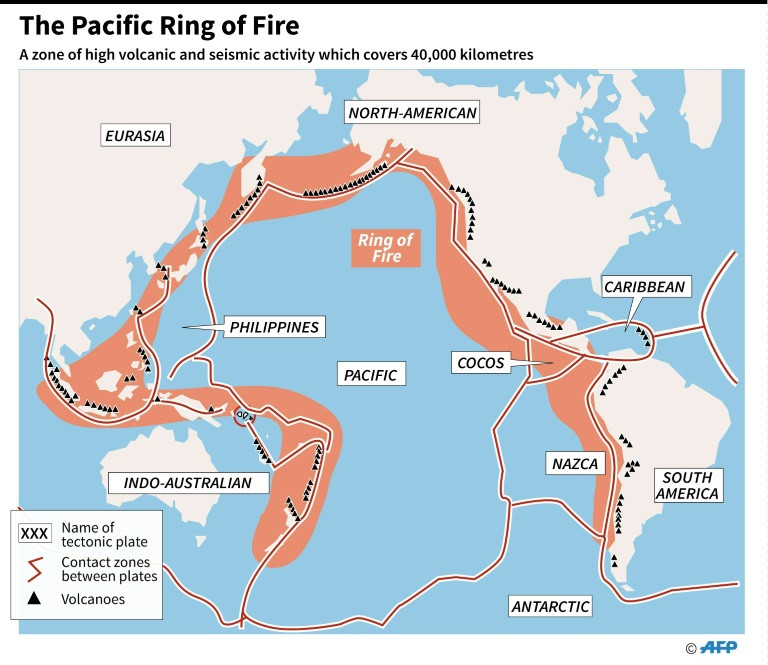
Large earthquakes — like the devastating one in Aceh in 2004 — usually occur when two tectonic plates collide or slide against each other. These are called interplate earthquakes, and they commonly occur along the Pacific Ring of Fire, which runs through Indonesia, the Philippines, and Japan.
Malaysia, however, sits on a relatively stable tectonic plate (the Sunda Plate) outside the Ring of Fire, which is why the country is considered low-risk for major earthquakes.
But that doesn't mean Malaysia is completely free from seismic activity.
Smaller earthquakes can occur within a tectonic plate itself, known as intraplate earthquakes. These usually happen along fault lines — cracks or fractures in the Earth's crust where stress gradually builds up.
When the accumulated stress along these lines is suddenly released, the ground shifts and an earthquake occurs. In Peninsular Malaysia, these localised intraplate earthquakes have been recorded along several fault lines, including in the Mersing Fault Zone.
Other known fault zones in Peninsular Malaysia include Bukit Tinggi in Pahang, Kuala Pilah in Negeri Sembilan, Manjung and Temenggor in Perak, and Tasik Kenyir in Terengganu.
However, METMalaysia has assured that the earthquakes in Johor are no cause for alarm
According to the department, both earthquakes were weak and posed no tsunami threat.
Nonetheless, it is important to always be prepared. Here are some quick safety tips to know if you ever feel the ground shake:
– Drop, cover, hold on: Get under a sturdy table or desk and hold on until the shaking stops.
– Stay away from windows: Glass can shatter easily.
– Don't use elevators: Take the stairs if you need to evacuate.
– If you're outside: Move to an open area, away from buildings, trees, or streetlights.
– If you're driving: Pull over safely and stay inside your vehicle until it's over.
