


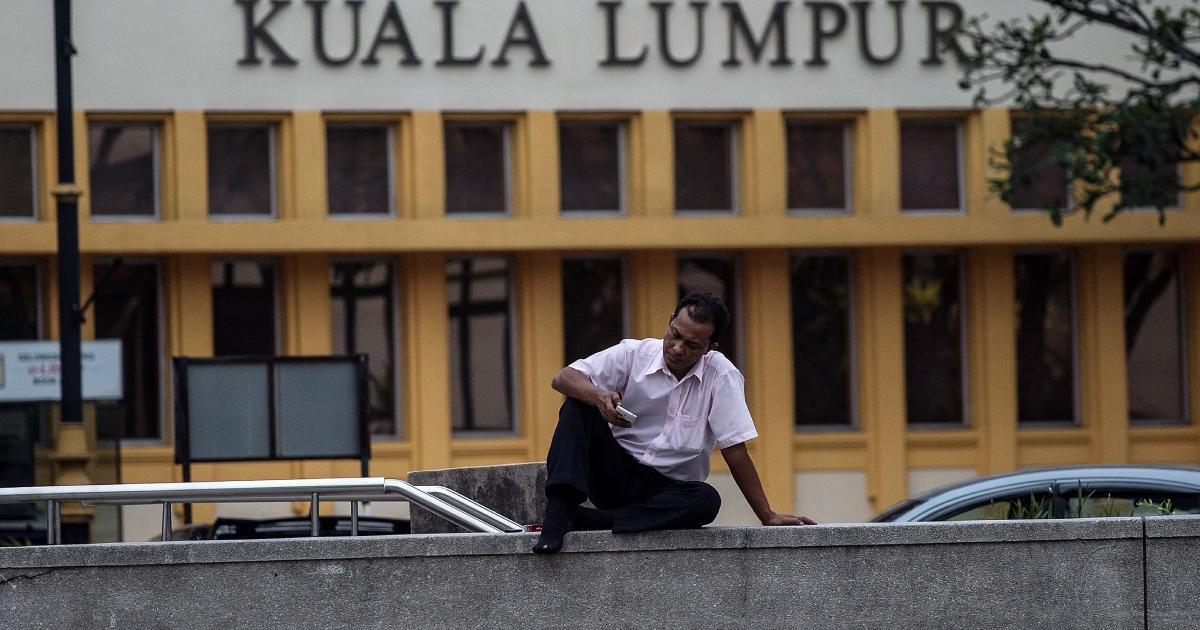
 Cover image via Manan Vatsyayana/AFP
Follow us on Instagram, TikTok, and WhatsApp for the latest stories and breaking news.
A viral social media post by a Malaysian employee has sparked widespread discussion online after the worker claimed they were declared "redundant" by their company, only to later be offered the exact same job as a contract employee
The post, originally shared on Facebook, resonated with many Malaysians who said it reflected growing concerns over retrenchment practices, cost-cutting measures, and the rise of contract-based employment arrangements.
According to the employee, the company informed them that layoffs were necessary because projects had allegedly dried up, and cited "role redundancy" as the reason for retrenchment.
However, the worker claimed the company later offered two options: accept three months' compensation and leave, or continue doing the same work under a contractor arrangement with reduced benefits.
"The job is exactly the same as what I'm doing now," the employee wrote, questioning how the position could be considered redundant if the company still needed the role filled.
The worker also alleged that while the contract arrangement came with a slightly higher basic salary, it involved lower billable hours, reduced overtime pay, and the removal of benefits such as relocation allowances and insurance coverage.
The employee further claimed they were still actively handling projects at the time the retrenchment decision was made, arguing that the company would struggle to prove the role was genuinely redundant.
Believing the move was aimed at reducing employment costs rather than eliminating the position entirely, the worker said they had filed a case with the Industrial Relations Department (JPP), a division under the Ministry of Human Resources.

Illustration photo of a Malaysian woman waiting for a bus while returning from work in Kuala Lumpur.
Image via Manan Vatsyayana/AFPThe employee reportedly sought an additional four months of compensation to settle the dispute, but claimed the company refused
In the post, the worker raised several questions about whether the retrenchment process was legally defensible, including whether offering the same role under a different employment structure contradicted the company's claim of redundancy.
The employee also questioned whether a permanent employment agreement that was allegedly signed until 2027 could strengthen claims of breach of contract or compensation.
Under Malaysian labour practices, redundancy typically refers to situations where a role is no longer required due to restructuring, downsizing, automation, business closure, or reduced operational needs.
However, labour disputes involving retrenchment often become contentious when employees believe their positions still effectively exist under a different title, arrangement, or hiring structure.
The post quickly attracted strong reactions online
Many social media users debated whether the worker should pursue the matter further through the Industrial Court if mediation efforts fail.
Some commenters argued that companies increasingly rely on contract arrangements to reduce long-term employment costs and liabilities, while others pointed out that retrenchment compensation packages are often negotiated based on years of service and internal company policies.
Others advised the employee to carefully weigh the financial and emotional costs of prolonged legal action against the certainty of accepting compensation and moving on.
The case has also reignited broader conversations about job security in Malaysia's changing labour market, particularly as more companies restructure operations amid economic uncertainty and shifting business models.
For many Malaysians following the discussion, the viral post highlighted a growing fear among workers that permanent positions may increasingly be replaced with more flexible, but less secure, contract arrangements.
Illustration photo of a Malaysian man sitting in an open area after work in Kuala Lumpur.
Image via Manan Vatsyayana/AFP