


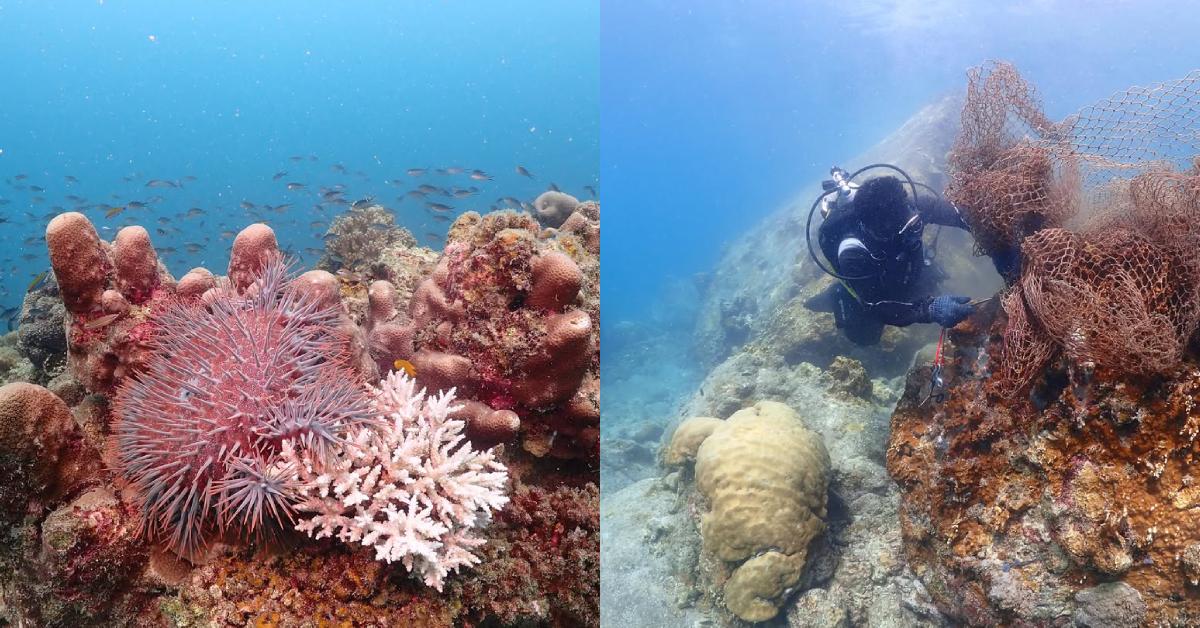
 Cover image via @reefcheckmalaysia (Instagram)
Follow us on Instagram, TikTok, and WhatsApp for the latest stories and breaking news.
Malaysia has lost coral reefs equivalent to 47,250 football fields over the past three years, according to Reef Check Malaysia's 2025 Annual Survey Report
The national reef check survey, which has been running since 2007, is carried out by trained volunteers, including members of the public, dive operators, non-profit organisations, and government officials from the Department of Fisheries Malaysia and Sabah Parks.
Based on surveys conducted at 297 sites nationwide, the report found that average live coral cover stood at 39.94% in 2025, down from 44.65% in 2024.
"That's a drop of five percentage points — roughly 10% of coral cover lost in just one year," Reef Check Malaysia chief executive officer Julian Hyde said, as quoted by Malay Mail.
Looking further back, Hyde noted that live coral cover stood at about 50% in 2022, meaning Malaysia has lost around 20% of its coral cover since then.
"We lost the equivalent of 47,250 football fields' worth of coral in the last three years," he stressed.
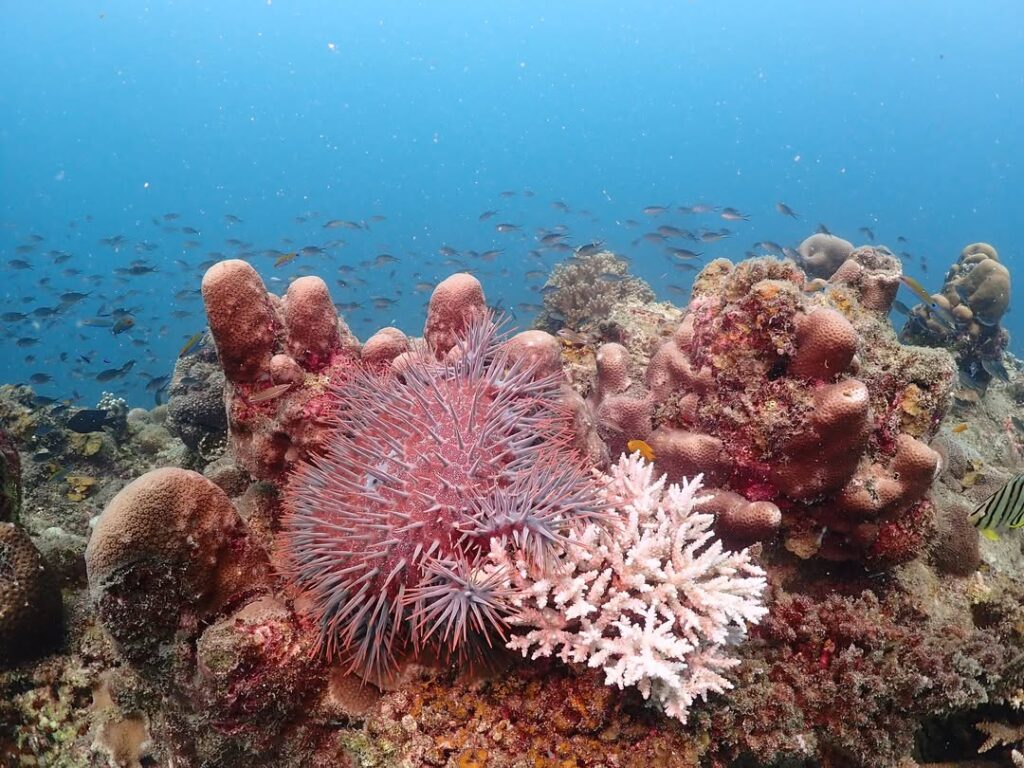
The continued decline was attributed to several factors, including the global coral bleaching event from 2023 to 2025 — an ongoing environmental crisis affecting around 84% of the world's coral reefs due to rising ocean temperatures
Other contributing factors include unsustainable tourism, coastal development, pollution, and destructive fishing practices.
The report found that signs of human disturbance are high in many reef areas, with 82.5% affected by trash, 80% by discarded fishing nets, and 57.5% by boat anchor damage. Coral bleaching was recorded at 67.5% of the surveyed locations.
In Sabah, 33.3% of sites showed evidence of dynamite fishing.
"These findings matter because coral reefs are critical to jobs and food security for coastal communities," Hyde said.
Hyde added that an estimated 140,000 small-scale fishers operate in Malaysia, with tens of thousands of households depending on coastal fisheries for food and income — livelihoods that depend directly on healthy marine ecosystems.
"Coral reefs are also an important tourism product. According to some sources, tourism accounts for 15% of Malaysia's GDP and 25% of employment," he said.
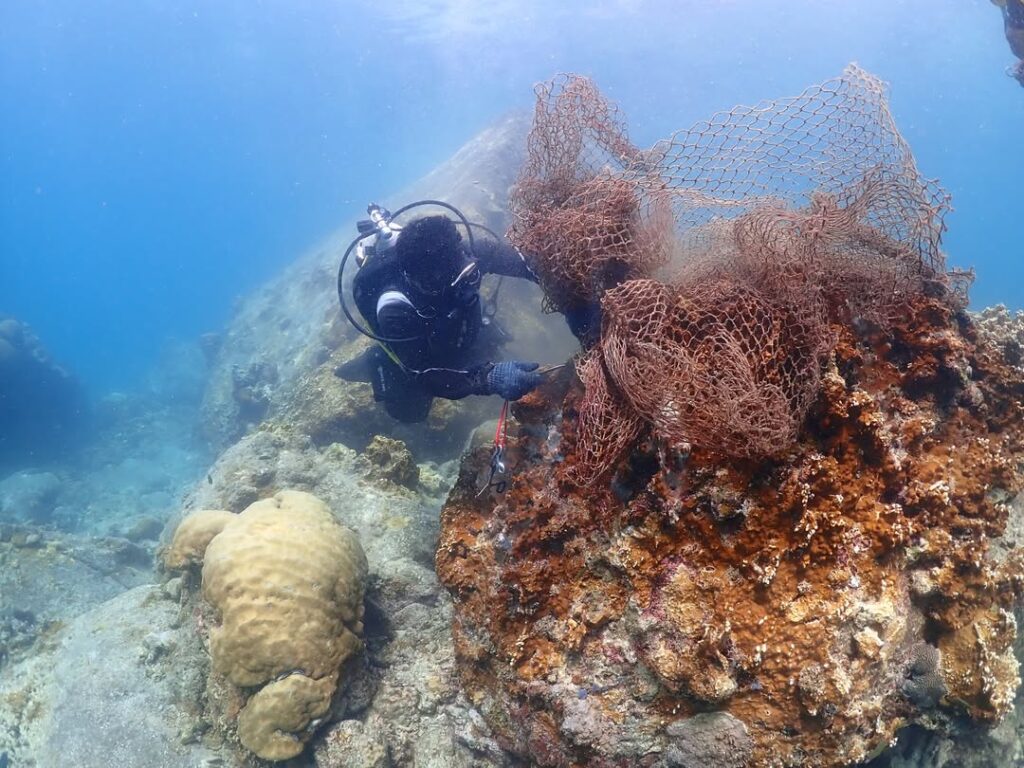
In response, Reef Check Malaysia is calling for stronger reef protection by reducing local stressors and strengthening the role of local communities
The organisation urged the government to adopt a joint management approach that formally integrates local communities into the management of marine protected areas, while building both ecological and economic resilience.
"By reducing local impacts, we give reefs the best possible chance to withstand large-scale pressures such as climate change," Hyde said, adding that diversified livelihoods could help reduce pressure on reefs, particularly from tourism.
Reef Check Malaysia also called for a shift towards more sustainable tourism practices, emphasising that the organisation is "not anti-tourism — but pro-sustainable tourism".
The organisation further encouraged the public to support various efforts to protect Malaysia's coral reefs and marine ecosystems.
Check out Reef Check Malaysia's 2025 Annual Survey Report here.
