


 Cover image via QQ.com
Follow us on Instagram, TikTok, and WhatsApp for the latest stories and breaking news.
A Japanese underground idol is making headlines for offering fans the chance to sniff her armpits
Hari Matsumoto, a singer from Wakayama prefecture, found an olfactory way to connect with her 400,000 social media followers.
Her unconventional service highlights the financial and mental health struggles faced by underground idols, performers who operate outside mainstream media.
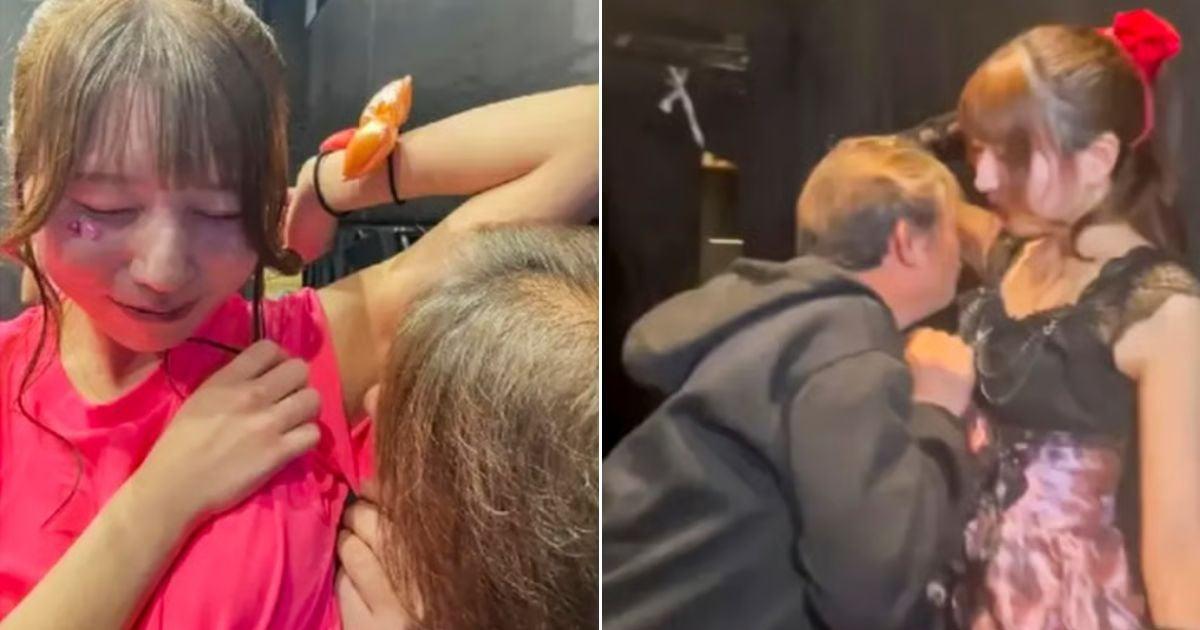
Matsumoto recently pivoted from standard handshakes to a more intimate "armpit-sniffing" perk during her post-show sessions.

A viral video showed a male fan sniffing the performer while she held him in her arms
These underground idols usually perform in small theatres, live houses, and shopping centres.
Unlike top-tier celebrities on TV, they build their base through direct, and sometimes unconventional, fan interactions to stand out in a crowded scene.
One devoted fan shared a photo of Matsumoto online and said, "I really like your scent. The reason I was born was to meet Hari. I love you." Others even signed 'loyalty contracts' to support her.
However, not everyone was a fan of the new gimmick.
One online user called the service "disgusting", while another remarked that the industry often tolerated "behaviour that would be unacceptable in other professions, such as selling body scents."

The controversy highlights the financial struggle in the industry. While an average office worker earns 300,000 yen (RM7,500) a month, these idols typically make 120,000 yen (RM3,000) or less.
The pressure of the job is intense. According to South China Morning Post, a survey by Tsugisute found that 48% of 102 idols reported workplace bullying, while 12% reported sexual harassment during their careers.
As idol culture expands to Shanghai and Hong Kong, the demands of maintaining single status and pleasing fans continues to impact performers. Many cite significant mental health issues arising from these strict standards.
