


 Cover image via SAYS
The unthinkable has happened. The widely-criticised Republican candidate, billionaire and reality TV star Donald Trump has been elected the 45th President of the United States by the people of America.
In 2016 US Elections held on 8 November, **Trump beat out Democratic candidate and Secretary of State Hillary Clinton by 61 electoral votes** – 279 electoral votes against Clinton's 218 – to emerge as current President Barack Obama's successor.
**However, Clinton is ahead of Trump in terms of the popular vote, securing 59,236,903 individual votes (47.6%) compared to Trump's 59,085,787 (47.5%).**
In addition, the Republicans also secured the majority in the US Senate (51 votes against 47) and House (236 votes against 191) elections, meaning **Trump will govern alongside a Congress under full Republican control**.
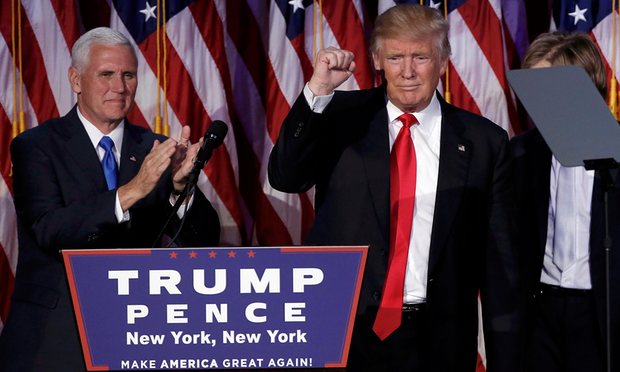
Much like Brexit, Trump's victory came as a shock to many, as political analysts and pollsters have previously predicted the contrary.
Let's take a look at the crucial factors that tipped the scales for the Republican candidate and deeper insights into the 2016 US Elections:
1. In contrast with pre-election polls, Trump clinched key victories in several swing states, many of which were previously taken by Democrats such as Florida, Ohio, Iowa, Missouri, Wisconsin, and Pennsylvania
For context, swing states refer to states wherein both political parties are deemed to have similar levels of support among voters and are often viewed as crucial battlegrounds in deciding the overall result of the presidential election.
2012 Republican candidate Mitt Romney had lost the aforementioned states to current president Barack Obama in the elections four years ago. To add, **Pennsylvania had not supported a Republican candidate since 1988**.

2. Exit polls revealed more insight into how Americans voted this time around. Younger voters – especially those below 30 – favoured Clinton, whereas those above 45 years old preferred Trump.

It is likely that the millennial bracket is a significantly smaller group than that of the older group of voters.
**INDICATORS:** Blue bars represent Democrat candidate Hillary Clinton, whereas the red bars represent Republican candidate Donald Trump.
3. White voters are particularly partial towards Trump, with 58% opting for the Republican candidate. However, non-white voters record significantly less support for the elected president.
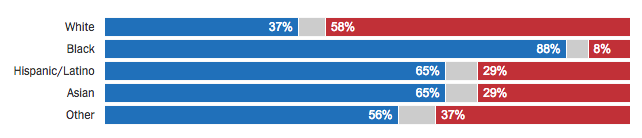
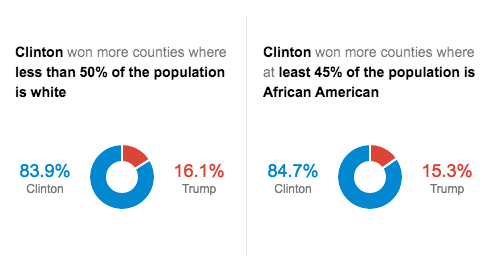
Image via AP
According to Google and AP's insights compilation, Clinton is a widely popular choice African-American and other non-white-dominant counties.
4. Speculation that most of Trump's supporters are "white and less educated" are promptly reflected in the exit polls, with 67% of white, non-college educated voters picking Trump for president

Non-white voters, both with and without college education, record much less support for Trump as compared to Clinton.
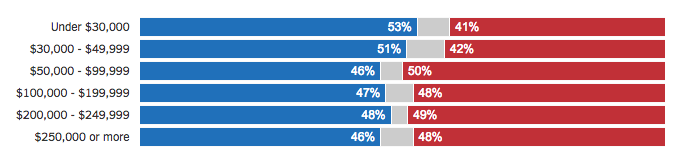
5. The income bracket do not seem to play a significant role in indicating voters' political affiliations, although those earning less than USD50,000 per year are slightly more inclined towards Clinton
6. Voters from small cities and rural areas favour Trump, making up for the lack of support in bigger cities

7. Over four million votes went to third party candidates, making up about 5% of the total voter turnout
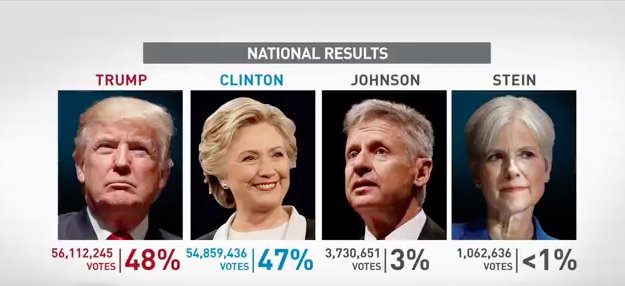
Image via Twitter @BauervanStraten
Some voters share the sentiment that third-party voters, who made up a small portion of votes in swing states, may have done so as part of a "protest" against the two main candidates, hence tipping the scales for Trump:
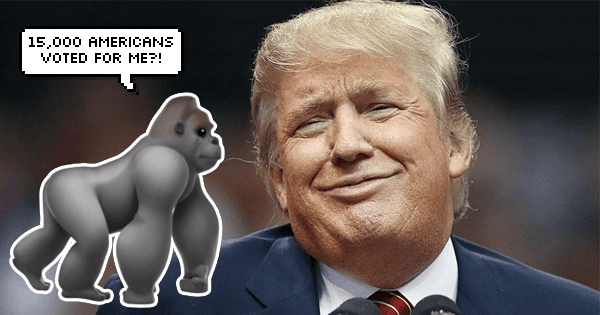
On Twitter-verse, there were also rumours that up to 15,000 third-party voters may have voted for the late Harambe via write-in votes
17-year-old gorilla Harambe *(pic above)* was shot and killed by workers at the Cincinnati Zoo in May 2016. His death did not just spark massive outrage all over the world, Harambe soon became the subject of several viral memes.
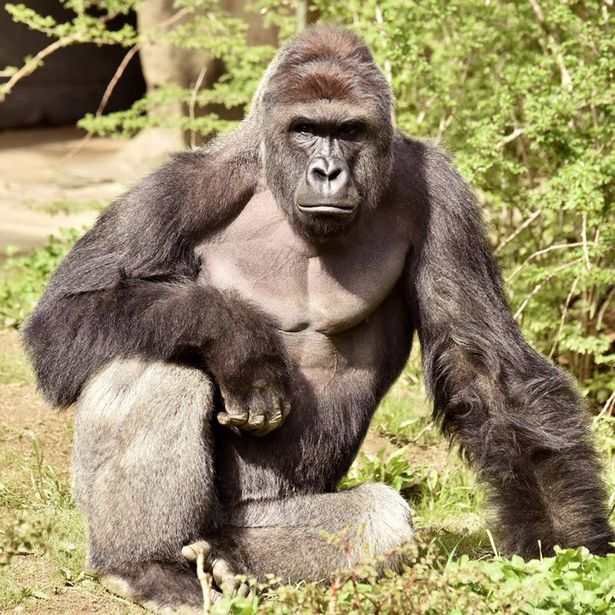
Image via Reuters
