


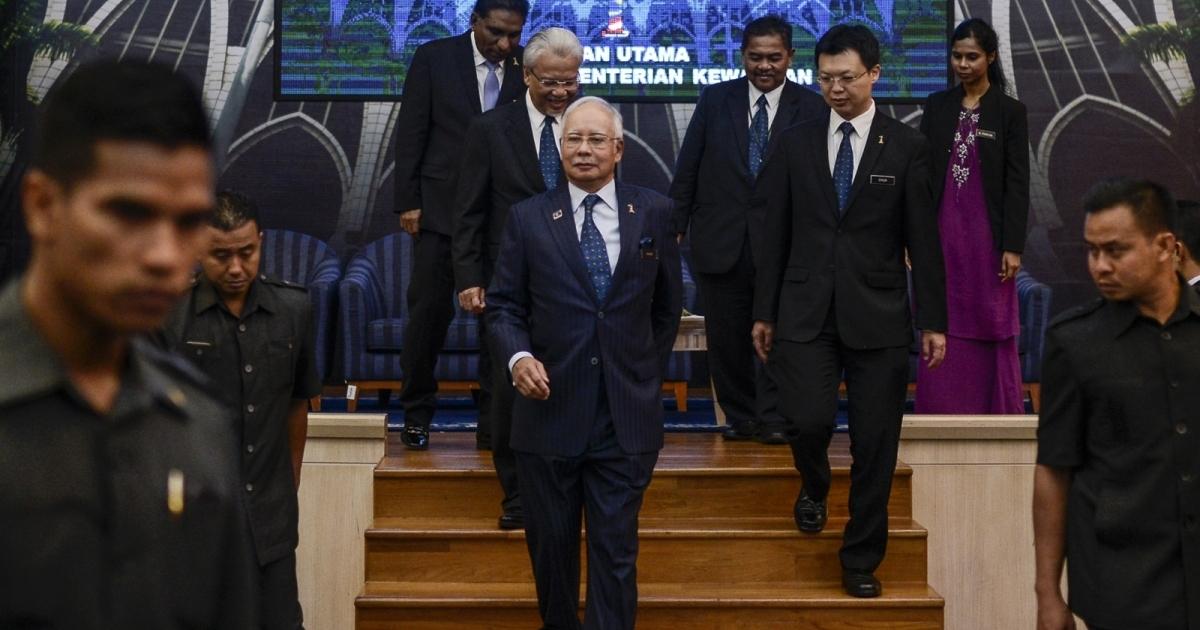
 Cover image via TMI
On Thursday, 28 January 2016, Prime Minister Najib Razak, who is also the Finance Minister, announced a revised Budget 2016. The PM said that the recalibration is necessary due to a slump in global oil prices and a slower economic growth in the USA and China.
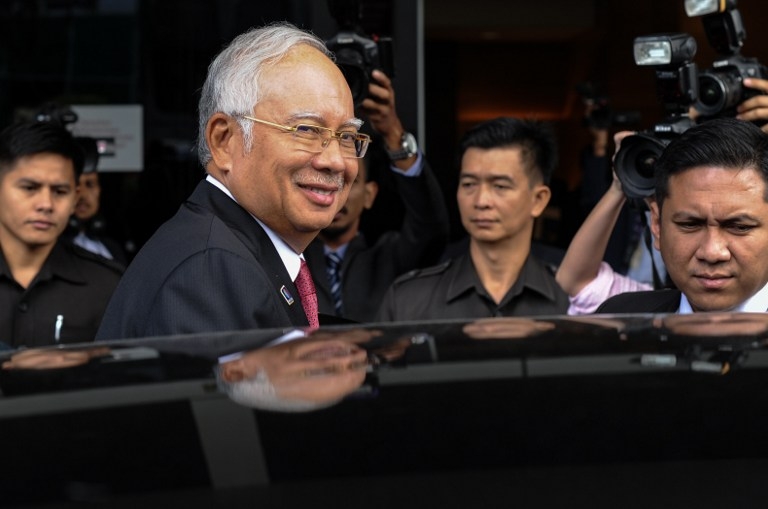
Image via AFP
In essence, 11 recalibrated key measures were announced. Saying the recalibrated budget was based on the approach of "shared responsibility" by certain segments of society, Najib assured that the lower-income groups will not be affected, and continue to benefit from measures such as the 1Malaysia People's Aid (BR1M).
Here are the 11 recalibrated key measures:
**1.** EPF contributions by employees to be reduced by 3%. This is expected to increase private sector spending by RM8bil.
**2.** Tax relief of up to RM2,000 to those with income RM8,000 a month or lower. Two million taxpayers to benefit.
**3.** To reduce cost of living, Govt to liberalise APs for agricultural products including coffee beans and meats.
**4.** Domestic Trade, Cooperatives and Consumerism Ministry ordered to increase enforcement and action against unethical traders.
**5.** 30% of contributions to the human resource development fund to be utilised for skills training, including those who are unemployed.
**6.** MyBeras programme to be introduced until Dec 2016. Each hardcore poor family will be given 20kg of rice every month.
**7.** The Government will update the management system of foreign workers, with levies clustered into two categories, not including foreign maids.
**8.** Government will exercise prudent spending on supplies and services and to continue with grant rationalisation.
**9.** Development budget to focus on projects and programmes that place the people first, have high multiplier effect and reduce imports.
**10.** Development financial institutions and Government venture capital funds to increase allocations by RM6bil for benefit of start-ups and SMEs.
**11.** GLCs urged to implement initiatives to reduce the income gap between senior management and workers, to be monitored by the Economic Planning Unit.

