


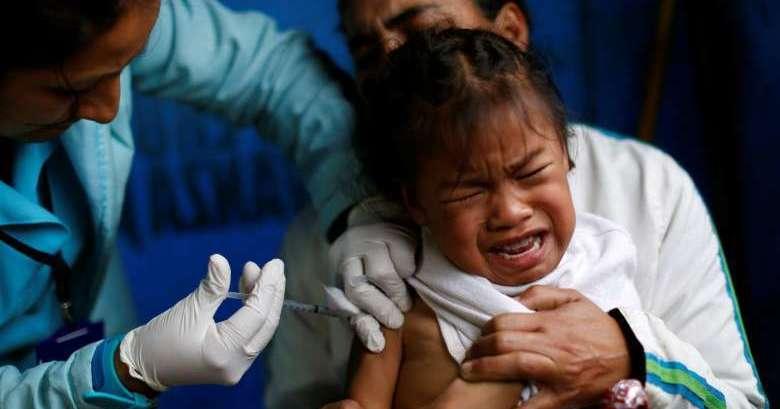
 Cover image via REUTERS
First things first, what is diphtheria?
An infection caused by the bacterium Corynebacterium diphtheriae, diphtheria is a highly contagious bacterial disease that affects the mucous membranes of the throat and nose, making it difficult for children to breathe and swallow. It left untreated, diphtheria can cause severe damage to your kidneys, nervous system, and heart.
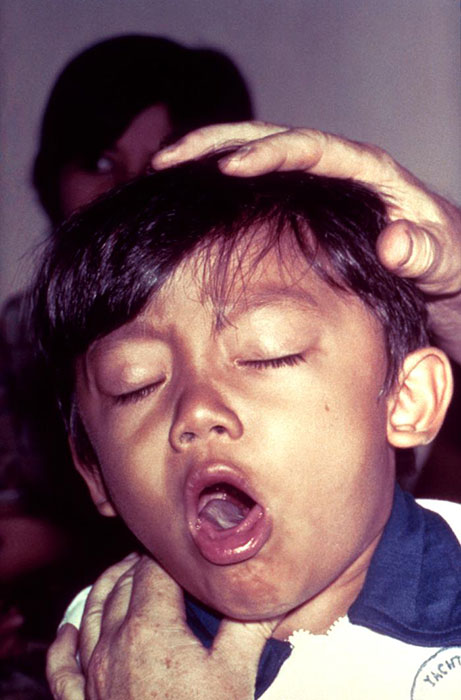
It spreads from person-to-person by coughing and sneezing, and among the symptoms of diphtheria, the patient experiences:
Low-grade fever
Swollen glands in the neck
A loud, barking cough
Gradual onset of a sore throat
Additionally, the most visible and common symptom of diphtheria is a thick, gray coating on the throat and tonsils.
Diphtheria of the skin usually causes ulcers and redness in the affected area.
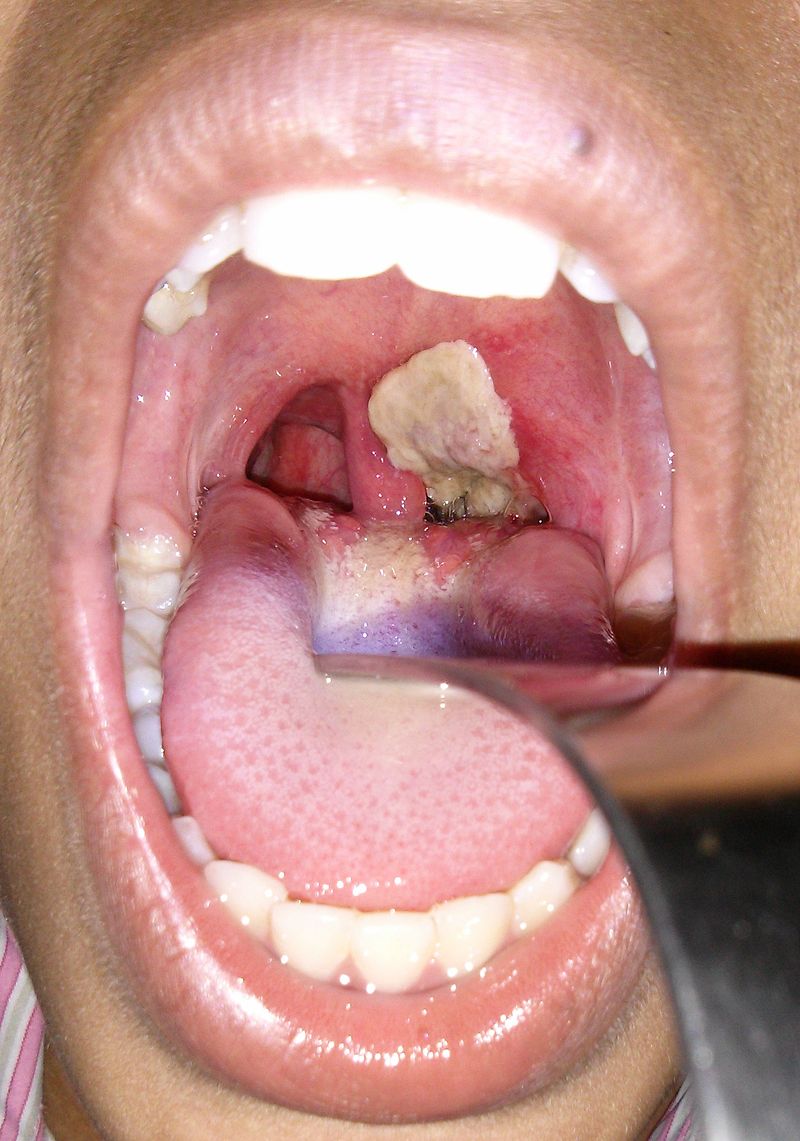
An adherent, dense, grey pseudomembrane covering the tonsils is classically seen in diphtheria.
Image via Wikipedia
So who can get infected by diphtheria?
Anyone and everyone not yet immunised or vaccinated is at the risk of diphtheria.
Every year, several thousand cases of diphtheria occur around the world. It was, once a major cause of illness and death among children.
However, starting in the 1920s, diphtheria rates dropped quickly due to the widespread use of vaccines. Although, the disease continues to cause illness globally.
So far in June this year, diphtheria has claimed 2 lives in Malaysia
With the use of antibiotics and vaccines, it can be prevented
Just so you know, the diphtheria vaccine is very safe even during pregnancy and among those who have a poor immune function
Although there are some mild reactions to it, like fever within 24 hours after the diphtheria injection is given, and soreness at the injection site.
While Malaysia's Health Ministry had introduced its National Children's Immunisation Programme more than 50 years ago and provided free, childhood immunisation is not compulsory here
Childhood vaccination against diphtheria is, however, required under Singapore law.
Wait, what is immunisation?
A process where kids are immunised against several different infectious diseases. Immunisation helps contain various types of communicable diseases. It is often, if not always, done through the use of vaccines.

A child being immunised from diphtheria by giving a vaccination against the disease.
Image via REUTERS
In addition to vaccine, personal hygiene is extremely important
Given the fact that diphtheria is transmitted through inhalation of airborne respiratory droplets and can also be contracted through physical contact with contaminated household and/or personal items, it is paramount to practice personal hygiene.
Additionally, it is recommended that parents of children with fever, sore throat, and swollen glands should immediately take them to see a doctor.

