


 Cover image via
 Follow us on Instagram, TikTok, and WhatsApp for the latest stories and breaking news.
In a major development for global health, researchers in China have identified an existing oral antiviral as a potential treatment against the Nipah virus (NiV)
The virus, which has a fatality rate of 40% to 70%, has historically lacked approved vaccines or specialised treatments.
The study, published in Emerging Microbes & Infections, highlights VV116 — a drug that had been approved for COVID-19 treatment in China and Uzbekistan — as a potential candidate to bridge this therapeutic gap.
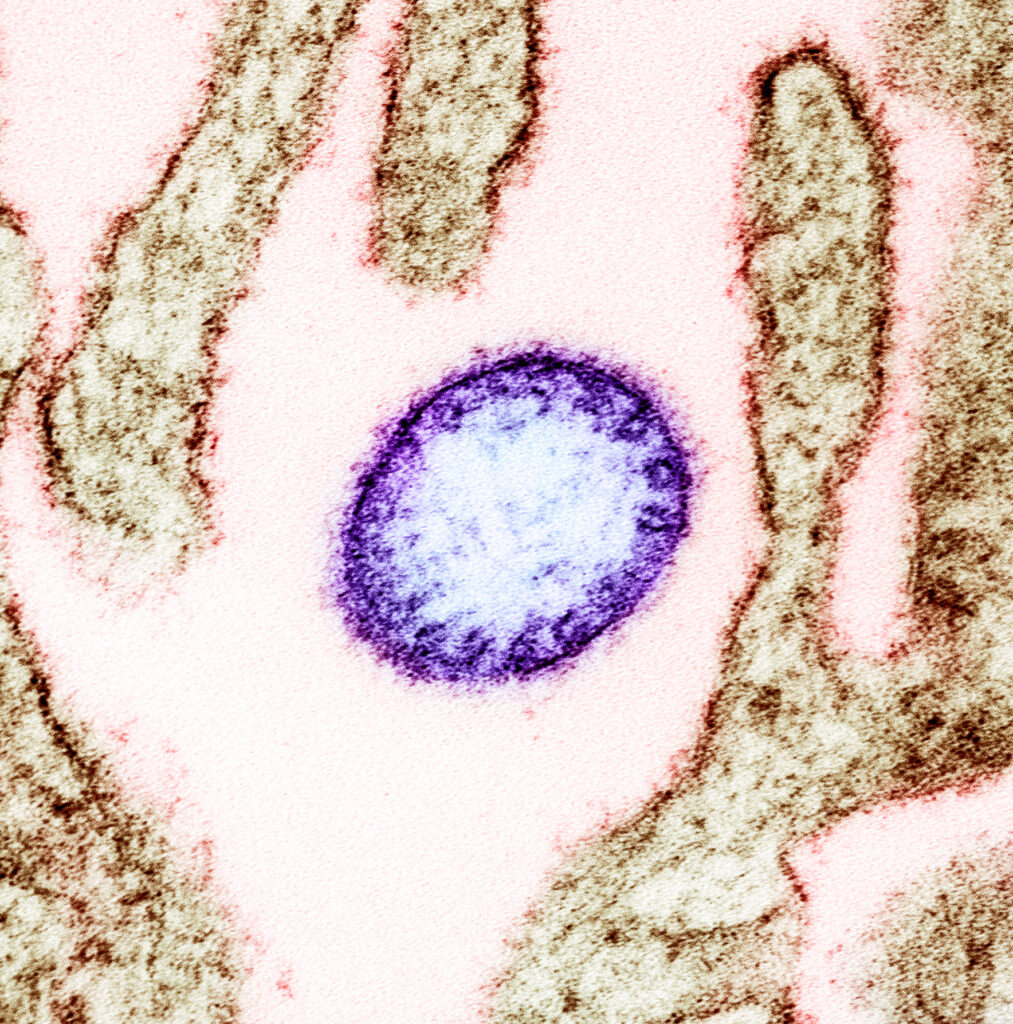
False-colour electron micrograph showing a Nipah virus particle (purple) in an infected Vero cell (brown).
Image via National Institute of Allergy and Infectious DiseasesThe research was a collaborative effort led by the Wuhan Institute of Virology, the Shanghai Institute of Materia Medica, and Vigonvita Life Sciences
The findings are particularly timely given the virus's re-emergence in West Bengal in January 2026, which followed a series of outbreaks across India and Bangladesh over the last three years.
Here's how the drug works:
VV116 acts as a "prodrug" that suppresses viral replication. It essentially "jams" the machinery (RNA) the virus needs to replicate, effectively stopping the infection's lifecycle.
Testing confirmed the drug's effectiveness against both the Malaysian (NiV-M) and the more virulent Bangladeshi (NiV-B) genotypes.
Why does this drug matter now?
Because VV116 has already passed regulatory hurdles for human use in other contexts, its path to deployment against Nipah is likely much shorter than that of a brand-new compound.
Beyond treating those already infected, experts believe the drug could be used prophylactically, meaning it can be used preventively to protect healthcare workers, lab personnel, and families in high-risk outbreak zones.
The World Health Organization (WHO) currently lists Nipah as a top-priority regional threat, making the repurposing of VV116 a potential game-changer for pandemic preparedness.
The Health Ministry is working around the clock to monitor the viral infection in India:
Health Ministry: Malaysia Closely Monitoring Nipah Virus Infections In India
"Our health security system is robust, tested, and ready," said minister Datuk Seri Dr Dzulkefly Ahmad.
