


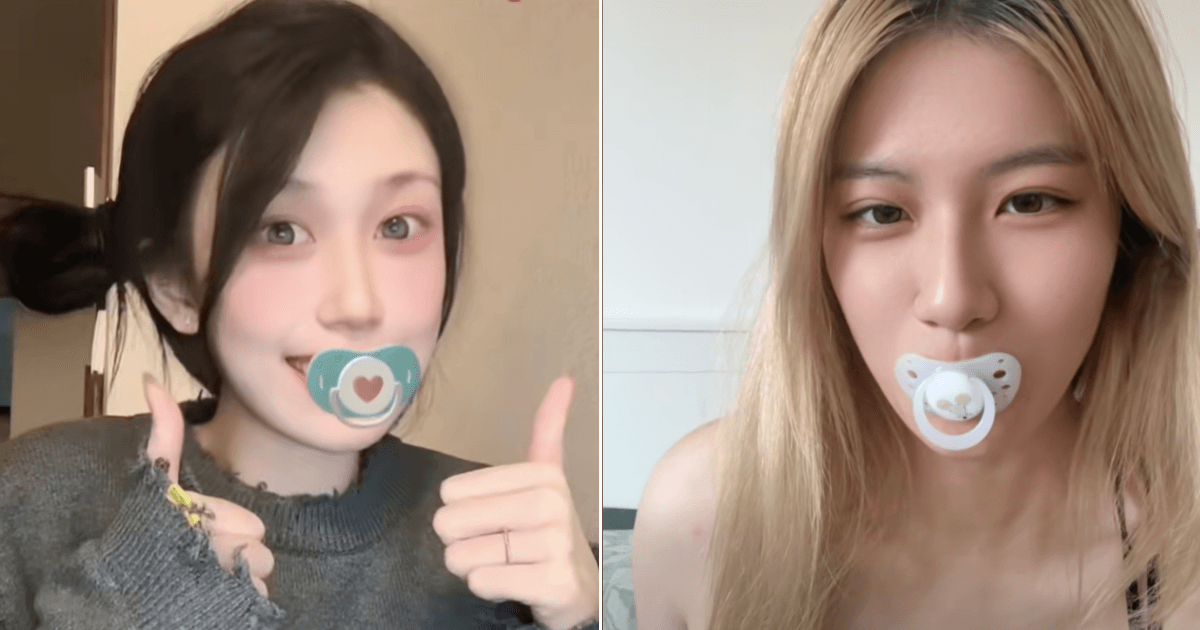
 Cover image via Douyin
Follow us on Instagram, TikTok, and WhatsApp for the latest stories and breaking news.
A new wellness trend has gone viral in China, where adults are using pacifiers, claiming they help relieve anxiety, improve sleep, and even assist in quitting smoking
These products, which are larger than the traditional baby version, are sold in a variety of colours on e-commerce platforms, with prices ranging from 10 yuan (about RM6) to 500 yuan (about RM295).
According to South China Morning Post, some online retailers claim to sell over 2,000 units a month.
Many buyers have left positive reviews, with one person writing, "It is amazing in helping me quit smoking. It gives me psychological comfort."

Some of the users have also claimed that sucking on the pacifier while under pressure at work gives them "a sense of safety" from their childhood
Despite the user testimonials, medical professionals have raised serious concerns about the potential health risks associated with the trend.
A dentist, Tang Caomin, warned that prolonged use could cause significant dental issues.
"By sucking the pacifier for more than three hours a day, the position of your teeth might change after a year," he said, adding that it could also lead to mouth-opening limitations and pain when chewing.
Tang also highlighted the risk of parts of the pacifier being accidentally inhaled during sleep.

Meanwhile, a psychologist, Zhang Mo, suggested that the habit may point to unmet emotional needs
Zhang believes that the solution is not to regress to childlike habits.
"The real solution is not to revert to being a child, but to face the challenge directly and solve it," she said.
The product has triggered a massive discussion on mainland social media, accumulating 60 million views on one platform alone, with many netizens expressing scepticism.
