


 Cover image via QQ.com
Follow us on Instagram, TikTok, and WhatsApp for the latest stories and breaking news.
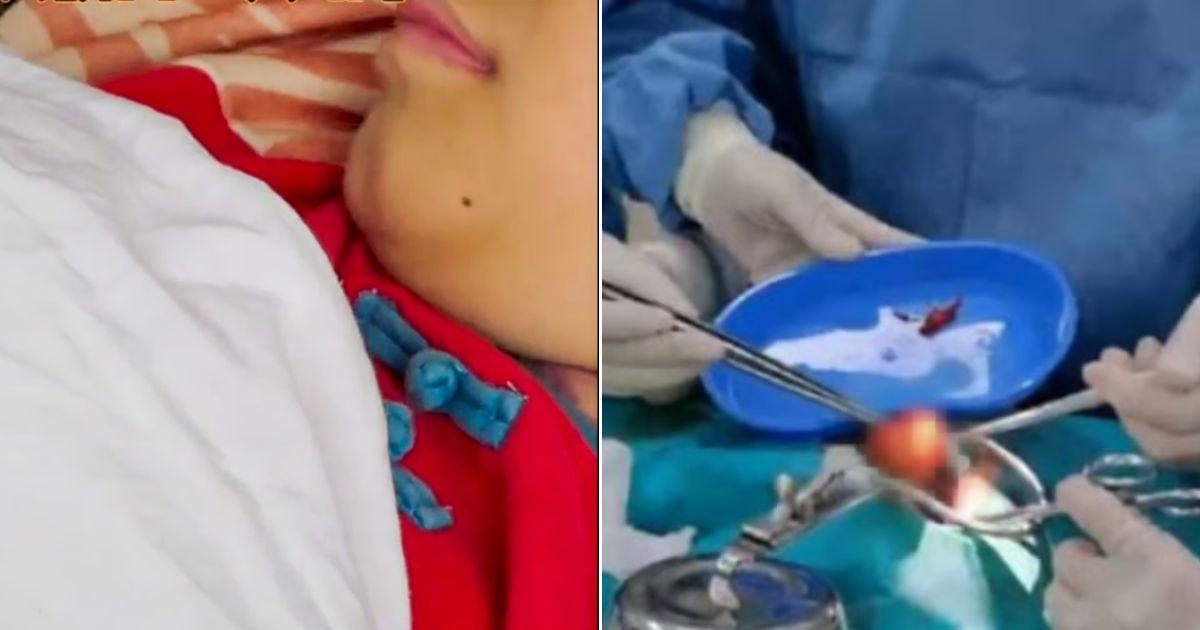
A 6-year-old boy in China is recovering after doctors removed a 6.6cm growth from his throat
Xiaoliang had struggled to breathe and eat normally for the past six months, prompting his family to seek urgent medical help.
His mother, Liu, grew concerned when her son began snoring heavily and discovered he could only swallow soft foods.
According to South China Morning Post, doctors at a local hospital identified an egg-sized mass but admitted they could not treat the condition.

After travelling to the Children's Hospital of Fudan University in Shanghai, ENT specialist Dr Chen Chao diagnosed the mass as a teratoma
This rare growth contained fat and cartilage, which had begun to obstruct the boy's airway.
While early reports likened the mass to an "undeveloped twin brother", medical specialists clarified the distinction.
A teratoma is a germ cell tumour that grows from a patient's own cells, rather than being an absorbed sibling.
These types of growths are extremely rare when found in the throat, especially at such a significant size.

Xiaoliang's mass measured 6.6cm and was still growing, posing a constant threat to his ability to breathe
The three-hour surgery was high-risk because the tumour sat dangerously close to the carotid artery.
Surgeons successfully performed a minimally invasive procedure, removing the growth in two halves to ensure the youngster's safety.
Xiaoliang made a swift recovery within just five days of the operation. Liu noted that her son's appetite had improved significantly, and he is finally able to enjoy solid foods like steamed buns.
Dr Chen advised parents to monitor their children's sleeping postures, as frequent adjustments can signal an underlying airway blockage. The case remains a rare example of a 'foetus in fetu'-style growth, occurring in approximately one in 500,000 births.
