


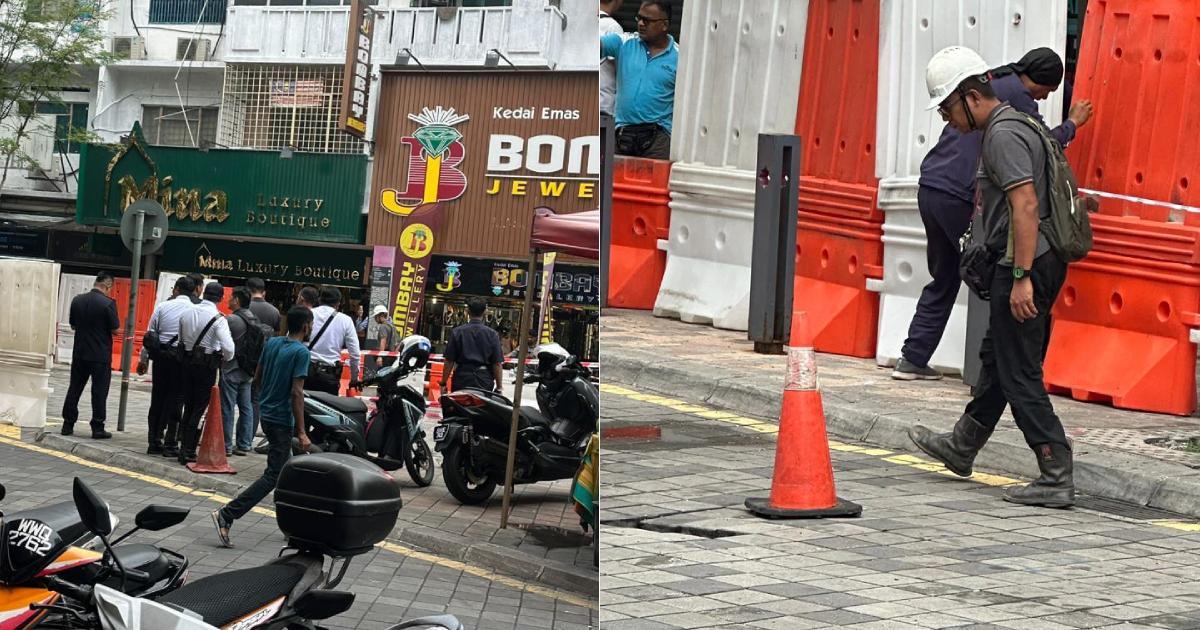
 Cover image via China Press
Follow us on Instagram, TikTok, and WhatsApp for the latest stories and breaking news.
Another sinkhole has struck the Masjid India neighbourhood, more than a year after last year's massive sinkhole that swallowed a woman alive
This time, the new sinkhole appeared along Jalan Bonus, in front of Bombay Jewellery, highlighting concerns over the city centre's ageing underground infrastructure.
Kuala Lumpur City Hall (DBKL) said the incident occurred around 8.39am earlier today, 10 November.
Teams from DBKL, Air Selangor, Indah Water Konsortium (IWK), and the Dang Wangi district police were deployed to carry out inspections and technical assessments, reported the New Straits Times.
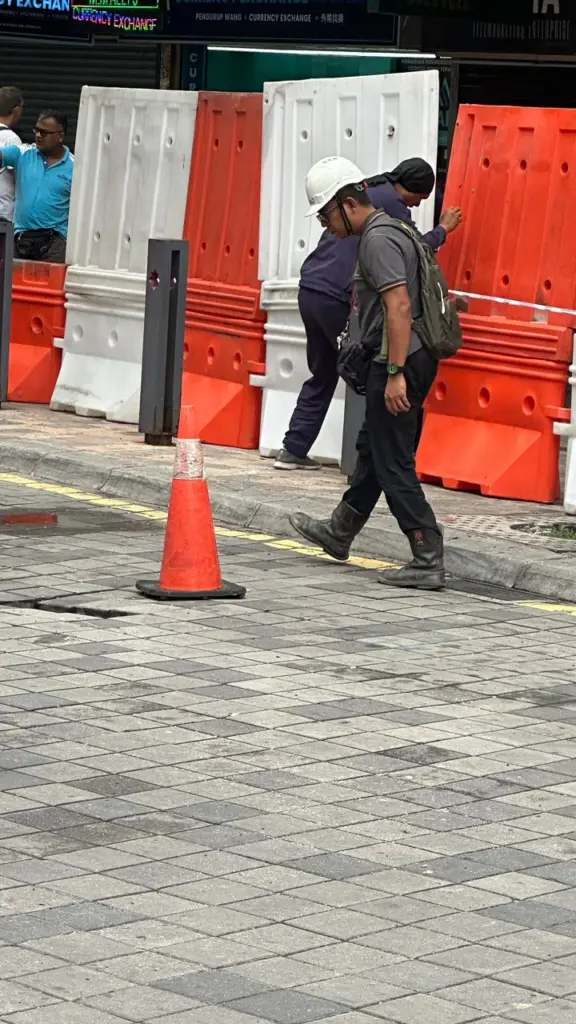
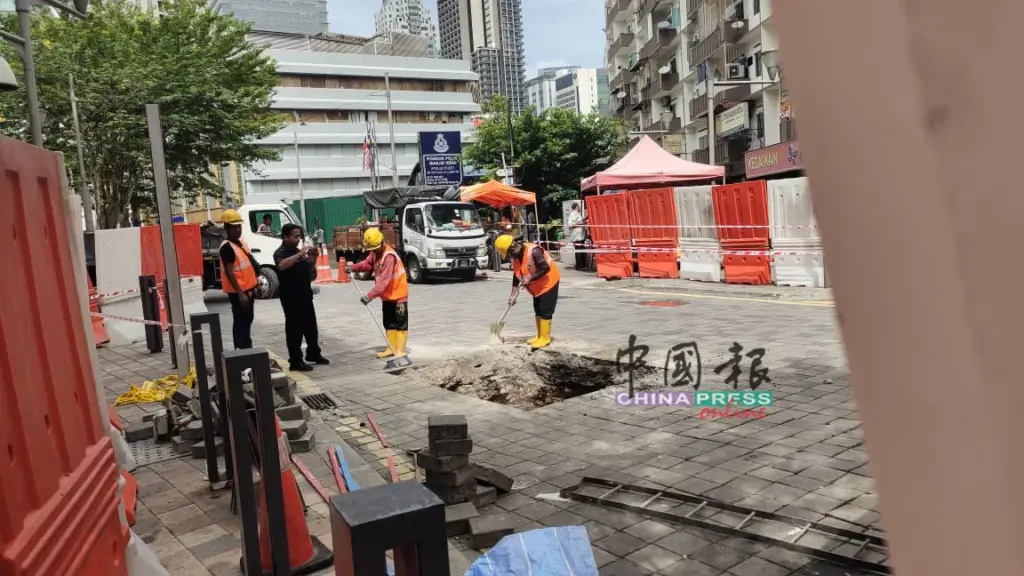
Jalan Masjid India has been temporarily closed to all traffic
The closure affects areas from Lorong Masjid India 4, beside the mosque, up to the affected section, DBKL said in a statement.

The incident follows the tragic case last year when Indian tourist G Vijayalakshmi, 48, fell into an 8m-deep sinkhole along Jalan Masjid India
Despite extensive search and rescue efforts, she was never found.
On 24 October, Minister in the Prime Minister's Department (Federal Territories) Datuk Seri Dr Zaliha Mustafa told the Dewan Rakyat that investigations by a special task force had determined the previous collapse was caused by the failure of a corroded sewer pipe, worsened by soil instability, and not the limestone as initially suspected.
Dr Zaliha said the site sits on the Kenny Hills Formation underlain by schist rock, while limestone lies much deeper, between 60m and 70m below ground level.
She added that the full findings had been presented to the Cabinet in August, and DBKL is preparing a public report to be released by the end of the year.
According to The Star, DBKL has begun geotechnical studies along key routes in the Golden Triangle to assess soil profiles and stability.
The studies use borehole resistivity, Ground Penetrating Radar (GPR), Light Detection and Ranging (LiDAR), and InSAR technology. Early findings show no areas currently classified as high-risk.
