


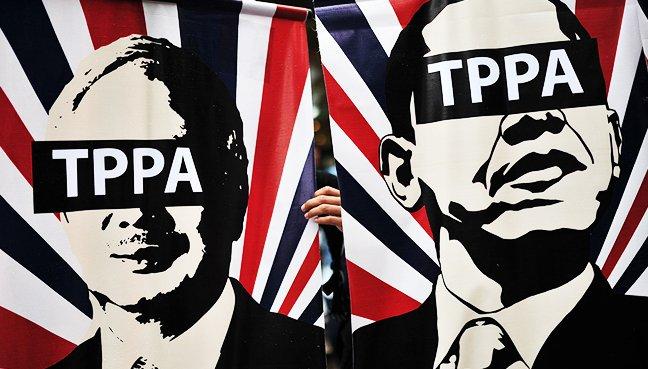
 Cover image via Free Malaysia Today
What is Trans-Pacific Partnership (TPP)?
TPP is a free trade agreement between 12 countries, spearheaded by American president Barack Obama.
According to the Office of the United States Trades Representative, this free trade agreement that was first introduced in 2006 is aimed to **increase the production of American exports, increase job opportunities for Americans, thus boosting the American economy.**
The **12 participating countries** in negotiations about the TPPA are:
– United States
– Singapore
– Brunei
– Chile
– New Zealand
– Australia
– Peru
– Malaysia
– Vietnam
– Mexico
– Canada
– Japan
After a lengthy discussion period of over five years, the final leg of the trade agreement was concluded on 5 October, yesterday in Atlanta, Georgia.
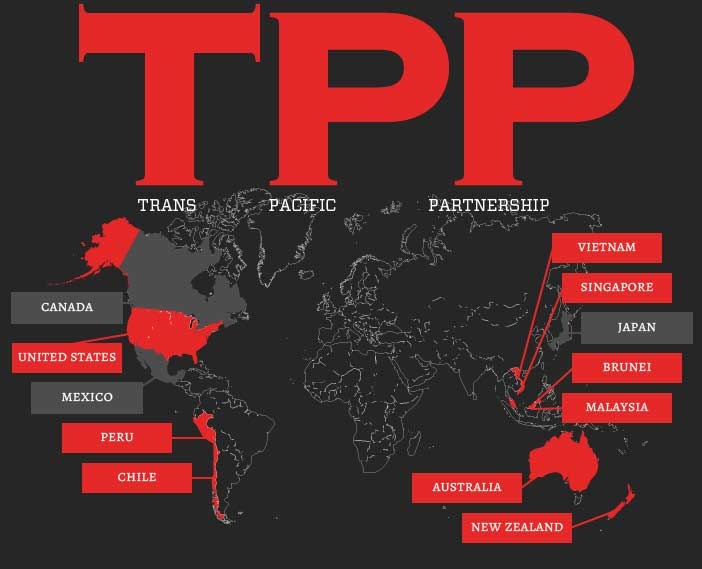
A map pointing to all the participating countries in the TPPA agreement
Image via Industrial Global Union
Why are there so many disagreements over Malaysia signing up for the Trans-Pacific Partnership Agreement (TPPA)?
While the focus has been from the start on the benefits that the Americans stand to gain from this trade, little light has been shed on how this trade affects the rest of the participating countries, as the talks, documents and issues discussed about the agreement have not been revealed to the public.

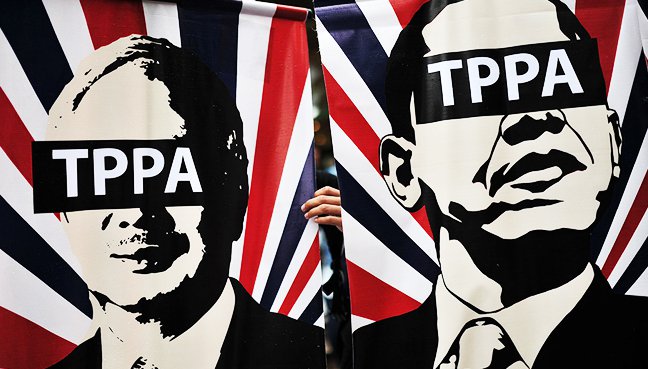
Protesters in Kuala Lumpur, showing dissatisfaction over Malaysia's involvement in the TPPA
Image via Free Malaysia Today
Despite assurances from the American government on the wholesome benefit of the TPP agreement, the differences in economic growth and stability between the involved countries have not been mentioned
On one end, there are the **developed, economically excelling, first-world nations**; United States, Singapore, New Zealand, Australia, Canada, Japan and on the other, are **nations that are classified as developing countries, third-world countries that are still struggling in terms of economical growth**; Malaysia, Brunei, Chile, Peru, Vietnam, Mexico.
What TPP aims to achieve is applying a vast number of **free trade laws, giving way to giant nations like America to penetrate into the local industries** of these developing countries, thus competing with local goods and services.
The question that is posed here is; **would these developing countries be able to sustain local industries with the sudden heavy competition and trade laws that no longer protect them?**
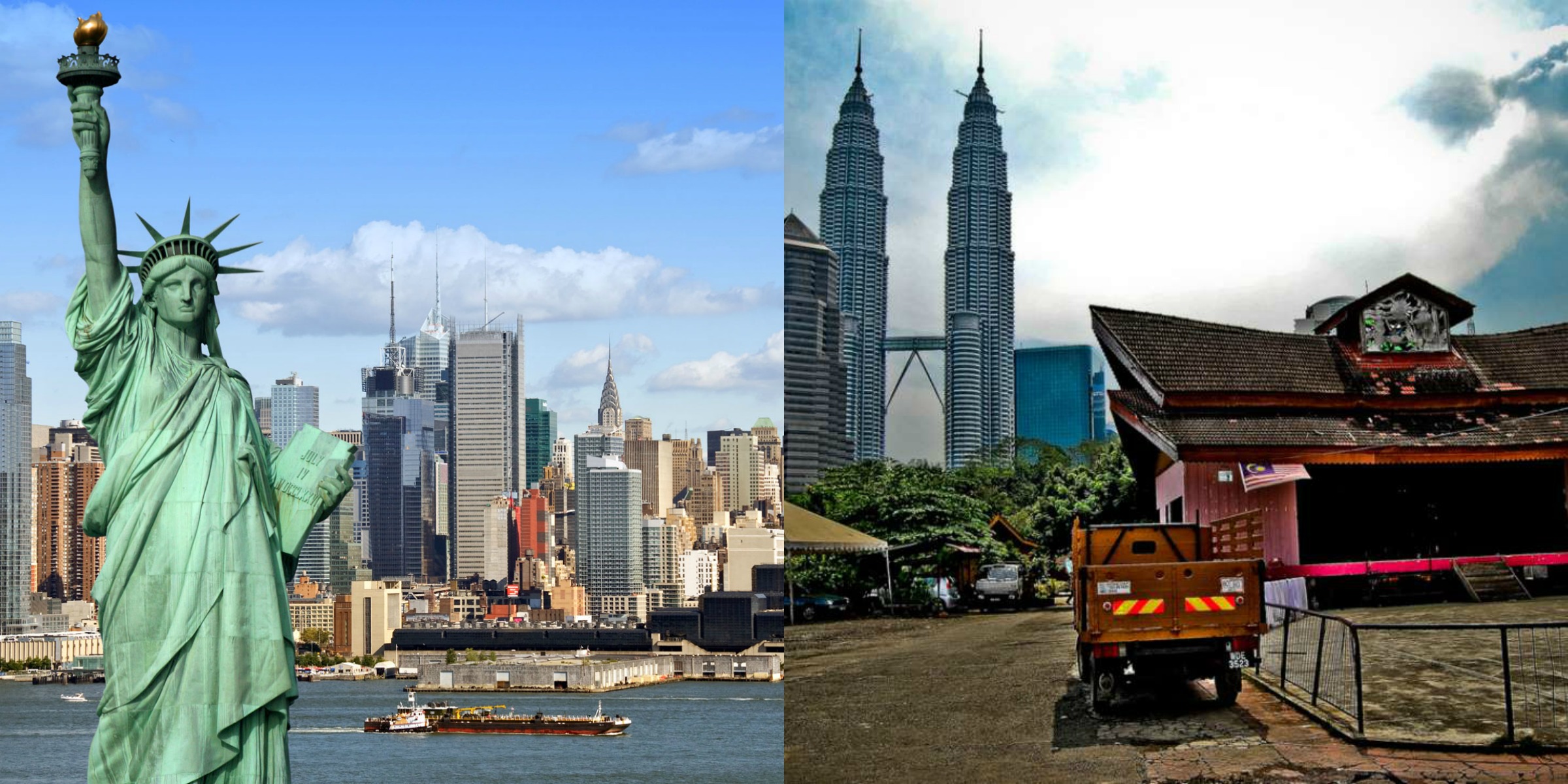
Countries involved in the TPPA are all at different stages of growth, economically
Image via Burgessyachts
How will it affect Malaysia?
**Listed below are some of the controversial policies that will be implemented in all countries that sign up for the Trans-Pacific Partnership Agreement, based on a report by an online magazine on economics and politics, Foreign Policy:**
The enforcement of strict intellectual property laws on information, healthcare products:
Intellectual property (IP) is basically defined as **all tangible and intangible ideas, thoughts, or invention by humans. Copyrights, trademark and patents** fall under intellectual property.
Another major aspect of the TPP agreement would be strengthening the existing laws surrounding IP, including cyber laws, trademark counterfeiting and copyright policies that would greatly affect the way we use the internet.
How would these ironclad IP laws affect Malaysians?
If the Malaysian government agrees to this, access to information on any copyrighted material might not be so easily and freely available as it is now.
That would mean **paying for most materials that we are currently just downloading for free; movies, music, research papers and any piece of information that is copyrighted, trademarked or patented.**
Local businesses:
It is common knowledge that first world nations, over the years, have developed the habit of setting up multinational corporations in developing countries due to the cheaper labor laws there.
However, **TPP's seeks to further decrease the costs of setting up these companies in these developing countries.**
Cutting up the already low costs of setting up multinational corporations, due to exchange rates and economical differences **may affect the locals working in those companies.**
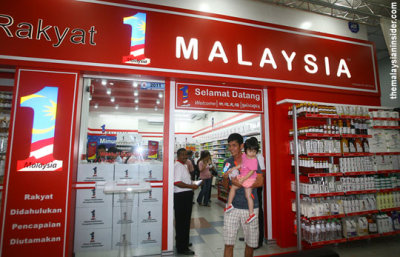
1Malaysia grocery shop that is BN's initiative to promote local goods
Image via Malaysians Must Know The Truth/Blog
Allowance for equality in domestic trade laws, financial policies and prohibition of taxes on export of raw materials:
Budding **local industries and companies may suffer due to the heavy competition from well developed countries' products and services,** with TPP's motion to **do away with protective trade policies** that serve to secure domestic traders' position in the local markets.
Basically, in terms of **economy,** TPP, if implemented in developing countries like Malaysia, might **directly affect local businesses, including government-linked companies (GLCs)** due the agreement's aim of wanting to compete with local traders, on the same platform and under the same laws.
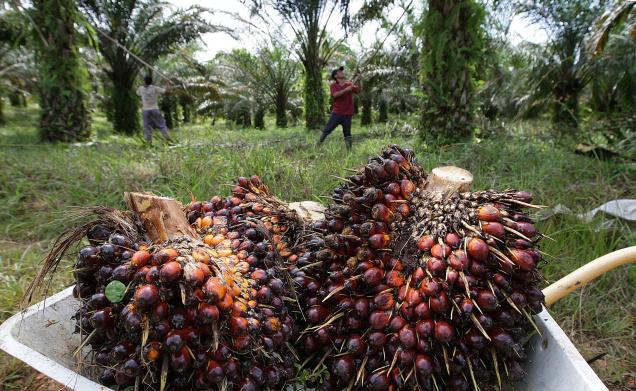
How does TPP affect the rising costs of medicine?
With the prices of medicine hiking up steadily over the years, Malaysians for the past decade, have been encouraged to start consuming generic medicine under the Generic Medicine Policy (GMP) resulting in healthcare organisations actively introducing the usage of generic medicine.
Generic medicine would be defined as **drugs marketed under no particular brand but share the similar chemical component as any 'original/branded' drugs and comply with the U.S. Food and Drug Administration (FDA).**

Image via Parti Socialis
Initially, America wanted a 12-year protection term against all generic medicine under TPPA, which would eliminate the competition of most forms of generic medicine for the agreed number of years
However, after much disagreement from other participating countries, America agreed with the **undisclosed**, minimum number of years instead.
The availability of generic medicine help drugs reach across a wider pool of people in both developing and poverty-stricken countries but if Malaysia were to sign the TPP agreement, we would have to **deal with purchasing expensive medicine under the stringent laws of TPP.**
That would affect a great number of people in developing countries and might even be the death of many that **cannot afford the rising costs of medicine for serious illnesses such as HIV, AIDS, and cancer.**
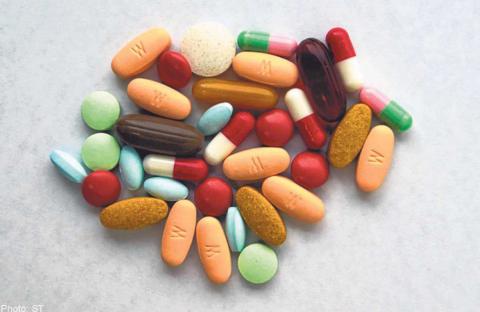
The rising costs of medicine due to TPPA laws might affect members of the community that belong to the lower-income group
Image via Your Health
Meanwhile, the Malaysian government believes TPPA would let us penetrate into the competitive global economy, thus improving the overall state of our country and wealth
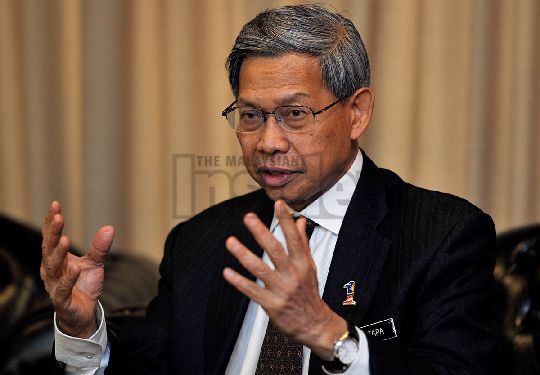
Malaysian Minister of International Trade and Industry Mustapa Mohamed
Image via The Malaysian Insider
