


 Cover image via
 Follow us on Instagram, TikTok, and WhatsApp for the latest stories and breaking news.
The Education Ministry has revealed that about 6,000 students in schools nationwide have been infected with influenza
According to Bernama, the surge in cases has prompted several schools to close on the advice of their respective district health offices.
Education director-general Azam Ahmad said the closures were carried out in accordance with procedures and guidelines set by the Health Ministry to ensure the safety of students, teachers, and school staff.
He said schools have been instructed to implement preventive and control measures to curb the spread of influenza among students, adding that the ministry has extensive experience in handling outbreaks since the COVID-19 pandemic.
Data from the Health Ministry showed an increase in cases across all states, with the highest numbers reported in Selangor (43 clusters), followed by Kuala Lumpur and Putrajaya (15), Penang (10), Johor (9), and Kedah (5). Most patients were reported to have mild symptoms.

Education director-general Dr Mohd Azam Ahmad.
Image via BernamaWith cases on the rise, here is what you should know about influenza, and simple tips to help prevent infection
1. What is influenza?
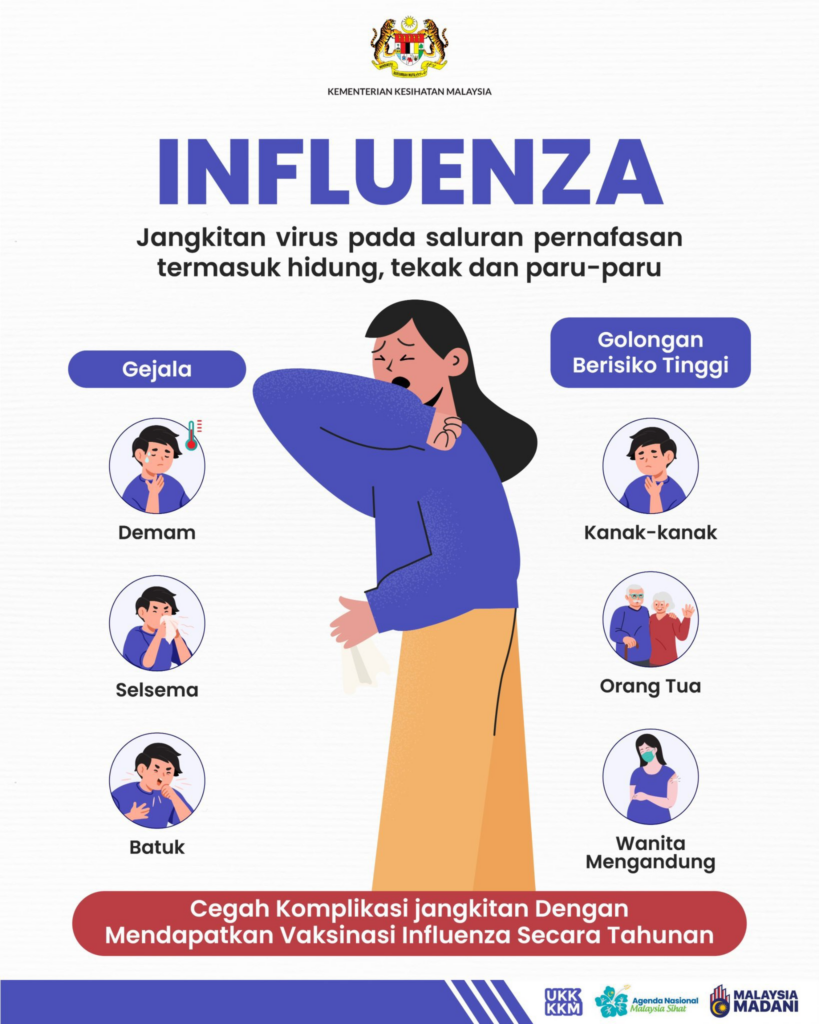
According to the Health Ministry, influenza, commonly known as flu, is a viral infection that affects the respiratory system, including your nose, throat, and lungs.
Common symptoms include:
• Fever
• Cold or runny nose
• Cough
• Sore throat
While most cases are mild, certain groups are at a higher risk of developing severe complications. These high-risk groups include:
• Children
• Elderly
• Pregnant women
2. Get an annual flu vaccination
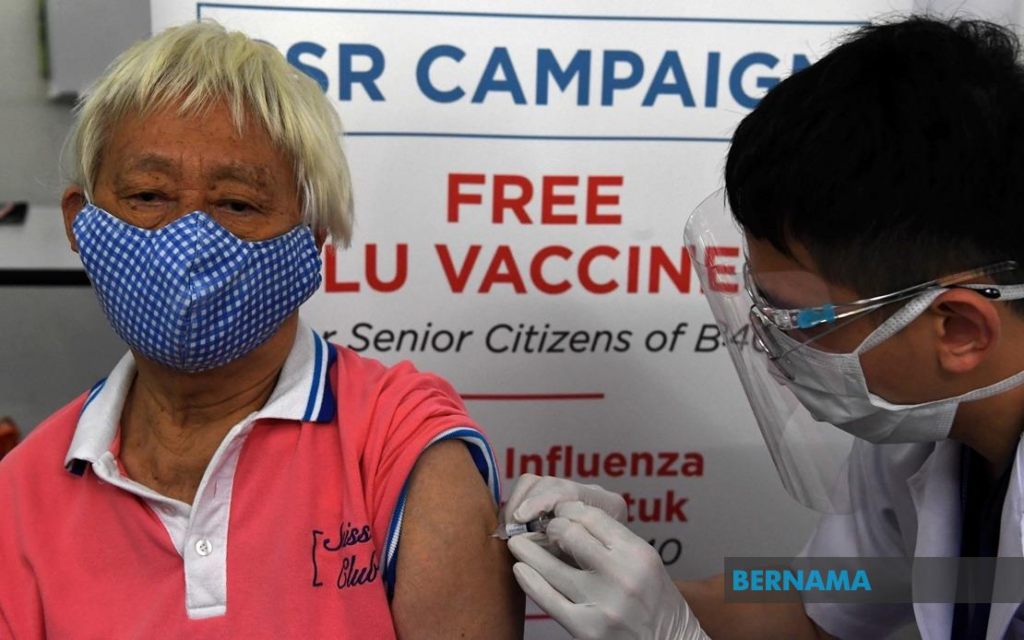
The best way to reduce your risk of infection is to get an annual flu vaccine.
Both the Health Ministry and the US Centers for Disease Control and Prevention (CDC) recommend vaccination as the most effective step to prevent complications from influenza.
There is a common misconception that flu vaccines are only for babies and young children. In fact, everyone is encouraged to get vaccinated each year, especially senior citizens and high-risk groups with comorbidities, as severe cases can sometimes be fatal.
Additionally, the Malaysian government is offering free flu vaccinations for senior citizens at selected government health clinics nationwide. Read this article for more information.
3. Practise good hand hygiene

Image for illustration purposes only.
Image via Burst/PexelsJust like during the COVID-19 pandemic, wash your hands often with soap and water. If soap and water are not available, use an alcohol-based hand sanitiser.
The CDC also advises avoiding touching your eyes, nose, and mouth, as germs can spread easily when you touch a contaminated surface and then touch your face.
These simple habits have always been important, but they are especially crucial in preventing influenza infections.
4. Cover your mouth and nose when you cough or sneeze
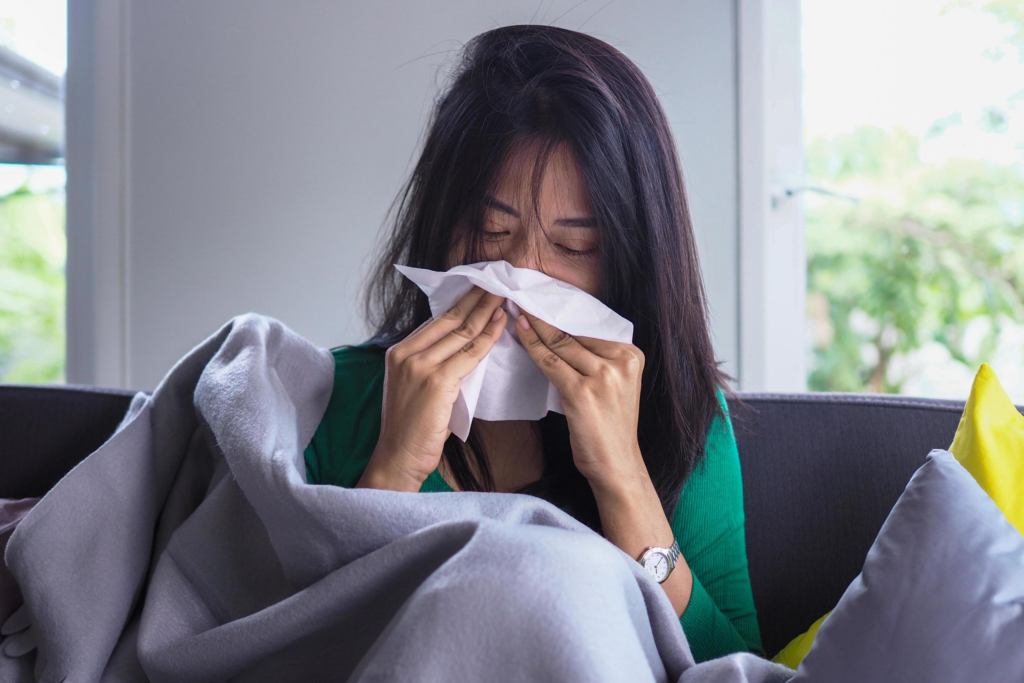
Image for illustration purposes only.
Image via nuttawan jayawan (Vecteezy)If you have to cough or sneeze, cover your mouth and nose with a tissue or your upper sleeve, not your hands.
The Health Ministry also suggests using a handkerchief or towel. This helps prevent the spread of respiratory droplets that carry the virus.
Consider wearing a mask, especially in crowded places, to further reduce the spread of germs.
5. Stay home when you are sick
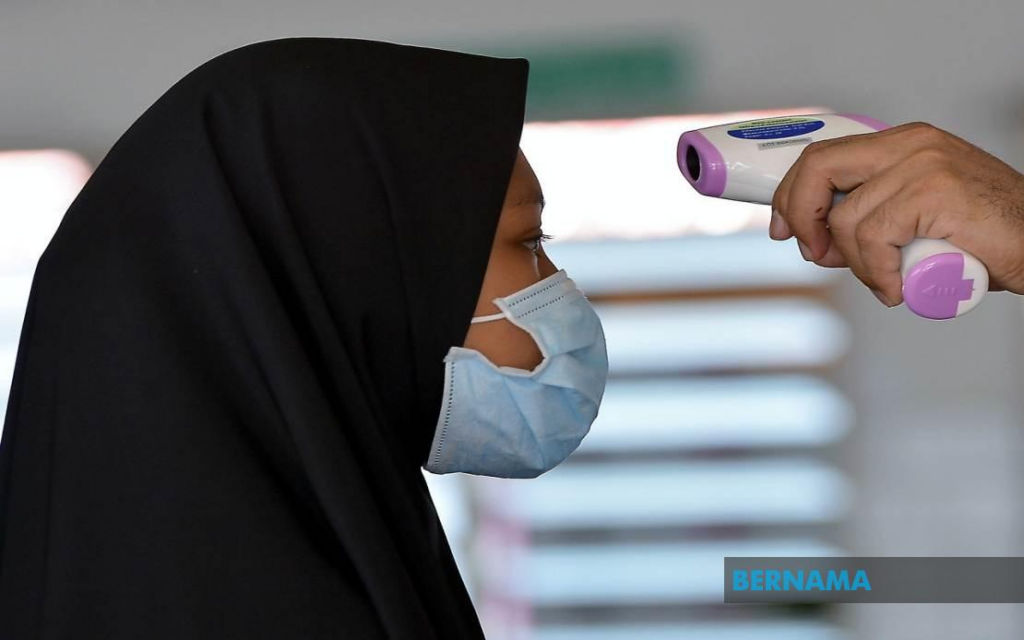
Image for illustration purposes only.
Image via BernamaIf you have flu-like symptoms, rest at home and avoid going to crowded places to prevent spreading the illness to others.
The CDC recommends staying home until your symptoms improve and you have been fever-free for at least 24 hours without the use of fever-reducing medication.
You should also inform your school, HR department, or workplace management if there is a potential outbreak, as taking early precautions can help break the chain of infection and protect others' health.
Just like with COVID-19, maintaining social distancing in public spaces can also help reduce transmission.
6. Avoid sharing personal items like towels and utensils

Image for illustration purposes only.
Image via PexelsInfluenza spreads through respiratory droplets, which can linger on personal items such as towels and utensils. Avoid sharing these items to reduce the risk of infection.
Similarly, dentist and content creator Dr Ester K advises the public to replace their toothbrush after recovering from influenza.
She explained that old toothbrushes may still harbour viruses and bacteria, which can remain on the bristles even after recovery.
7. Clean and disinfect your environment, especially frequently touched surfaces

Image for illustration purposes only.
Image via Branimir Balogović/PexelsRegularly clean and disinfect objects and surfaces that are frequently touched to help eliminate germs.
According to the CDC, the flu virus can survive on certain surfaces for up to 48 hours. Pay extra attention to items such as doorknobs, light switches, keyboards, and phones.
At your workplace or school, make sure there is an adequate supply of tissues, soap, alcohol-based hand sanitisers, and disposable wipes for everyone to use.
8. Seek medical advice when necessary
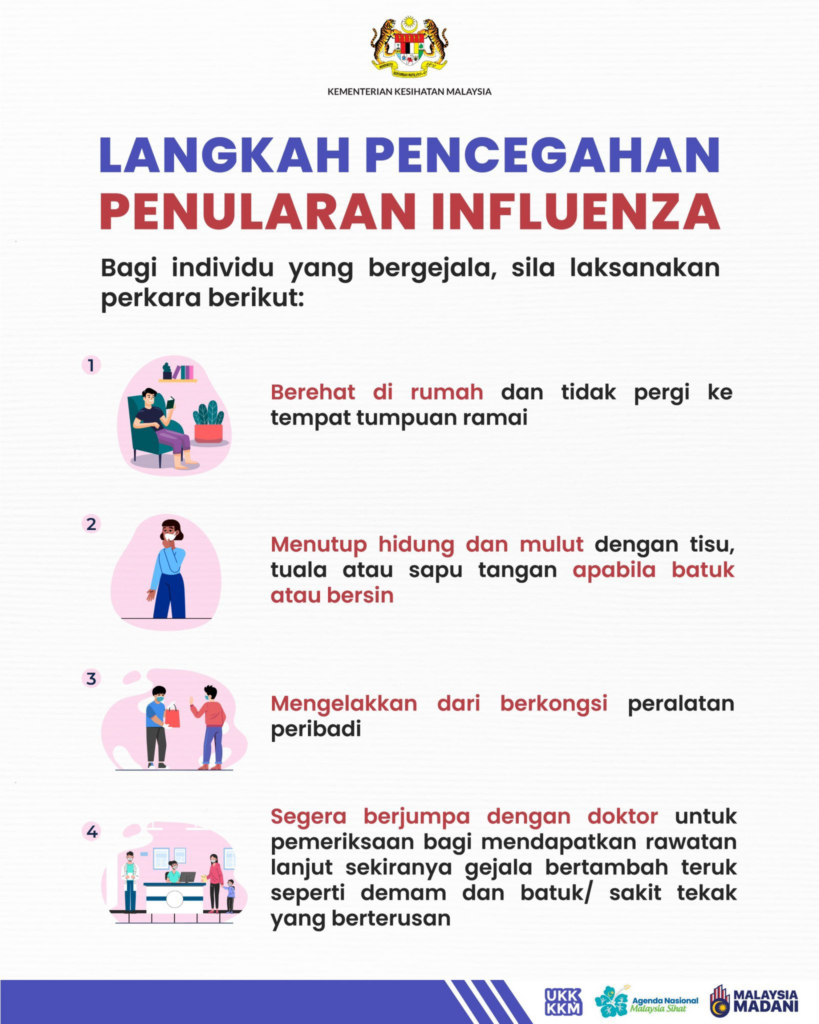
If your symptoms worsen, such as having a persistent high fever, a severe cough, or difficulty breathing, the Health Ministry suggests you see a doctor immediately for a check-up and further treatment.
Early consultation is especially important for high-risk groups, including individuals with chronic illnesses such as asthma, diabetes, or heart disease.
A doctor can assess whether antiviral medication or additional care is needed to prevent complications and ensure a quicker recovery.
The information provided is for educational and communication purposes only and it should not be construed as personal medical advice. Information published in this article is not intended to replace, supplant or augment a consultation with a healthcare professional regarding the reader's own medical care.
