


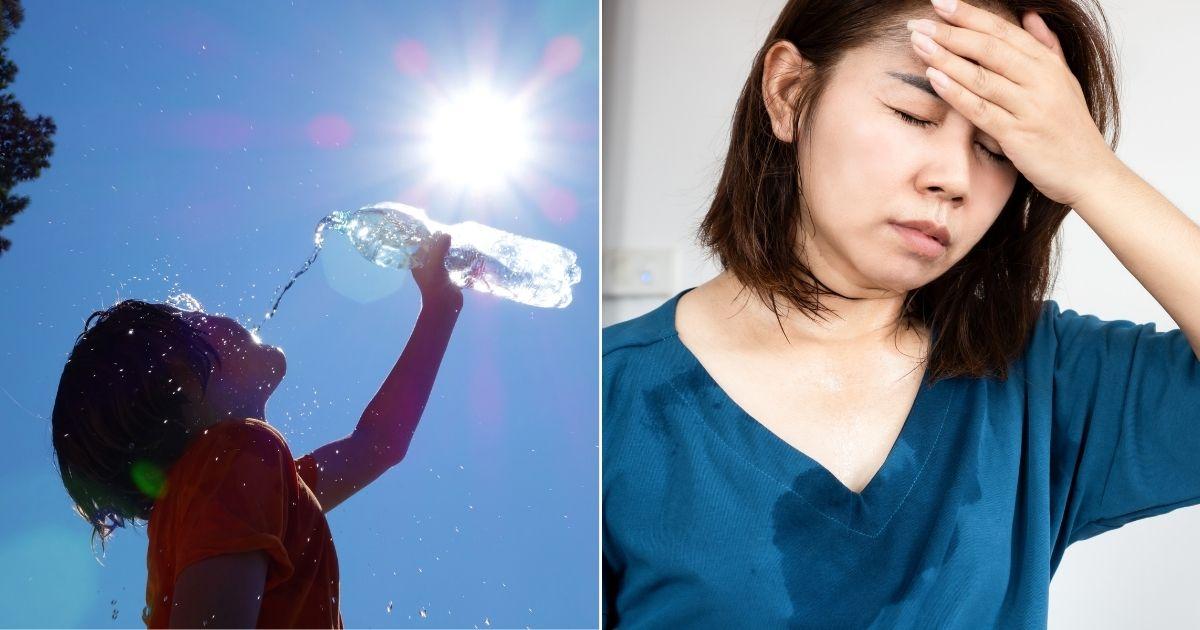
 Cover image via AlexVeluscek/Canva Teams & doucefleur/Canva Teams
As Malaysia is beginning to feel the rise in temperature, there has been increasing concern over heat-related illnesses, particularly heat stroke
As excessive heat continues to affect many parts of the country, it's important to understand the risks that come with prolonged exposure to high temperatures.
While feeling hot and uncomfortable is normal in a tropical climate, heat stroke is far more serious. It's a medical emergency that can be life-threatening if not treated promptly.
Here's what you need to know about heat stroke, how it happens, and what you can do to stay safe.

Image via Bernama/NST
Heat stroke happens when the body can no longer regulate its temperature
Heat stroke occurs when the body's internal temperature rises above 40°C and it loses the ability to cool itself down through sweating and other natural processes. When this happens, internal organs begin to overheat, which can lead to serious complications, including permanent damage to the brain, heart, and kidneys.
There are two types of heat stroke:
- Exertional heat stroke, which typically affects people who are physically active in hot conditions (e.g. athletes, outdoor workers)
- Non-exertional (classic) heat stroke, which can occur in anyone exposed to high temperatures for long periods, especially vulnerable groups such as the elderly or very young children

Image via Aflo Images/Canva Teams
Heat stroke symptoms can escalate quickly and require immediate medical attention
Key symptoms of heat stroke include:
- A body temperature above 40°C
- Dry, hot skin (lack of sweat can be a red flag)
- Confusion, dizziness, or slurred speech
- Nausea and vomiting
- Rapid heartbeat and shallow breathing
- Loss of consciousness or seizures
If someone is showing these signs, they should be treated as a medical emergency. Call 999 or get them to the nearest hospital immediately.

Image via Aflo Images/Canva Teams
Heat exhaustion is an early warning sign that can lead to heat stroke if untreated
Before heat stroke occurs, a person may experience heat exhaustion — a less severe but still serious condition. Symptoms include heavy sweating, fatigue, headache, muscle cramps, and dizziness.
If you or someone else shows signs of heat exhaustion, move to a cooler place, drink fluids, and rest. If symptoms persist for more than an hour or worsen, seek medical help.
Ultimately, prevention is key and starts with staying cool and hydrated
To reduce the risk of heat stroke, you should:
- Drink plenty of water regularly, even if you don't feel thirsty
- Avoid outdoor activities during peak heat hours (typically 11am to 4pm)
- Wear lightweight and light-coloured clothing
- Use fans or air conditioning where possible
- Take frequent breaks if you're working outdoors
- Never leave children or pets in parked vehicles, even briefly
Staying in shaded areas and checking in on neighbours, especially the elderly, can also make a big difference.

Image via Leung Cho Pan/Canva Teams

