


 Cover image via Pensoft.net
Deep within the rainforests of Peninsular Malaysia is a plant so unusual, it could have grown straight out of a fantasy novel
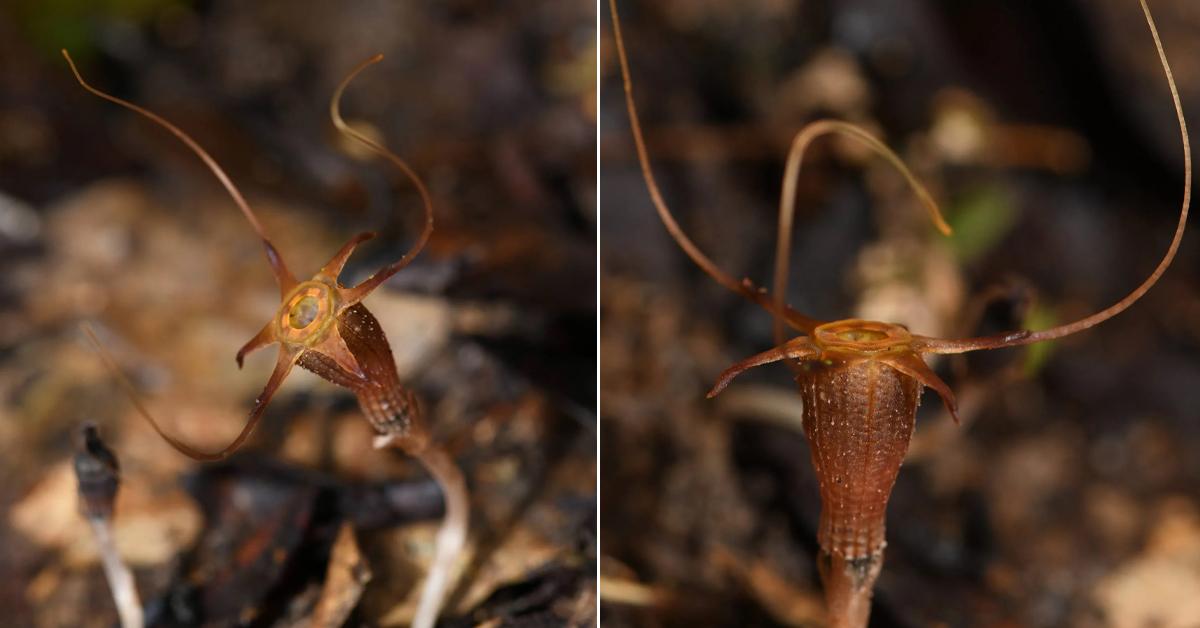
It's called Thismia aliasii, and it stands at just 11cm tall. It might be small, but its appearance is anything but ordinary.
The orange-brown flower features antenna-like structures that make it look even more otherworldly.

Thismia aliasii is part of the Thismia family, often referred to as "fairy lanterns".
Image via Pensoft.net
Unlike most plants, Thismia aliasii doesn't need sunlight to thrive
In fact, it doesn't even have leaves, nor does it perform photosynthesis. Instead, it survives underground, feeding off fungi in a process called mycoheterotrophy.
Essentially, it's a "freeloader" in the fungal world, borrowing nutrients from the soil instead of producing its own food through sunlight.
It also lacks chlorophyll, which means it's completely dependent on its underground network for survival.
When it finally makes its rare appearance above ground, it reveals a stunning, mitre-shaped flower that is hard to miss. However, it's so small and short-lived that you might easily overlook it unless you're specifically on the lookout.

First spotted in 2019 by Mohamad Alias Shakri, a forest ranger in Terengganu, Thismia aliasii wasn't officially documented and named until 2025
A team of Malaysian botanists, including Siti-Munirah Mat Yunoh and Dome Nikong from the Forest Research Institute Malaysia, worked with Shakri to study and name the plant.
The species was named aliasii in honour of Ali bin Hassan, the forest ranger who helped protect the area where it was discovered.


Due to its elusive nature and reliance on a fragile habitat, Thismia aliasii is listed as Critically Endangered on the IUCN Red List
Thankfully, it was discovered in the protected Chemerong Forest Eco Park in Terengganu, a conservation area that safeguards the species from further harm.
"It was not easy to obtain specimens for further study as its habitat is on the mountain and COVID-19 time delayed search efforts. Fortunately, targeted field work to find this plant was successful with the support of NAGAO [the Nagao Natural Environment Foundation]," said Siti-Munirah Mat Yunoh, co-author of the research paper on the plant in the open-access journal PhytoKeys.
While its habitat remains protected, the future of Thismia aliasii is uncertain. However, without this conservation effort, it might have vanished before scientists could even document it.
Watch a video of the Thismia aliasii below:


