 Cover image via hiroyuki owa/Google & SAYS
Follow us on Instagram, TikTok, and WhatsApp for the latest stories and breaking news.
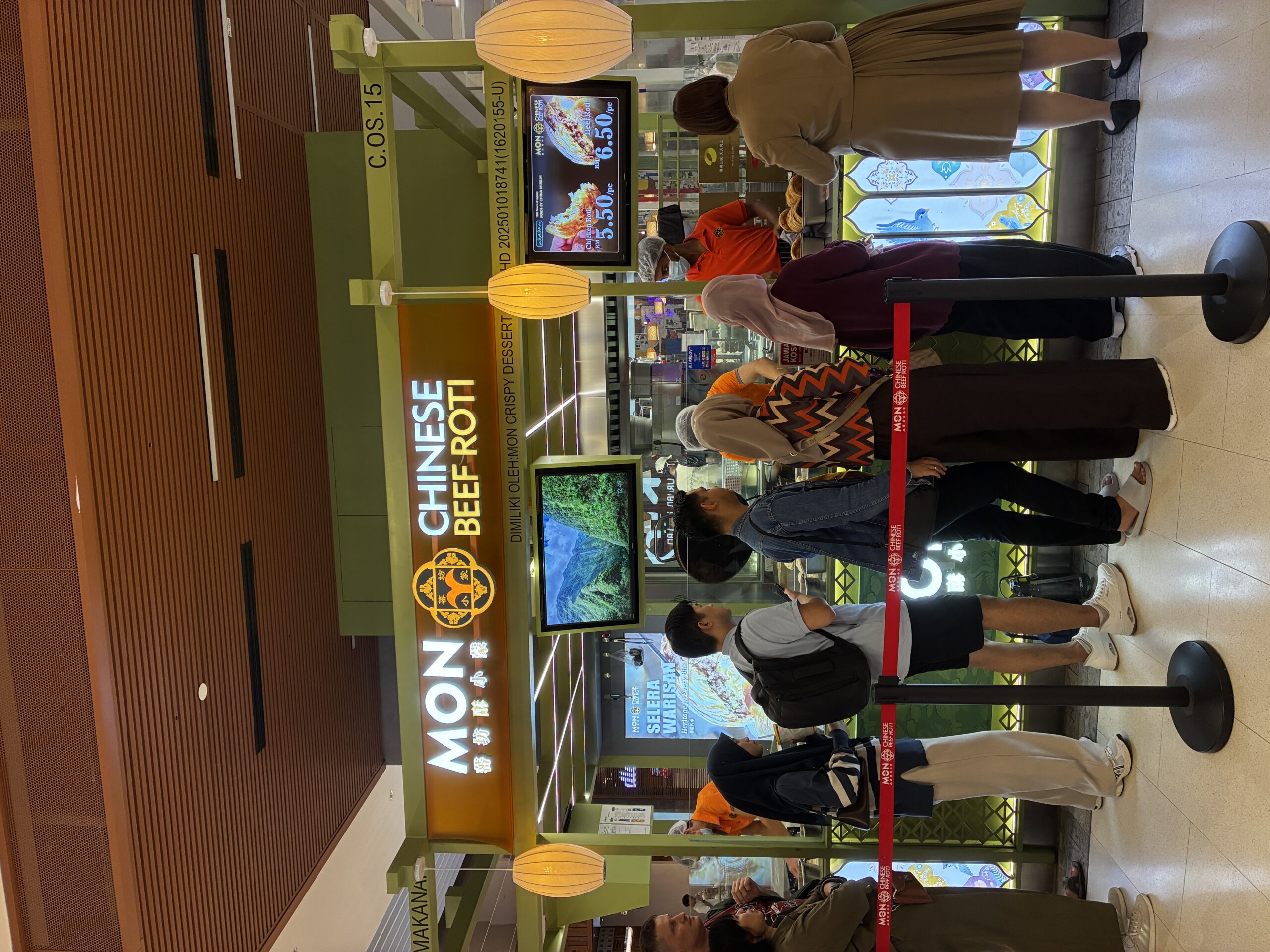
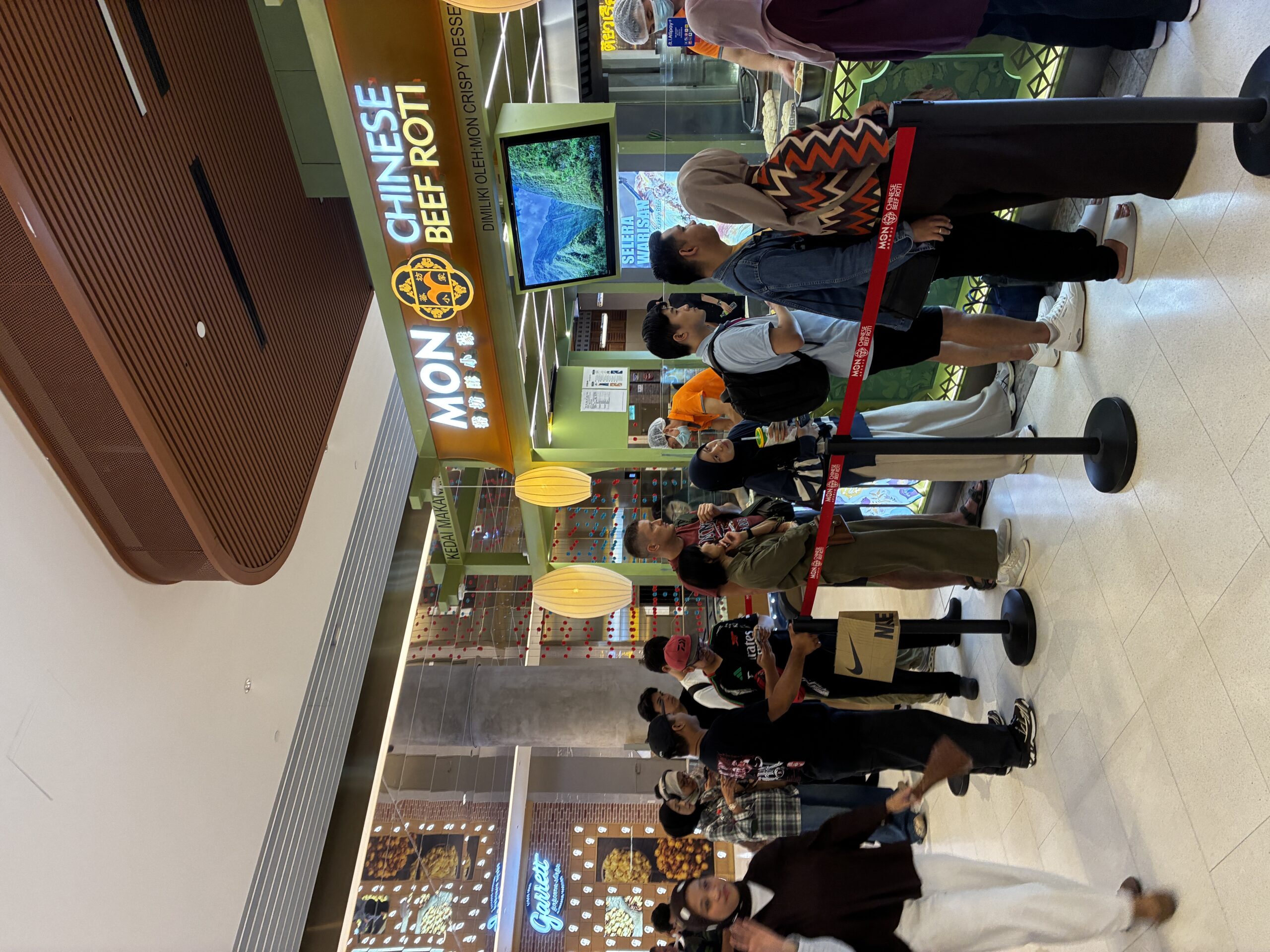
Mon Chinese Beef Roti has been drawing long queues for quite some time now
People don't just buy one or two pieces either, it's often bags and bags at a time.
Whether it's lunchtime rush or a random weekday afternoon, there always seems to be a steady line of people waiting patiently for one thing: that golden, flaky beef roti everyone keeps talking about online.
But why is it so popular and where did it even come from?
The beef roti itself is inspired by Hui Muslim culinary traditions, a Chinese Muslim community with over 1,200 years of history
The Hui people developed a distinct food culture shaped by Islamic dietary laws and Chinese cooking techniques, especially in northern China where wheat-based foods are a staple.
Similar to murtabak, this style of stuffed flatbread is often referred to as guo kui in parts of China and is a popular street food.
Over centuries, particularly during the Silk Road era, Hui cuisine evolved through constant cultural exchange.
Ingredients, spices, and cooking methods travelled between China, Central Asia, and the Middle East, influencing everything from noodle-making to flatbreads and meat dishes.
That's where you start to see the foundation of what Mon Chinese Beef Roti is serving today: hand-crafted dough techniques, layered flatbreads, and richly spiced beef fillings that reflect a blend of Chinese culinary precision and Central Asian spice traditions.
While it's called 'roti' today, the technique behind it is far more intricate than a simple flatbread
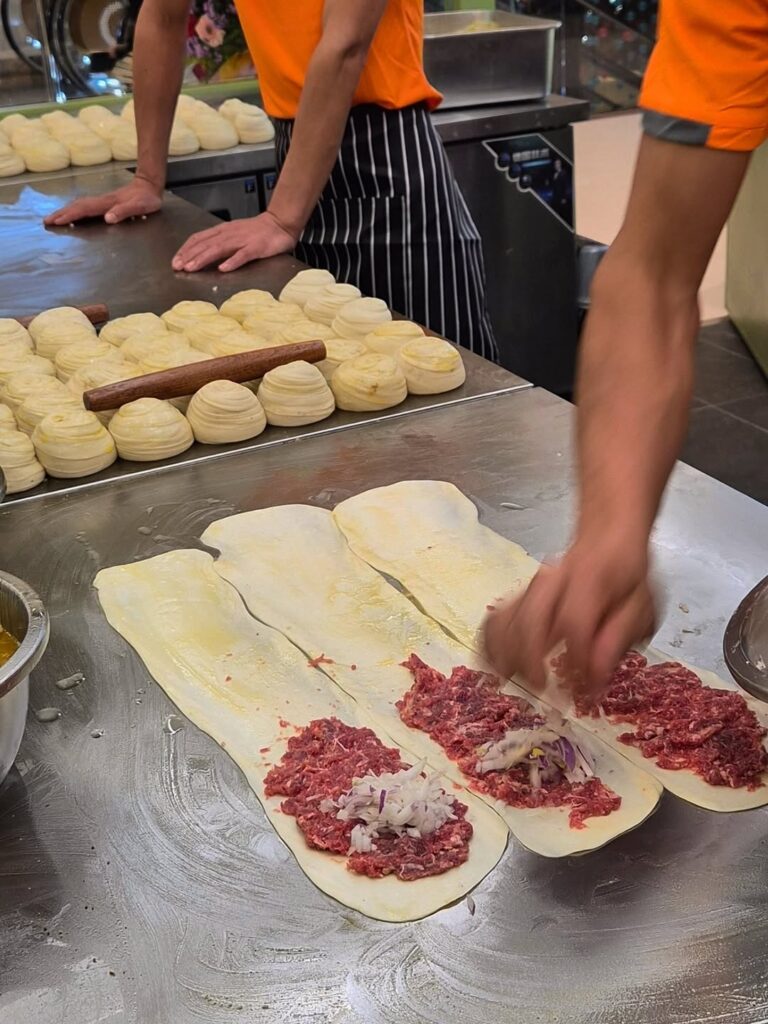
The dough is stretched, folded, oiled, and layered repeatedly. A process that creates those signature crispy, shattering layers on the outside while keeping the inside soft and chewy.
It's a method rooted in northern Chinese wheat traditions, similar in skill level to dishes like hand-pulled noodles and laminated pastries.
Meanwhile, the beef filling is typically seasoned with over 20 spices, commonly including cumin, garlic, ginger, and warming aromatics that give it a deep, fragrant kick without overpowering heat.
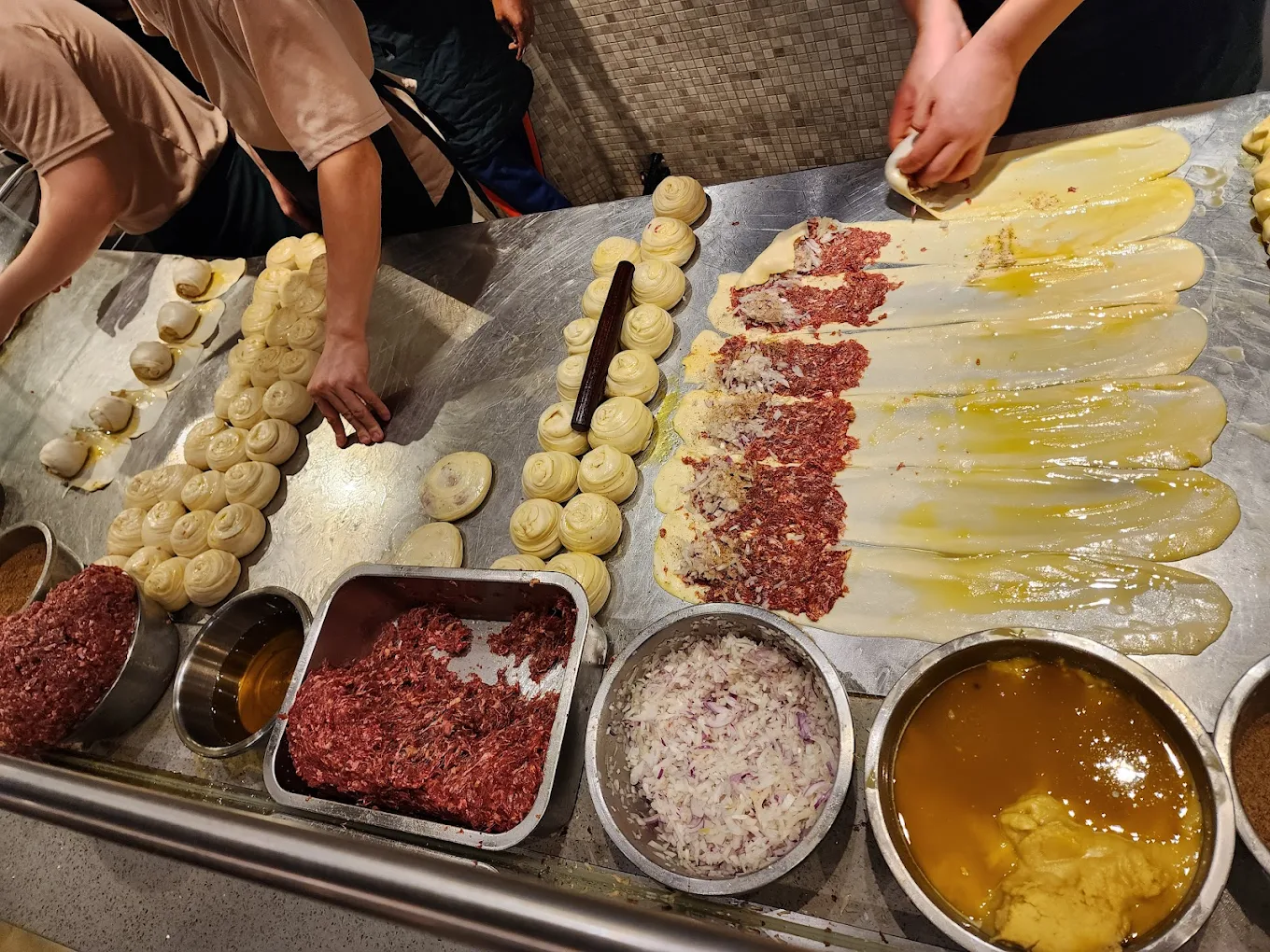
Everything is made by hand, through a process that can take up to 28 steps per piece
It's the kind of food that demands patience, both from the maker and, apparently, from the people lining up for it.
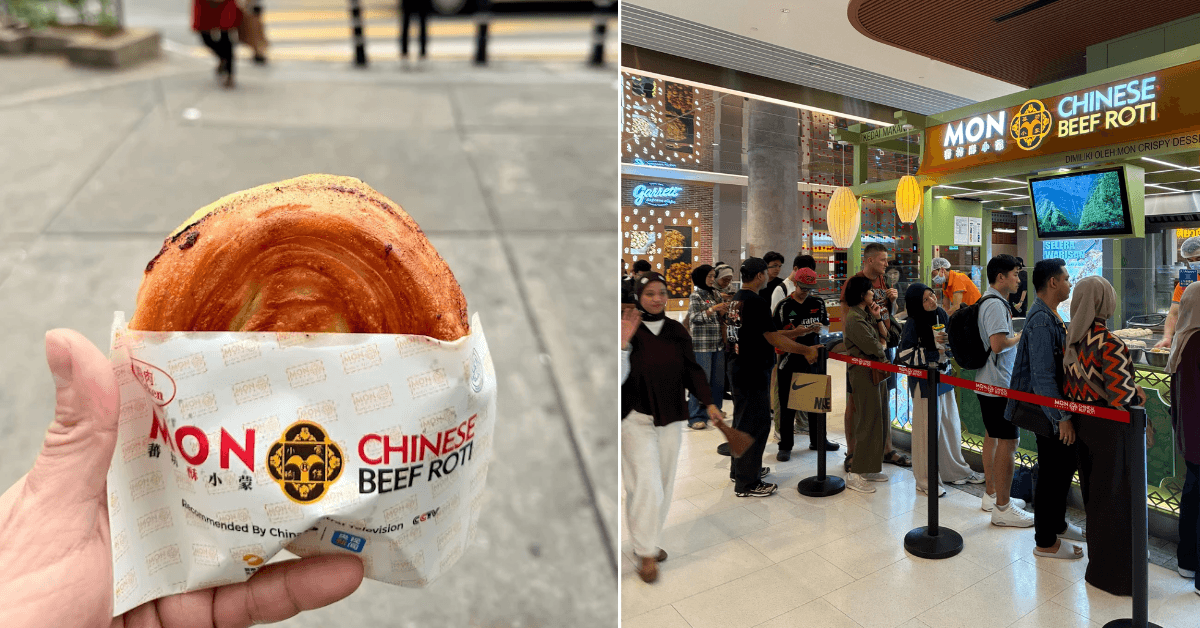
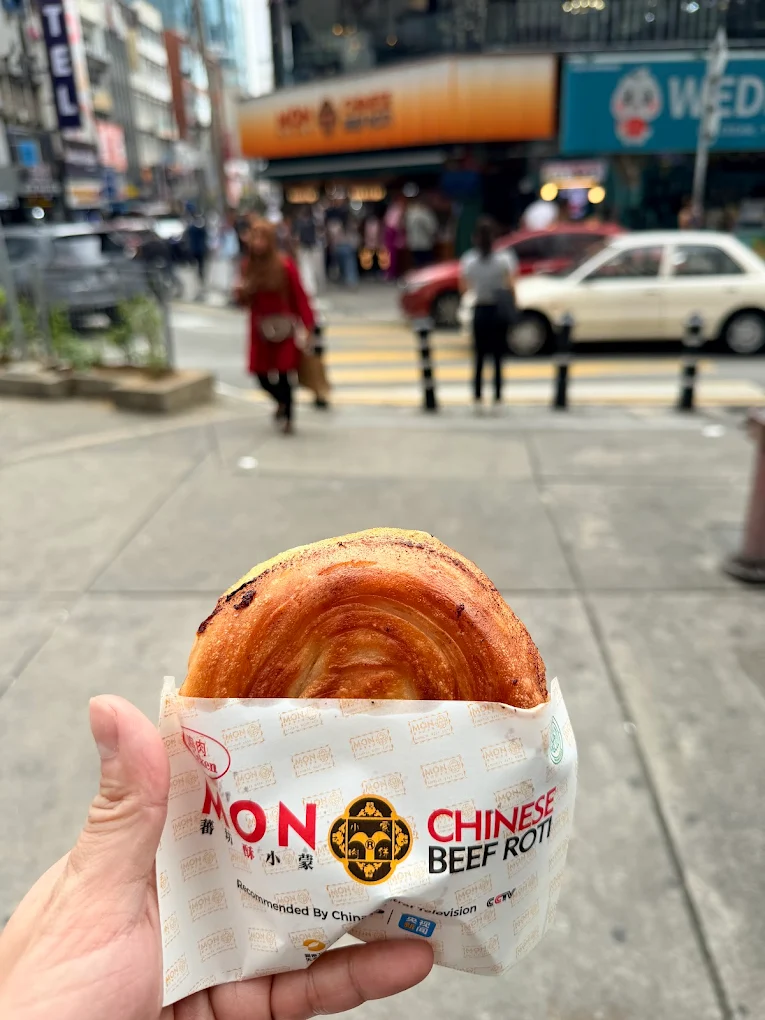
It's a freshly made, pan-fried roti stuffed with either beef or chicken, served piping hot straight off the stove.
The beef version goes for RM6.50, while the chicken is RM5.50, wallet-friendly prices that also help explain its popularity.
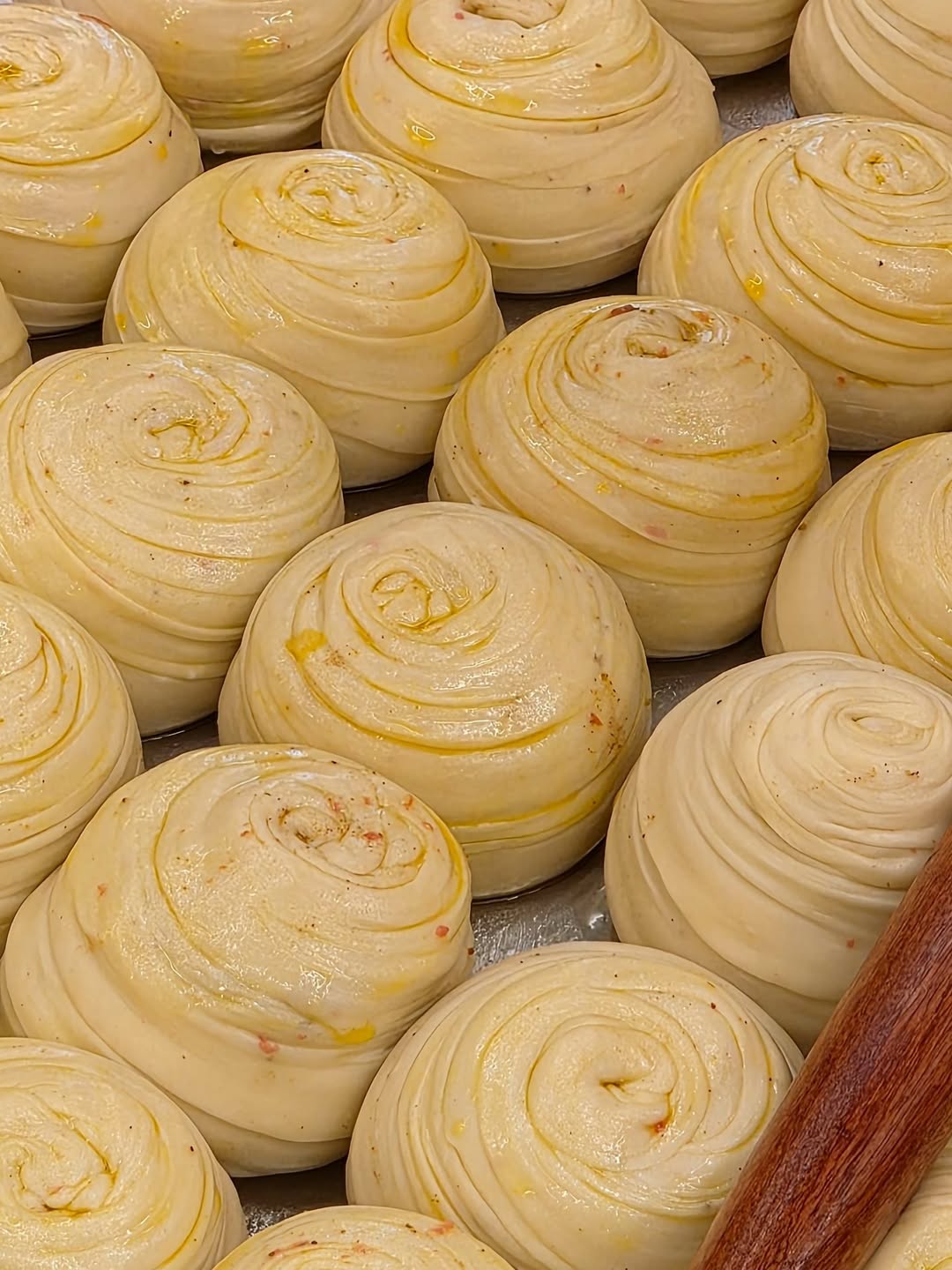
In Kuala Lumpur, Mon Chinese Beef Roti first gained traction in the Bukit Bintang area, where its freshly made, open-kitchen style setup quickly caught attention
By 2023 to 2024, clips of the roti being stretched, folded, and pan-fried were circulating widely on social media, turning it into a must-try spot almost overnight.
Since then, its popularity hasn't really slowed down. It has expanded to multiple locations across the Klang Valley, including:
- Bukit Bintang (the original viral hotspot)
- Pavilion KL area food courts
- Pavilion Bukit Jalil
- The Exchange TRX
- Suria KLCC
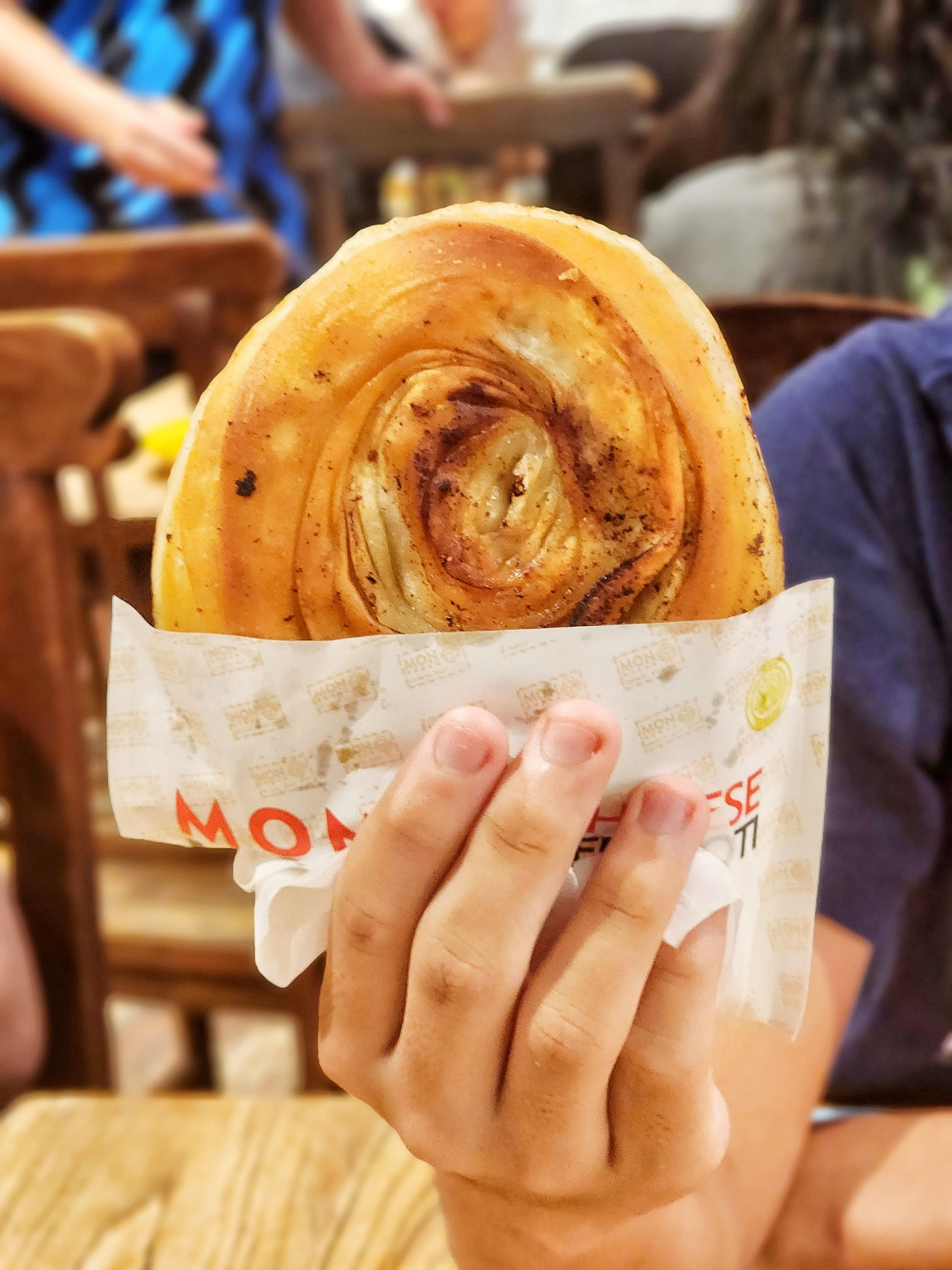
It has also expanded beyond Malaysia, with an outlet in Singapore as well.
Each location seems to carry the same pattern: it opens, it goes viral, and the queues follow.