


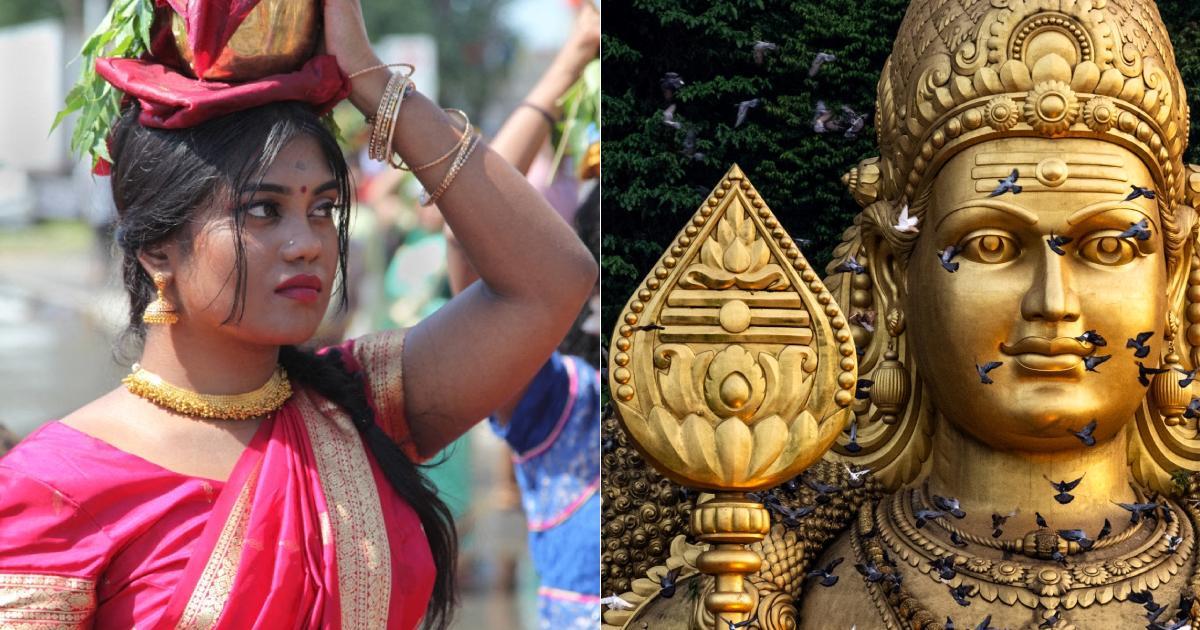
 Cover image via Creative Touch Imaging Ltd/NurPhoto/AFP & Mohd Rasfan/AFP
Follow us on Instagram, TikTok, and WhatsApp for the latest stories and breaking news.
If you've ever stood at the foot of Batu Caves, you've seen the towering statue of Lord Murugan, his right hand holding a long, gleaming spear
During Thaipusam, the spear appears in silver, wood, and steel, carried in processions, attached to kavadis, and, for some devotees, pierced through cheeks and tongues.
That spear is called the Vel. And in Hinduism, it is far more than just a weapon. It symbolises how the human mind is meant to function, and how inner battles are meant to be won, particularly in South Indian culture.
In Hindu mythology, the story of Thaipusam centres on Lord Murugan's battle against the demon Surapadman, a figure representing ego and ignorance. Before the battle, Goddess Parvati gifted her son, Lord Murugan, the Vel, imbuing it with divine power.
When Lord Murugan defeats Surapadman with the Vel, the demon is not merely destroyed; he is transformed, with one half becoming Murugan's peacock mount, and the other appearing as a rooster on his flag.
Because of this, the Vel is not treated merely as an object. In many temples, it is worshipped as a deity in its own right, representing the union of strength, wisdom, and divine grace.
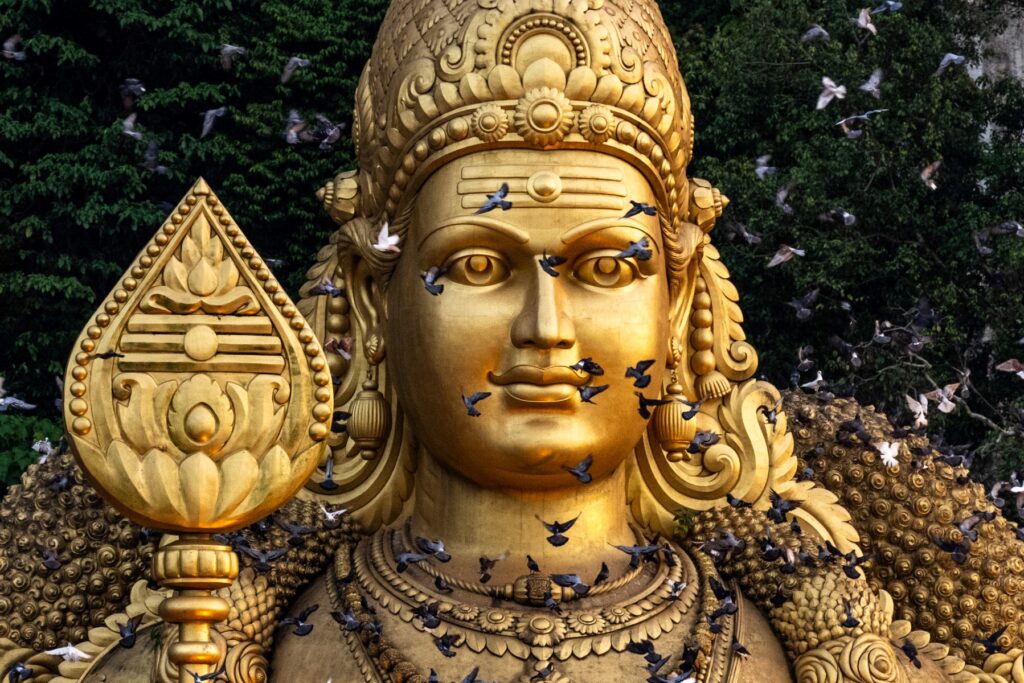
A flock of pigeons fly in front of the Lord Murugan Statue during the Thaipusam festival at Batu Caves.
Image via Mohd Rasfan/AFPA traditional Vel is more than just a spearhead on a staff; its design carries layered meaning
It's designed to represent how a "perfect" human mind should function:
The broad head represents expansive knowledge, the ability to see beyond narrow understanding.
The long shaft represents discipline and depth, knowledge that is grounded and steady.
The sharp tip represents focused wisdom, the ability to pierce through illusion, ego, and falsehood.
Together, the Vel becomes a visual metaphor for a mind that is open, disciplined, and sharp.
But why do devotees pierce their cheeks?
One of the most visually striking rituals during Thaipusam is Alagu Kuthal, the practice of body piercing as an act of devotion. This can range from small silver Vels pierced through the cheeks or tongue to larger hooks attached to the back or torso, often supporting kavadis.
Cheek or tongue piercing is closely associated with a vow of silence, sometimes referred to in tradition as Alavu Kavadi, with alavu meaning "to limit". By physically limiting speech, the devotee symbolically withdraws from worldly distraction, focusing fully on prayer and the fulfilment of vows.
Within this ritual, the Vel is seen as guarding the devotee's speech and intention, a reminder to remain disciplined in thought, word, and action throughout the pilgrimage.
More broadly, Alagu Kuthal represents mastery of mind over body.
The act of enduring physical discomfort is understood as a demonstration of spiritual focus, self-control, and surrender of ego, echoing Lord Murugan's victory over ignorance in the legend of Thaipusam.
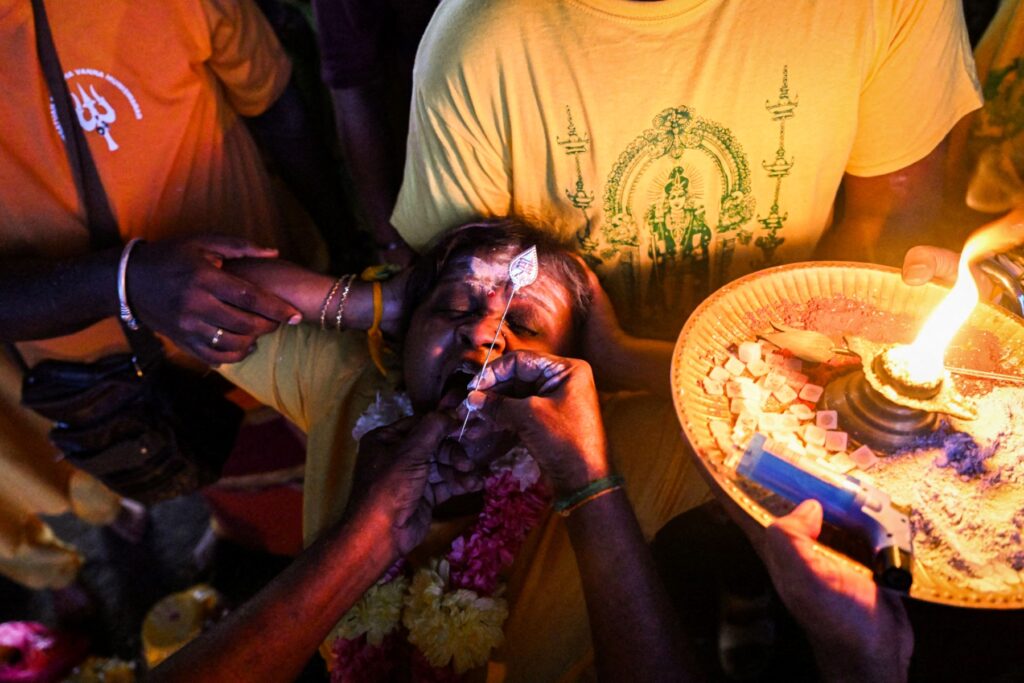
A Malaysian Hindu devotee in a state of trance has her tongue pierced with the Vel before making her way towards the Batu Caves temple.
Image via Mohd Rasfan/AFPAt Batu Caves, the 140-foot Lord Murugan statue stands holding a towering Vel, visible long before visitors begin the climb up the temple steps
It's a reminder to everyone climbing those 272 steps that no matter how heavy your kavadi, meaning "burden", is, wisdom and focus will get you to the top.
So the next time you hear chants of "Vetrivel, Veeravel", meaning 'Victorious Vel, Valorous Vel', or the more common "Vel, Vel", simply meaning 'Spear, Spear', echoing through the streets during Thaipusam, remember that the Vel is not about the conquest of others; it is about conquering the self.
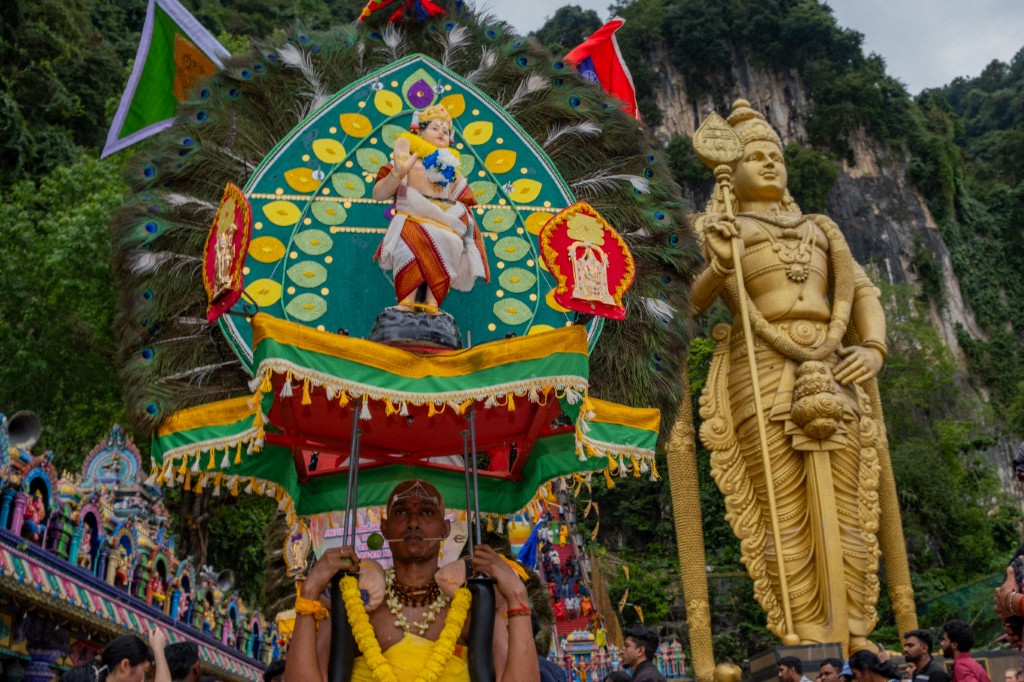
A devotee carries an ornately decorated kavadi in front of the towering golden statue of Lord Murugan at Batu Caves, marking the culmination of the Thaipusam pilgrimage.
Image via Keyza Widiatmika/NurPhoto/AFP)