


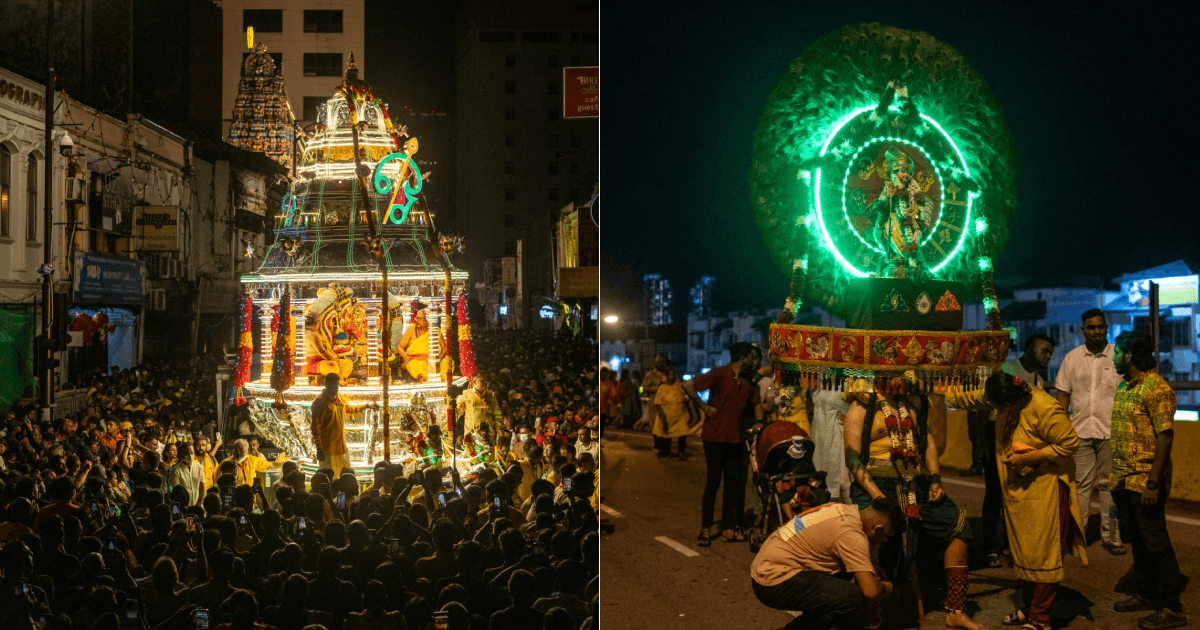
 Cover image via Mohd Rasfan/AFP
Follow us on Instagram, TikTok, and WhatsApp for the latest stories and breaking news.
If you work in Kuala Lumpur, Selangor, Penang, Perak, or Johor, Thaipusam is likely already marked on your calendar as a public holiday
But in states like Kelantan, Terengganu, Melaka, Pahang, Perlis, Sabah, and Sarawak, it's just another working day.
So why is one of Malaysia's largest religious festivals a public holiday only in certain parts of the country?
The answer comes down to state powers, demographics, and the structure of Malaysia's public holiday laws.
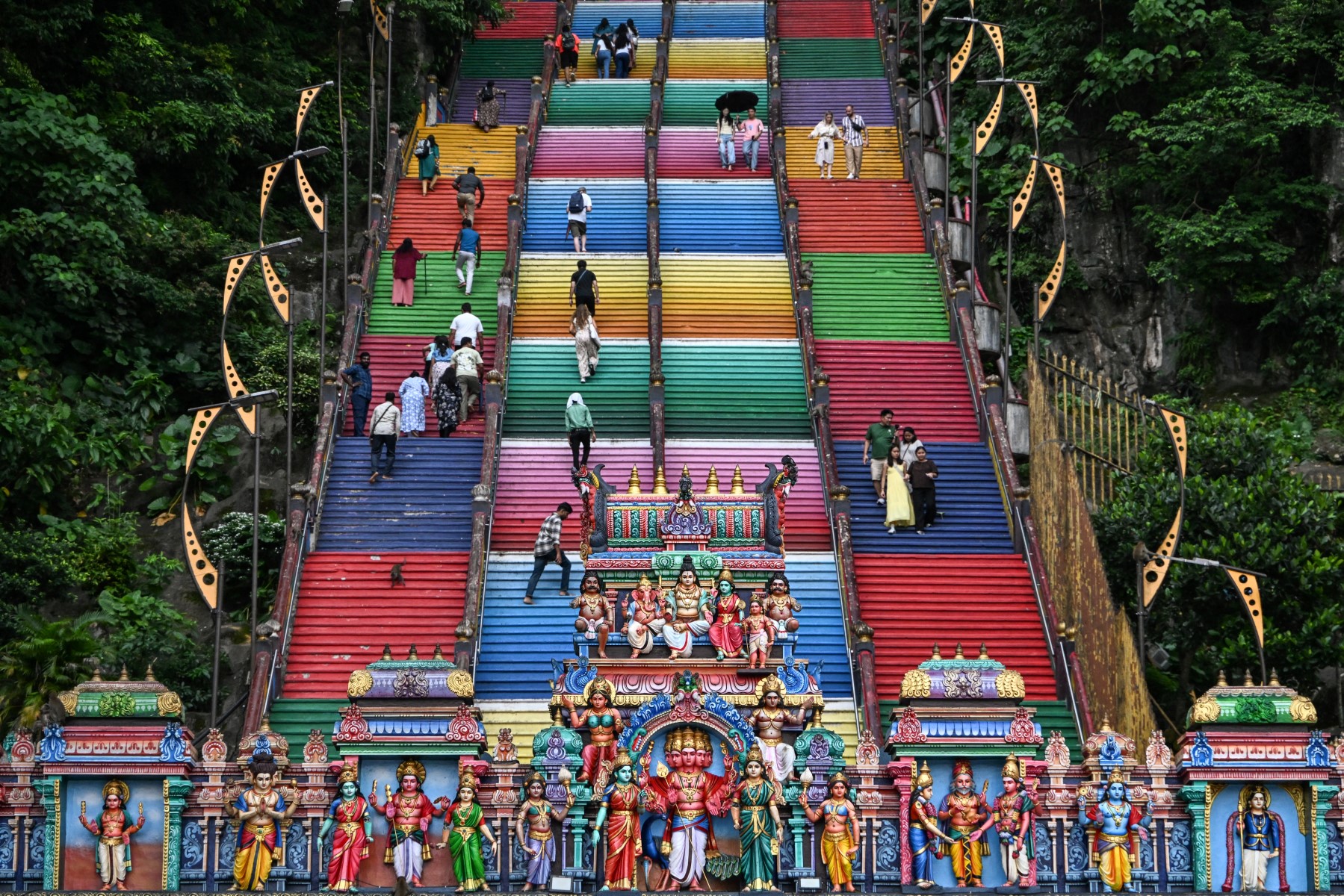
People visit the Batu Caves Hindu temple complex on the outskirts of Kuala Lumpur.
Image via Jam Sta Rosa/AFPPublic holidays in Malaysia are split between federal and state powers
Under the Holidays Act 1951, public holidays fall into two broad categories, namely federal holidays and state holidays.
Federal holidays, set by the federal government, apply nationwide. These include Merdeka Day, Labour Day, the Yang di-Pertuan Agong's Birthday, and Federal Territory Day.
State holidays, however, are decided by individual state governments. Each state chooses additional holidays that reflect the cultural and religious makeup of its population.
Thaipusam currently falls under this second category, as a state-level holiday.
That's why it is officially observed in Kuala Lumpur, Putrajaya, Selangor, Penang, Perak, Johor, and Negeri Sembilan, while Kedah declares it a special holiday.
States that do not gazette Thaipusam as a public holiday are not legally required to close offices or schools on that day.
Another key factor is demographics
States such as Selangor, Penang, Perak, and Johor have large Hindu communities. Declaring Thaipusam a state holiday in these states is not just symbolic; it is a practical necessity to accommodate hundreds of thousands of devotees and avoid widespread absenteeism from offices and schools.
In states with smaller Hindu populations, state governments prioritise other cultural festivals that are more locally significant, such as Gawai in Sarawak or Kaamatan in Sabah.
This "decentralised" approach allows Malaysia to manage its multi-religious calendar without applying every festival uniformly nationwide.
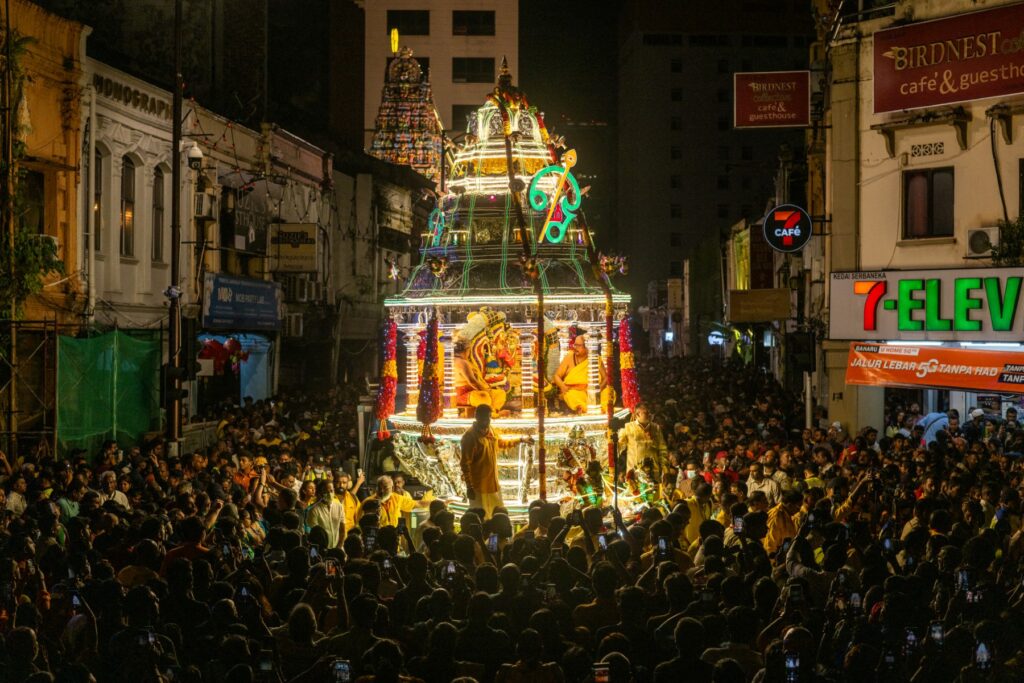
Hindu devotees gather on the street as they pray in front of Lord Murugan's silver chariot, pulled towards the Batu Caves temple on the eve of the Thaipusam Festival.
Image via Mohd Rasfan/AFPHowever, in 2026, Thaipusam happens to fall on the same date as Federal Territory Day
The federal government gazetted both days as holidays for the Federal Territories. This matters because under Section 60D(1)(a) of the Employment Act 1955, if a public holiday falls on a Sunday, it is observed on the next working day.
So in Kuala Lumpur, Putrajaya, and Labuan, Federal Territory Day is observed on Monday, while Thaipusam is observed on Tuesday.
However, this replacement only applies in states where Thaipusam is already gazetted as a holiday. In states that do not recognise Thaipusam as a public holiday, there is no replacement day provided.
That's why someone in KL may get two replacement days, creating a four-day weekend, while people in Melaka or Kuantan may not.
But why not just make Thaipusam a national holiday?
Indian community leaders have long called for Thaipusam to be made a federal holiday in the name of inclusivity.
Figures from the Malaysian Indian Congress (MIC), including deputy president Datuk Seri Saravanan Murugan, and the Malaysian Trades Union Congress (MTUC), have repeatedly called for nationwide gazettement so Hindu workers can observe Thaipusam without having to use annual leave.
However, the government has also had to weigh these requests against economic considerations.
The Malaysian Employers Federation (MEF) has consistently cautioned that Malaysia already has one of the highest numbers of public holidays once federal and state holidays are combined. Its executive director, Datuk Shamsuddin Bardan, previously estimated that adding a single extra public holiday can cost employers between RM1 billion and RM1.5 billion in lost productivity and higher wage bills.
Business groups such as the Small and Medium Enterprises Association (SAMENTA) have also warned that additional or last-minute holidays can disrupt production schedules, logistics, and supply chains, challenges that hit smaller businesses especially hard.
This balancing act is not new.
Historically, Malaysia's reluctance to continuously add religious holidays has been tied to policies aimed at maintaining economic competitiveness.
The issue is often compared to Singapore's 1968 holiday rationalisation, when religious communities were asked to select which festivals to retain as public holidays to reduce the total number of national holidays. In that exercise, the Hindu community chose Deepavali over Thaipusam. Similarly, the Christian community retained Good Friday while giving up Easter Monday, and the Muslim community retained Hari Raya Puasa and Hari Raya Haji over the Prophet Muhammad's Birthday.
Regardless, Thaipusam remains one of the most visible expressions of Malaysia's religious diversity, even if not everyone gets the day off.
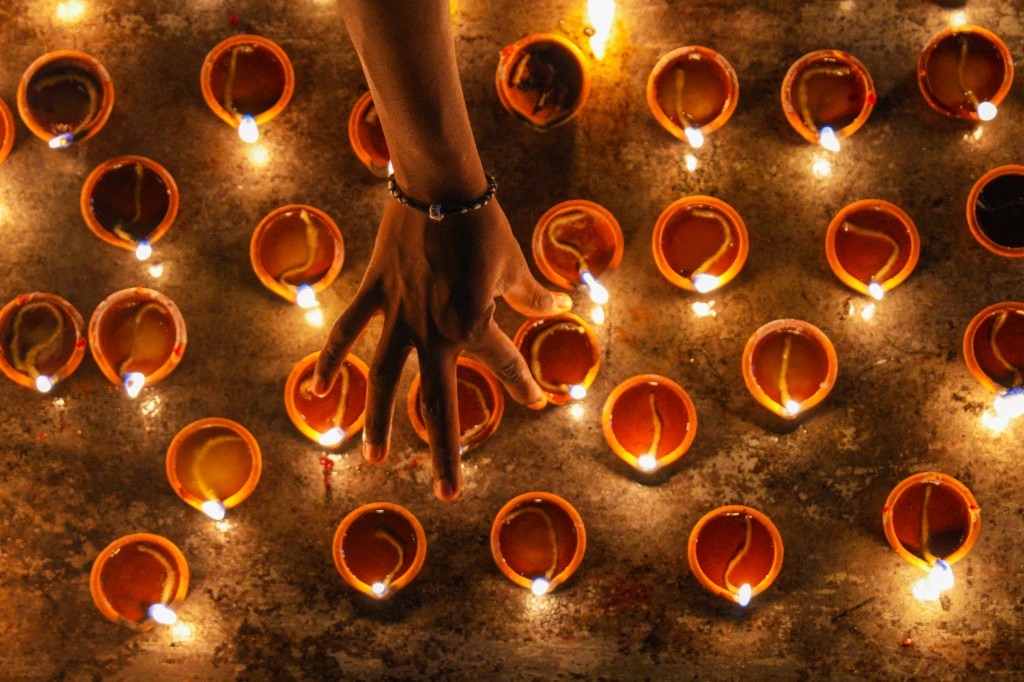
Hindu devotees light the oil lamps at a Hindu temple for Deepavali.
Image via Thilina Kaluthotage/NurPhoto/AFPWhat if you need the day off in a state where Thaipusam isn't a public holiday?
There are still options.
Hindu civil servants are typically allowed to apply for unrecorded leave to observe religious festivals.
In the private sector, many companies voluntarily include Thaipusam among their six optional holidays selected from gazetted state holidays, even in states where it is not legally required.
In practice, many employers still accommodate staff who wish to observe the festival, even if it's not officially marked as a holiday on the calendar.
